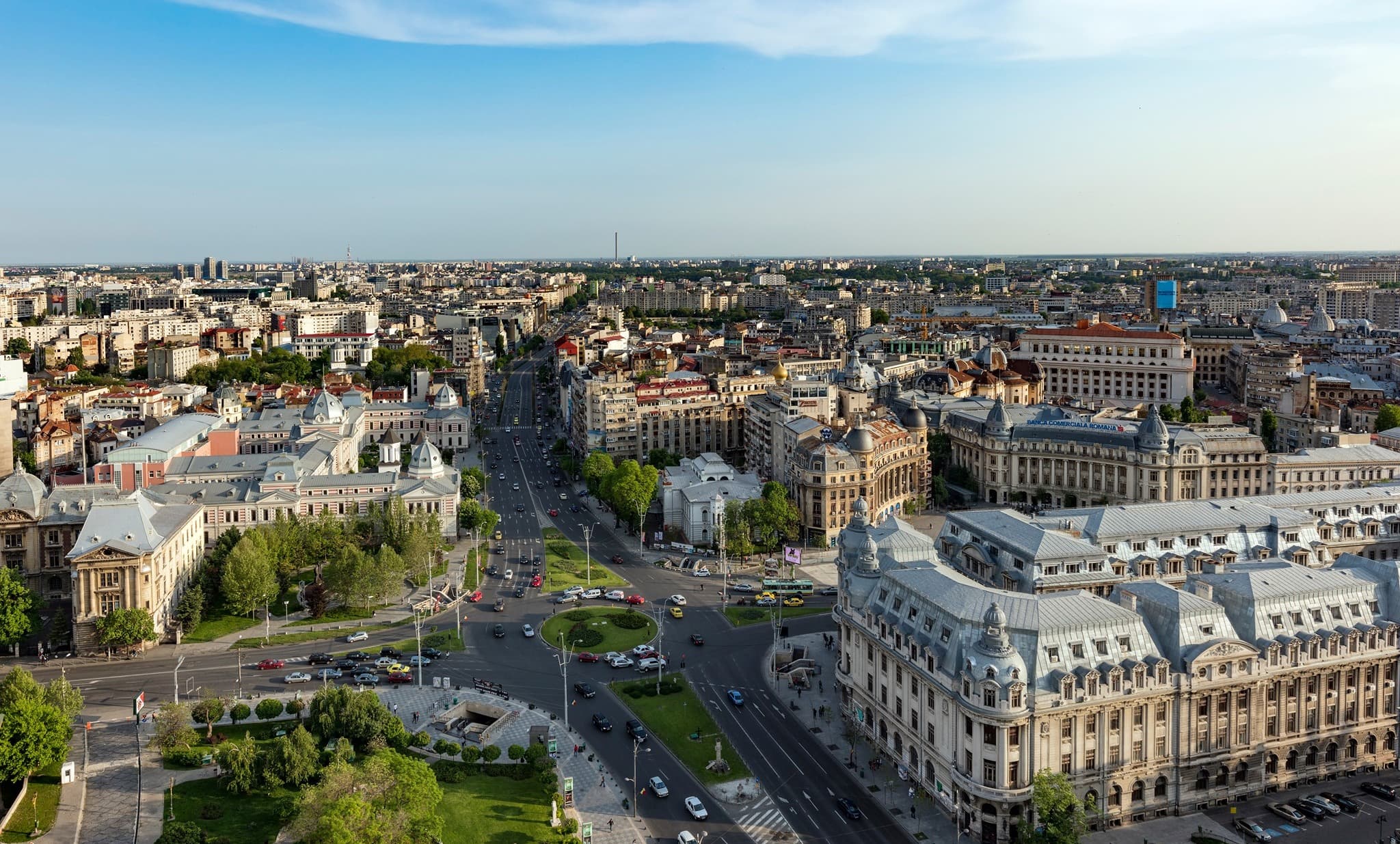
Bucharest
Romania

Munich
Germany
Bucharest
Munich
💰 Budget
🛡️ Safety
Bucharest
Bucharest is generally safe for tourists, though petty crime like pickpocketing occurs in crowded areas and on public transport. The Old Town party district can get rowdy late at night. Stray dogs have decreased significantly but are still present in some outer areas. Use common sense and you will be fine.
Munich
Munich is one of the safest large cities in Europe and consistently ranks among the top cities globally for quality of life and low crime. The public transport system runs reliably into the early hours, streets are well-lit, and aggressive crime towards tourists is genuinely rare. The main exception is Oktoberfest: six weeks of mass intoxication creates opportunistic pickpocketing around the Theresienwiese grounds, on the U4/U5 U-Bahn lines, and in Marienplatz. Bag snatching and phone theft spike sharply during the festival. Outside Oktoberfest, the usual urban vigilance around crowded tourist areas and train stations is sufficient. The Hauptbahnhof area around the main train station can feel rough late at night but is not genuinely dangerous.
⭐ Ratings
🌤️ Weather
Bucharest
Bucharest has a humid continental climate with hot summers and cold winters. The city sits on the Wallachian Plain, exposed to cold winds from the northeast in winter and heat from the south in summer. Spring and autumn are short but pleasant.
Munich
Munich has a continental climate with warm, sometimes hot summers and reliably cold winters — snow is common from December through February, and the city handles it with characteristic Bavarian efficiency. The Alps to the south create a unique weather phenomenon: the Föhn wind, a warm and intensely dry Alpine wind that rushes down from the mountains and can raise temperatures by 10°C in hours. Locals say the Föhn causes headaches and irritability, and statistically more disputes are filed with Munich police on Föhn days. It also brings extraordinary clarity — from the city centre you can see the Alps in sharp, almost cinematic detail. Autumn arrives damp and golden, which is precisely the backdrop for Oktoberfest.
🚇 Getting Around
Bucharest
Bucharest has an extensive public transit system operated by STB (buses, trams, trolleybuses) and Metrorex (metro). The metro is the fastest way to get around, while ride-hailing apps are extremely affordable by Western European standards.
Walkability: The historic center and Old Town are compact and walkable. Calea Victoriei, the grand boulevard, is excellent for strolling. However, Bucharest is a sprawling city and sidewalks in some areas are poorly maintained. The metro or Bolt is recommended for longer distances.
Munich
Munich has one of the best public transport systems in Europe, run under the unified MVV (Münchner Verkehrsgesellschaft) network that covers U-Bahn (metro), S-Bahn (suburban rail), tram, and bus on a single ticket. The network covers the entire metropolitan area across clearly defined concentric fare zones, and trains run every 5-10 minutes during peak hours. Timetables are reliable to the minute — missing a connection by 30 seconds is a legitimate frustration. The MVV app (or Google Maps) handles journey planning seamlessly. Buy a day ticket (Tageskarte) if making more than two trips; the Isarcard Week pass or the München Card (which includes museums) can offer additional value for visitors staying several days.
Walkability: The Altstadt (old town) is highly walkable with a pedestrianised core along Kaufingerstraße and Neuhauser Straße connecting Marienplatz to Karlsplatz. Most key sights — Frauenkirche, Residenz, Hofbräuhaus, Viktualienmarkt — are within 15 minutes on foot. Beyond the Altstadt, Munich is a large, spread-out city and public transport is more practical than walking.
The Verdict
Choose Bucharest if...
you want "Little Paris" Belle Époque architecture — Palace of the Parliament, Lipscani old-town bars, Stavropoleos Monastery, Herastrau Park, and Transylvania trips
Choose Munich if...
you want Bavaria at full volume — Oktoberfest, beer gardens, the Alps 45 minutes south, and BMW-grade engineering everywhere
Bucharest