Bucharest
Romania

Nice
France
Bucharest
Nice
💰 Budget
🛡️ Safety
Bucharest
Bucharest is generally safe for tourists, though petty crime like pickpocketing occurs in crowded areas and on public transport. The Old Town party district can get rowdy late at night. Stray dogs have decreased significantly but are still present in some outer areas. Use common sense and you will be fine.
Nice
Nice is generally a safe city for tourists with a visible police presence on the Promenade and in the old town. The primary risks are petty theft — particularly from opportunistic pickpockets targeting distracted visitors and scooter thieves who snatch bags. Security measures have been significantly heightened since the July 2016 Bastille Day attack on the Promenade des Anglais, which killed 86 people. Heavy vehicle barriers are now permanent fixtures along the promenade. Summer heat waves are a genuine health risk for the elderly and those unaccustomed to the climate.
⭐ Ratings
🌤️ Weather
Bucharest
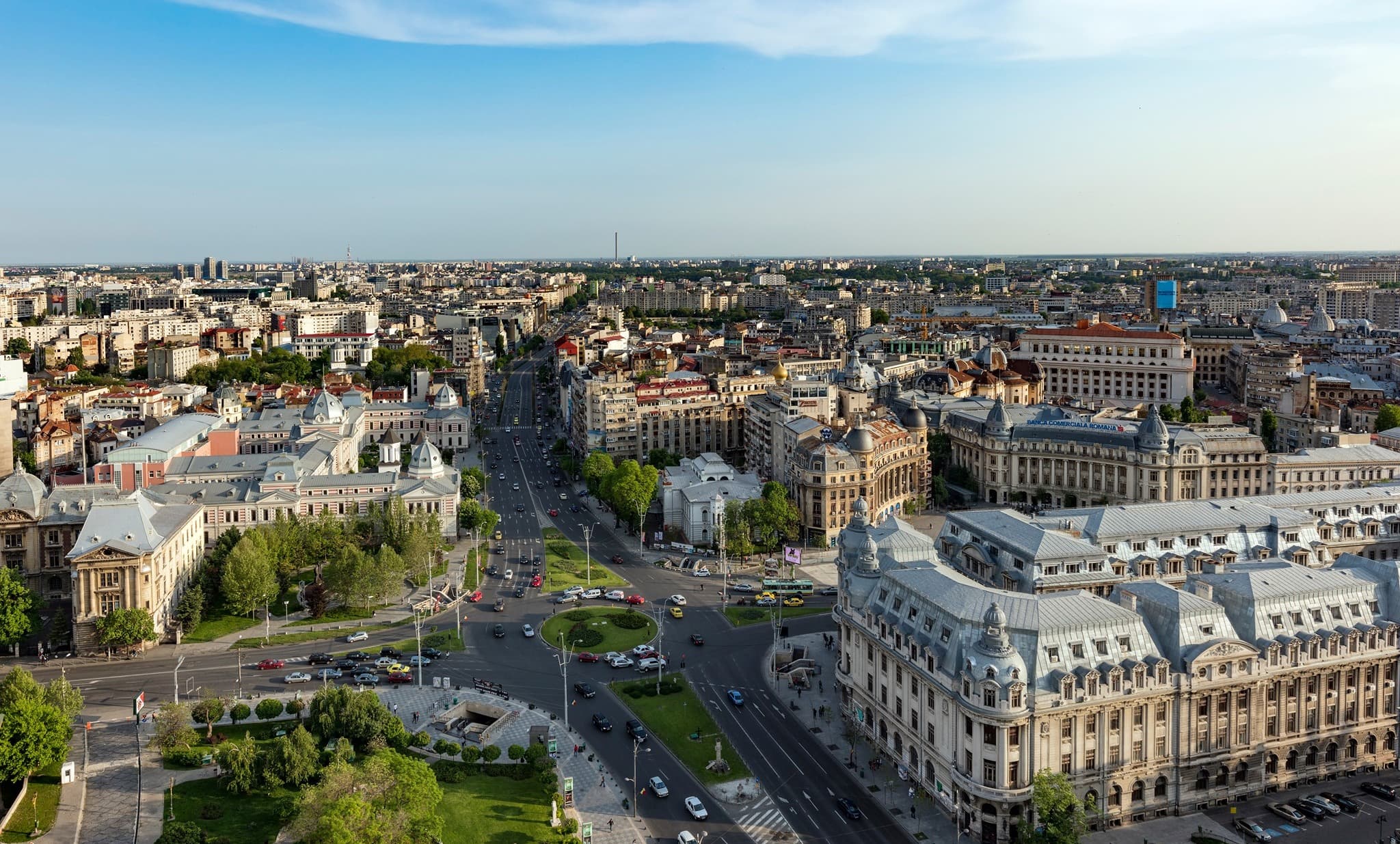
Bucharest has a humid continental climate with hot summers and cold winters. The city sits on the Wallachian Plain, exposed to cold winds from the northeast in winter and heat from the south in summer. Spring and autumn are short but pleasant.
Nice
Nice enjoys one of the most enviable climates in Europe — a classic Mediterranean pattern with over 300 sunny days per year. Summers are hot and dry, winters are mild and occasionally rainy but rarely cold enough to freeze. The Mediterranean sea moderates temperatures year-round. The Mistral wind can blow through the region, bringing cold, clear spells in winter and spring. Sea swimming is pleasant from June through October (13-24°C).
🚇 Getting Around
Bucharest
Bucharest has an extensive public transit system operated by STB (buses, trams, trolleybuses) and Metrorex (metro). The metro is the fastest way to get around, while ride-hailing apps are extremely affordable by Western European standards.
Walkability: The historic center and Old Town are compact and walkable. Calea Victoriei, the grand boulevard, is excellent for strolling. However, Bucharest is a sprawling city and sidewalks in some areas are poorly maintained. The metro or Bolt is recommended for longer distances.
Nice
Nice's city centre is compact and walkable. The Lignes d'Azur network operates trams and buses throughout the city and region on a unified €1.70 ticket (or €5 day pass). Two modern tram lines cross the city, with a third connecting the airport. TER coastal trains run every 20 minutes in both directions along the Cannes-Ventimiglia line, making day trips to Monaco, Antibes, Cannes, and Menton fast and affordable. The entire French Riviera is effectively your neighbourhood.
Walkability: The city centre — Vieux Nice, Promenade des Anglais, Cours Saleya, Place Masséna, and the port — is excellent for walking. The terrain is mostly flat. Colline du Château requires a short uphill walk or the lift. Cimiez (Musée Matisse, Musée Chagall, Roman ruins) is a 20-minute uphill walk from the old town or a short bus ride (Bus #15 or #17). Comfortable walking shoes are enough; hiking boots are not needed in the city.
The Verdict
Choose Bucharest if...
you want "Little Paris" Belle Époque architecture — Palace of the Parliament, Lipscani old-town bars, Stavropoleos Monastery, Herastrau Park, and Transylvania trips
Choose Nice if...
you want the French Riviera's capital — Promenade des Anglais, Old Nice socca, Matisse + Chagall, and Monaco 25 minutes away for €1.70
Bucharest