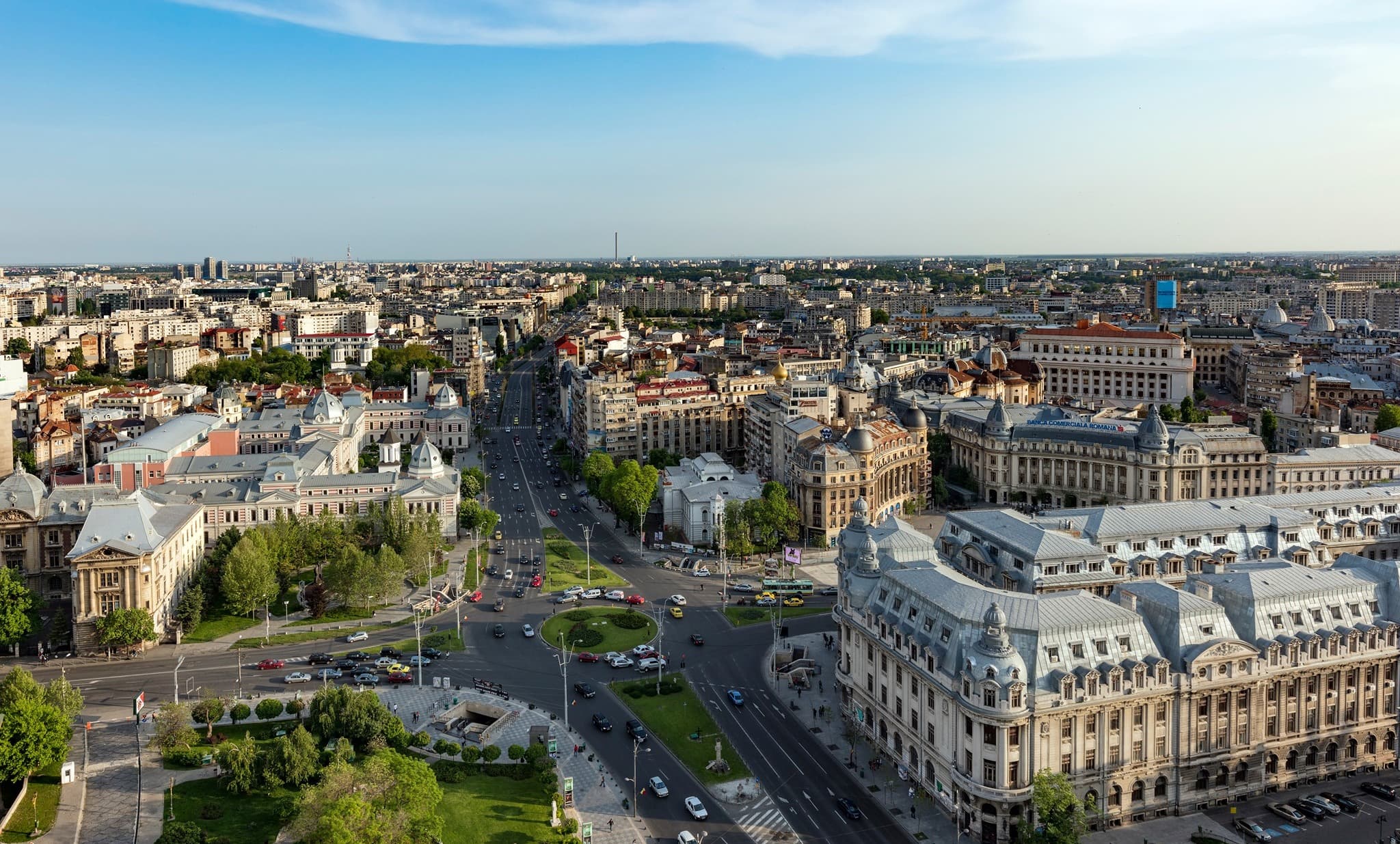
Bucharest
Romania

Oslo
Norway
Bucharest
Oslo
💰 Budget
🛡️ Safety
Bucharest
Bucharest is generally safe for tourists, though petty crime like pickpocketing occurs in crowded areas and on public transport. The Old Town party district can get rowdy late at night. Stray dogs have decreased significantly but are still present in some outer areas. Use common sense and you will be fine.
Oslo
Oslo is one of the safest capital cities in the world. Violent crime against tourists is extremely rare and the city functions efficiently and honestly. The main nuisances are opportunistic pickpockets around Karl Johans gate and the central train station (Oslo S) area, and winter ice on sidewalks and harbor edges. The Vaterland and Grønland areas, east of Oslo S, are worth basic awareness at night but present no serious danger by any international standard.
⭐ Ratings
🌤️ Weather
Bucharest
Bucharest has a humid continental climate with hot summers and cold winters. The city sits on the Wallachian Plain, exposed to cold winds from the northeast in winter and heat from the south in summer. Spring and autumn are short but pleasant.
Oslo
Oslo has a humid continental climate, though the Gulf Stream moderates temperatures considerably compared to other cities at the same latitude. Summers are genuinely warm and glorious, with up to 19 hours of daylight in June. Winters are cold and dark — only 6 hours of daylight in December — but snowfall and Christmas market season make them atmospheric. The aurora borealis (Northern Lights) is occasionally visible from Oslo on clear, dark winter nights, though you'll see them far better further north. Spring arrives late but emphatically; autumn is crisp and colorful.
🚇 Getting Around
Bucharest
Bucharest has an extensive public transit system operated by STB (buses, trams, trolleybuses) and Metrorex (metro). The metro is the fastest way to get around, while ride-hailing apps are extremely affordable by Western European standards.
Walkability: The historic center and Old Town are compact and walkable. Calea Victoriei, the grand boulevard, is excellent for strolling. However, Bucharest is a sprawling city and sidewalks in some areas are poorly maintained. The metro or Bolt is recommended for longer distances.
Oslo
Oslo has an excellent public transit system operated by Ruter, covering the T-bane (metro), tram, bus, commuter train, and harbor ferry lines under a single unified ticket. A single trip costs NOK 46 (~$4.25); a 24-hour day pass costs NOK 130 (~$12), and a 72-hour pass NOK 230 (~$21). The Oslo Pass (NOK 495/24h, NOK 695/48h, NOK 845/72h) includes unlimited Ruter transit plus free entry to most major museums — worth calculating based on your itinerary. The city center is compact and very walkable. Cycling is excellent and Oslo Bysykkel (city bikes) are available via app for NOK 49/month or NOK 49 per 45-minute trip.
Walkability: Oslo's city center is compact and extremely walkable. The Opera House, Akershus Fortress, Aker Brygge, Karl Johans gate, and the Royal Palace form a walkable central core within about 2.5 km. Vigeland Park is a comfortable 30-minute walk or 10-minute tram ride. Bygdøy peninsula requires a ferry or bus in summer. Holmenkollen requires the T-bane metro.
The Verdict
Choose Bucharest if...
you want "Little Paris" Belle Époque architecture — Palace of the Parliament, Lipscani old-town bars, Stavropoleos Monastery, Herastrau Park, and Transylvania trips
Choose Oslo if...
you want Nordic lifestyle at its most refined — harbor saunas, Vigeland's sculptures, the Bergen Railway, and no concern for your wallet
Bucharest