Savannah vs Yellowstone National Park
Which destination is right for your next trip?

Savannah
United States
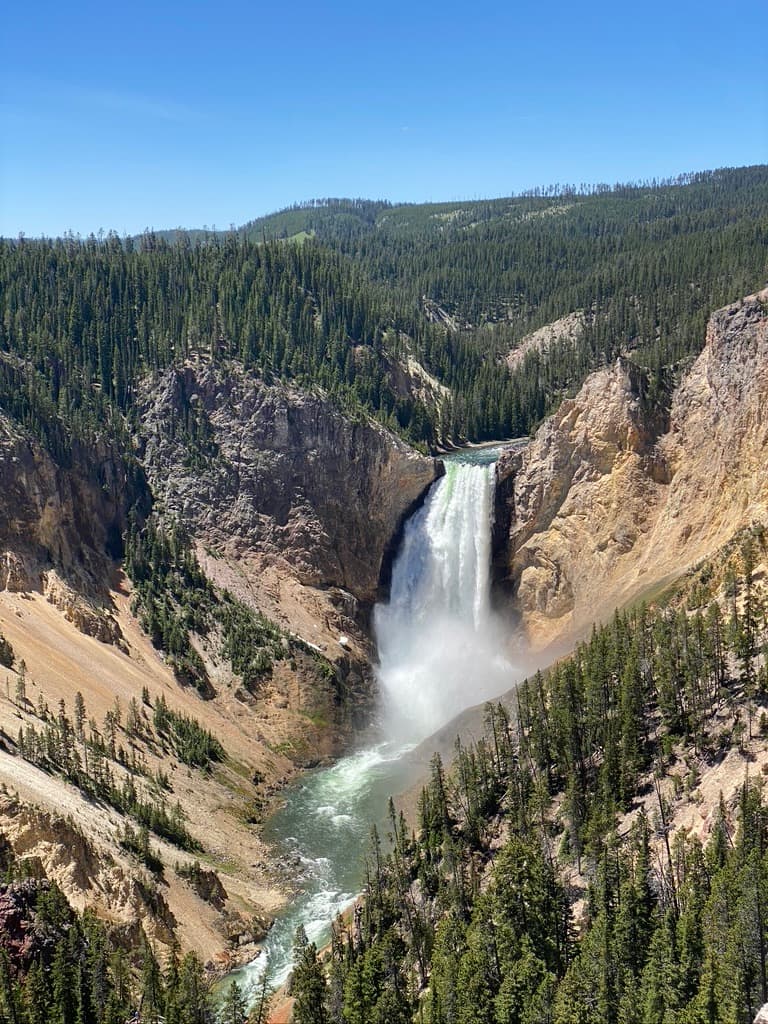
Yellowstone National Park
United States
Savannah
Yellowstone National Park
💰 Budget
🛡️ Safety
Savannah
The historic district is generally safe during the day and into the evening, with a heavy tourist-police presence and well-lit main streets. Savannah has a higher violent-crime rate than Charleston by raw numbers, mostly concentrated in neighborhoods north and west of the historic district that tourists rarely visit. The most common visitor issues are car break-ins, aggressive panhandling near River Street, and overdoing it on to-go cups.
Yellowstone National Park
Yellowstone is extremely safe from a crime perspective. The real hazards are natural — thermal features that can kill you in seconds, bison that gore more visitors than bears each year, grizzly bears, sudden weather changes, and thin ice on Yellowstone Lake. The park has a strong ranger presence, but help can be hours away in remote areas. Respect wildlife distances, stay on boardwalks near thermal features, and always carry bear spray in the backcountry.
⭐ Ratings
🌤️ Weather
Savannah
Savannah has a humid subtropical climate — mild winters, long pollen-heavy springs, and notoriously muggy summers where the heat index regularly crosses 105°F. Hurricane season runs June 1 through November 30, with highest risk in August-September. Spring (March-May) and late autumn (October-November) are the clear sweet spots.
Yellowstone National Park
Yellowstone has a high-elevation continental climate dominated by its altitude — most of the park sits at 7,000-8,500 feet, which means summer highs are pleasant but nights are cold year-round, and winters are genuinely severe. Snow is possible in every month. Weather varies enormously across the park: Mammoth (lowest elevation) can be 15°F warmer than Old Faithful on the same day. Always pack layers and rain gear.
🚇 Getting Around
Savannah
Savannah's historic district is small, flat, and gorgeously walkable — the entire square grid is about 1 mile by 1.5 miles. The DOT (Downtown Transportation) shuttle runs for free through the historic district, which solves most in-town needs. Rideshare fills the gaps, and a rental car is worth it only if you're doing Tybee Island or the plantations. Bikes are a great option in the flat, shaded squares.
Walkability: The historic district is one of the most walkable neighborhoods in the American South — designed in 1733 as a pedestrian grid, flat, deeply shaded by live oaks, with a square to rest in every 2-3 blocks. The main hazards are uneven brick sidewalks and the cobblestones on River Street. Outside the historic district and Starland, the city becomes car-dependent fast.
Yellowstone National Park
A private vehicle is essentially required — there is no public transit into or through Yellowstone, no reliable rideshare inside the park, and the Grand Loop Road (142 mi figure-8) connects the major sights with distances that demand a car. Xanterra operates in-park shuttle bus tours from the lodges that can supplement but not replace a personal vehicle. In peak summer, expect bison traffic jams that can stop traffic for 30+ minutes, a 45 mph park-wide speed limit, and parking lots that fill by 8-9am at popular features.
Walkability: Yellowstone is not walkable between areas — distances are too great and there are no sidewalks along park roads. Within villages (Old Faithful, Canyon, Mammoth, Lake) you can walk between lodges, restaurants, and visitor centers. Boardwalk systems around geyser basins (Upper, Midway, Lower, Norris, Mammoth) are extensive and allow hours of thermal feature exploration on foot.
The Verdict
Choose Savannah if...
you want Spanish-moss cobblestones, open-container historic squares, and low-country cuisine in America's most perfectly preserved colonial grid
Choose Yellowstone National Park if...
you want the world's first national park — wolves + bison in Lamar Valley and half the planet's geysers on a figure-eight drive
Savannah
Yellowstone National Park