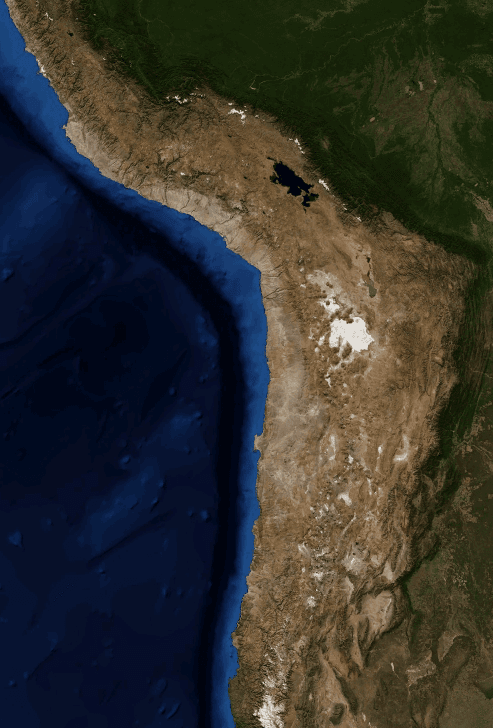
Atacama Desert
The driest non-polar desert on Earth — a high-altitude moonscape of volcanoes, geysers, salt flats, and altiplano lagoons centered on the adobe village of San Pedro de Atacama (2,400m). El Tatio's dawn geysers, Valle de la Luna's sunset, the Salar de Atacama's flamingos, and the Miscanti & Miñiques lakes round out the standard week. ALMA observatory tours and the world's clearest night skies make it a stargazer's pilgrimage. Connects overland to Uyuni.
Tours & Experiences
Browse bookable tours, activities, and day trips in Atacama Desert
📍 Points of Interest
Loading map...
At a Glance
- Pop.
- ~5K (San Pedro de Atacama)
- Timezone
- Santiago
- Dial
- +56
- Emergency
- 133 / 131
The Atacama Desert is the driest non-polar desert on Earth — some weather stations in the core have never recorded rainfall, and parts of the plateau average less than 1 mm of precipitation per year
San Pedro de Atacama sits at roughly 2,400 meters (7,900 ft) elevation, making altitude sickness a real consideration for new arrivals — the surrounding volcanoes and geysers reach 4,000–5,000 m
El Tatio Geyser Field at 4,320 m is the third-largest active geyser field in the world and the highest, with over 80 active geysers erupting most dramatically at dawn
Salar de Atacama is Chile's largest salt flat and one of the world's top lithium-mining regions — it also hosts three flamingo species and is a critical habitat for Andean wildlife
The Atacama Plateau has the clearest skies on Earth, with over 300 cloudless nights per year and virtually no light or radio pollution — it hosts ALMA, the world's most powerful radio telescope array
The region was home to the Atacameño (Lickanantay) people for thousands of years before Inca conquest in the 15th century, leaving behind fortresses, terraced villages, and a nearly extinct language called Kunza
Top Sights
Valle de la Luna (Valley of the Moon)
🌿A surreal landscape of eroded salt and clay formations sculpted by wind into ridges, caves, and dunes. The valley glows amber and violet at sunset — one of the most otherworldly scenes on the continent. Part of Los Flamencos National Reserve.
El Tatio Geysers
🌿The world's highest geyser field erupts most dramatically at dawn, when freezing air temperatures cause steam columns to billow meters into the sky. Tours depart at 4 AM to arrive for sunrise. Natural hot spring pools are available for bathing after the show.
Salar de Atacama & Laguna Chaxa
🌿Chile's largest salt flat stretches 3,000 km² of crystalline white crust. Within it, Laguna Chaxa hosts large flocks of flamingos — three species including the rare James's flamingo — feeding in vivid turquoise lagoons against a backdrop of snow-capped volcanoes.
Cejar Lagoon & Tebinquinche
🌿Hypersaline lagoons within the salt flat where visitors float effortlessly — even more buoyant than the Dead Sea. Crystal-clear turquoise water sits against white salt and volcanic peaks. Tebinquinche is the best spot for sunset reflections.
Altiplanic Lagoons: Miscanti & Miñiques
🌿Two stunning high-altitude lagoons (4,200 m) set in a volcanic landscape with deep blue water, flamingos, and the towering cones of Volcán Miscanti and Miñiques in the background. Among the most beautiful scenery in the Atacama.
Pukará de Quitor
📌A pre-Inca fortress dating to the 12th century, perched on a rocky hillside above the San Pedro River gorge. The partially restored stone walls and towers offer commanding views of the oasis, the Licancabur volcano, and the desert valley below.
ALMA Observatory & Stargazing Tours
🗼The Atacama Large Millimeter Array is the most powerful radio telescope on Earth, open for public visits on Saturdays. Even without ALMA, the Atacama offers the finest naked-eye stargazing on the planet — numerous operators run nightly tours with telescopes and laser pointer guides.
Off the Beaten Path
Valle de la Muerte at Sunrise
Also called Valle de Marte (Valley of Mars), this wind-sculpted valley of rust-red dunes and jagged ridges lies adjacent to Valle de la Luna. Most tours bring visitors at sunset — arriving at dawn reveals the dunes in fiery orange light with no crowds.
Tour groups flood Valle de la Luna at sunset but almost no one visits Valle de la Muerte in the early morning, leaving you alone in one of the most dramatic landscapes in the Andes.
Tulor Archaeological Village
The remains of a 3,000-year-old Atacameño village — one of the oldest known settlements in the region — partially buried under desert sand. Low adobe walls and pits mark what was once a thriving community. Less visited than Pukará de Quitor.
A rarely visited pre-Columbian site just 8 km from San Pedro that reveals ancient daily life in the Atacama long before the Inca arrived — almost no tourist infrastructure, just raw ruins.
Río Grande Hot Springs
A set of natural thermal pools along the Río Grande canyon, less commercialized than the Puritama hot springs that most tour operators promote. The volcanic-fed waters sit at around 32°C, surrounded by canyon walls.
Puritama hot springs charge a hefty entrance fee and get crowded with tour groups. Río Grande offers a quieter, cheaper alternative with the same mineral-rich thermal water.
San Pedro Village at Night
After tour groups return to their lodges, the adobe village of San Pedro transforms into a quiet, starlit town. The Plaza de Armas is peaceful, and the Milky Way is visible with the naked eye directly above the church tower on clear nights.
The Atacama's greatest asset — the sky — is completely free and best experienced by simply stepping outside after 9 PM on any clear night, away from any tour operator.
Machuca Andean Village
A tiny Atacameño village of 30 inhabitants at 4,000 m elevation near El Tatio, with a white adobe church and locals selling grilled llama skewers. Most El Tatio tours pass through briefly — linger longer to talk with residents.
One of the last living examples of traditional Atacameño village life, where residents still practice pre-Columbian weaving and herding, and the church has stood for centuries.
Insider Tips
Climate & Best Time to Go
Monthly climate & crowd levels
The Atacama operates on extremes. Days are intensely sunny and dry year-round — UV radiation at this altitude is among the highest on Earth. Nights drop sharply regardless of season, often below freezing at the higher elevations of El Tatio and the altiplanic lagoons. The rare rainy season ("Bolivian Winter") runs January–February, when afternoon thunderstorms can close some high-altitude routes. Humidity is near zero for most of the year.
Summer / Bolivian Winter
January - February64-82°F day / 41-54°F night
18-28°C day / 5-12°C night
Warmer days but the only period of any real precipitation. Afternoon thunderstorms can close the road to El Tatio and some altiplanic lagoon routes. The altiplano blooms with wildflowers after rains — a phenomenon called "Desierto Florido" in good years.
Autumn
March - May61-79°F day / 36-46°F night
16-26°C day / 2-8°C night
The Bolivian Winter ends and conditions clear rapidly. March and April are excellent — routes reopen, crowds thin from the December holiday peak, and the air is crystalline. Nights grow colder through May.
Winter (Dry Season)
June - August54-72°F day / 23-37°F night
12-22°C day / -5-3°C night
The most popular travel season and the coldest. Nights are frigid — sub-zero at El Tatio where geyser steam spectacles are most dramatic. Days are sunny, dry, and perfect for sightseeing. High season means accommodation prices peak in July and August.
Spring
September - November59-77°F day / 32-45°F night
15-25°C day / 0-7°C night
An excellent shoulder season. Temperatures begin warming but nights remain cool. Crowds drop after August, prices ease, and skies remain completely clear. September and October are among the best months to visit the Atacama.
Best Time to Visit
April through November represents the dry season and optimal visiting window. April-June and September-October are the ideal shoulder months — clear skies, manageable temperatures, no Bolivian Winter thunderstorms, and fewer tourists than the July-August peak. Avoid January-February if high-altitude route access is important.
Shoulder Season — Autumn (March - May)
Crowds: Low to moderateThe Bolivian Winter ends, skies clear, and the desert returns to its extreme dryness. March and April see the last possible wildflowers from summer rains. Nights cool significantly by May.
Pros
- + Clear skies after the summer rains
- + Lower accommodation prices
- + All routes open
- + Comfortable daytime temperatures
Cons
- − Nights very cold by May
- − Some roads still recovering from summer storms in March
Peak Season — Winter (June - August)
Crowds: Very high in July-AugustThe most popular season. Guaranteed clear skies, best geyser steam spectacle at El Tatio (coldest air temperatures make steam most dramatic), and the highest tourist traffic. Book accommodation well in advance for July and August.
Pros
- + Guaranteed clear skies
- + Most dramatic El Tatio geyser steam
- + Festivals (Carnaval in February, Andean New Year in June)
- + All tours running at full frequency
Cons
- − Coldest nights (sub-zero at high altitude)
- − Highest accommodation prices
- − Most crowded tour groups
- − Book far in advance
Shoulder Season — Spring (September - November)
Crowds: Moderate, dropping by NovemberOne of the best times to visit. Temperatures warm gradually, crowds ease after August, and skies remain completely clear. October is particularly excellent — warm enough for comfort, empty enough for space.
Pros
- + Excellent weather with warming temperatures
- + Fewer tourists than winter peak
- + Lower prices
- + All attractions accessible
Cons
- − Accommodation prices only slightly lower than peak
- − Shorter evenings
Bolivian Winter / Rainy Season (January - February)
Crowds: High (Chilean summer holidays)The only period of any precipitation. Afternoon thunderstorms can close high-altitude roads to El Tatio and Miscanti Lagoon. Some altiplano routes become impassable. The upside: the rare wildflower bloom and vivid green altiplano if rains are heavy.
Pros
- + Possibility of Desierto Florido wildflower bloom
- + Warm daytime temperatures
- + Vibrant altiplano with water in the lagoons
Cons
- − High-altitude road closures possible
- − Afternoon thunderstorms
- − Chilean domestic tourism peak
- − Some tours cancelled due to weather
🎉 Festivals & Events
Carnaval Atacameño
FebruaryA colorful Andean carnival blending indigenous Atacameño traditions with Catholic influences, featuring traditional music, costumes, and processions through San Pedro de Atacama.
Andean New Year (Machaq Mara / Inti Raymi)
June 21The winter solstice marks the indigenous Andean New Year. Celebrated at Pukará de Quitor and other ancient sites with ceremonies, offerings, and music at dawn — a deeply meaningful cultural event.
Fiesta de San Pedro
June 29The patron saint festival of San Pedro de Atacama with religious processions, traditional dance, and community celebrations in the village plaza.
Safety Breakdown
Very Safe
out of 100
The Atacama is one of the safest travel destinations in South America. San Pedro de Atacama is a small, tourist-oriented village with minimal crime. The primary risks are environmental rather than human — altitude sickness, extreme UV radiation, dehydration, and hypothermia at dawn excursions are the real hazards. Choose licensed tour operators for high-altitude excursions.
Things to Know
- •Acclimatize for at least 24 hours in San Pedro before heading to high-altitude sites like El Tatio (4,320 m) or Miscanti Lagoon (4,200 m) — altitude sickness can be severe
- •Apply SPF 50+ sunscreen and wear UV-blocking sunglasses at all times — UV index at this elevation regularly exceeds 15 (extreme), the highest category
- •Carry at least 2 liters of water on any excursion — the dry air causes rapid dehydration, often without noticeable thirst
- •Layer heavily for El Tatio dawn tours — temperatures at the geyser field at 5 AM can be -10°C even in summer; gloves, hat, and thermal layers are essential
- •Book tours only with licensed operators registered with SERNATUR (Chile's national tourism service) — avoid unmarked minibuses offering cut-rate prices for high-altitude routes
- •Do not drive a rental car to El Tatio or Laguna Miscanti without 4WD and high-clearance — roads are unpaved and can be washed out after summer storms
Natural Hazards
Emergency Numbers
Police (Carabineros)
133
Fire Department
132
Ambulance / Medical Emergency
131
CONAF (National Park Emergency)
+56 55 2851959
San Pedro de Atacama Municipal
+56 55 2851002
Costs & Currency
Where the money goes
USD per dayQuick cost estimate
Customize per category →Estimates based on regional averages. Flight prices vary by season and airline.
budget
$50-75
Hostel dorm, self-catering meals, 1 shared group tour per day, bicycle rental for nearby sites
mid-range
$120-200
Private room in guesthouse or small hotel, restaurant meals, 1-2 tours daily, stargazing excursion
luxury
$300+
Boutique eco-lodge or high-end hotel, private guided tours, fine dining, spa, private vehicle
Typical Costs
| Item | Local | USD |
|---|---|---|
| AccommodationHostel dorm bed | CLP 15,000-25,000 | $16-27 |
| AccommodationMid-range guesthouse (double) | CLP 70,000-130,000 | $75-140 |
| AccommodationBoutique eco-lodge (double) | CLP 180,000-350,000 | $190-370 |
| FoodBasic lunch menu at local restaurant | CLP 8,000-12,000 | $8-13 |
| FoodDinner at mid-range restaurant | CLP 14,000-22,000 | $15-23 |
| FoodCoffee or tea | CLP 2,500-4,000 | $2.50-4 |
| FoodSupermarket groceries (self-catering) | CLP 6,000-10,000 | $6-11 |
| ToursValle de la Luna sunset tour (group) | CLP 18,000-28,000 | $19-30 |
| ToursEl Tatio geysers (group tour) | CLP 35,000-55,000 | $37-58 |
| ToursCejar Lagoon & salt flat tour | CLP 25,000-40,000 | $26-43 |
| ToursStargazing tour with telescope | CLP 18,000-30,000 | $19-32 |
| ToursMiscanti & Miñiques lagoons | CLP 30,000-50,000 | $32-53 |
| TransportBicycle rental (full day) | CLP 8,000-14,000 | $8-15 |
| TransportBus to Calama (1.5 hr) | CLP 3,000-5,000 | $3-5 |
💡 Money-Saving Tips
- •Book shared group tours rather than private — the cost per person is 3-4x lower and the experience is nearly identical
- •Bring all cash from Calama — ATMs in San Pedro run dry frequently and you may find yourself without pesos for tours
- •Buy groceries at the small supermarkets on Caracoles Street for self-catering breakfasts and lunches
- •Visit Valle de la Muerte by bicycle — the road is accessible on two wheels and you avoid the tour van fee entirely
- •Pukará de Quitor is only 3 km from the village — walk or cycle rather than booking a tour
- •The night sky is completely free — step outside after 9 PM for the finest naked-eye stargazing on Earth without paying for a tour
- •Travel in shoulder season (April-June or September-October) for accommodation prices 20-40% lower than the July-August peak
- •Ask hostels about shared transport to Calama airport rather than booking a private transfer
Chilean Peso
Code: CLP
Approximately CLP 900-950 per 1 USD (as of early 2026). ATMs in San Pedro de Atacama are scarce, frequently out of cash, and have low daily withdrawal limits — bring sufficient pesos from Calama before arriving. The BancoEstado and Banco de Chile ATMs on Caracoles Street are the main options and are often empty by midday. USD cash is accepted at some tour agencies and hotels but at poor exchange rates.
Payment Methods
Cash is essential in the Atacama. Most restaurants, tour agencies, and small shops prefer or require Chilean pesos. A growing number of mid-range hotels and tour operators accept credit cards, but often add a 3-5% surcharge. Stock up on cash in Calama at the airport or city center banks before the 1.5-hour drive to San Pedro.
Tipping Guide
10% service charge (propina) is sometimes included in the bill — check before adding more. If not included, 10% is standard.
CLP 3,000-5,000 (~$3-5 USD) per person per tour is appreciated for good service. For multi-day Bolivia crossings, CLP 10,000-15,000 per person is typical.
Round up the fare or add CLP 1,000-2,000 for helpful drivers on transfers from Calama airport.
Not expected but CLP 2,000-3,000 for cleaning staff is a kind gesture, particularly in hostels.
CLP 3,000-5,000 per person for a nightly astronomy tour guide is appropriate.
How to Get There
✈️ Airports
El Loa Airport, Calama(CJC)
100 km northwest of San Pedro de AtacamaShared transfer vans (transfer empresas) run direct to San Pedro for $15-25 USD per person and meet arriving flights. Private taxis cost $60-80 USD. The transfer takes approximately 1.5 hours on a paved highway. Book transfers in advance as the airport has limited services.
✈️ Search flights to CJC🚌 Bus Terminals
San Pedro de Atacama Bus Terminal (Licancabur Street)
Tur Bus and Pullman Bus operate services to Calama (1.5 hr, $3-5 USD), Antofagasta (5 hr, $15-25 USD), and onward connections to Santiago (24 hr overnight). Buses to Calama connect with flights at CJC airport. For Bolivia crossings, several operators offer 3-day Uyuni overland tours departing from San Pedro — the most popular route into Bolivia from the Atacama.
Getting Around
San Pedro de Atacama village is small enough to walk in 15 minutes, but virtually all major attractions lie 15–120 km away on unpaved or semi-paved desert roads. Most visitors rely on guided tour vans — this is the norm and often the safest option for remote high-altitude routes. Rental cars give flexibility for those comfortable with 4WD driving in remote terrain.
Guided Tour Vans
$30-100 USD per tour depending on destination and group sizeThe default way to reach El Tatio, Salar de Atacama, Miscanti Lagoon, and most other sites. Tour operators depart from Caracoles Street in San Pedro and include transport, guide, and usually entrance fees in the price. Tours typically carry 10-15 passengers.
Best for: El Tatio geysers, Salar de Atacama, Miscanti & Miñiques, Cejar Lagoon, Valle de la Luna
Rental Car (4WD recommended)
$80-150 USD/day for 4WD; standard sedans available for paved routes onlySeveral agencies in San Pedro rent 4WD vehicles including Toyota Hilux pickups and SUVs. A 4WD with high clearance is essential for El Tatio and the altiplanic routes. Gives freedom to set your own schedule and reach sites at off-peak hours.
Best for: Independent travelers comfortable with remote desert driving; Valle de la Luna at non-tour times
Bicycle
$8-15 USD/day for standard bikeSan Pedro has several bicycle rental shops. Bikes are a great way to reach Pukará de Quitor (3 km), Valle de la Muerte (11 km on partly paved road), and the edge of the salt flat. Not suitable for El Tatio or high-altitude routes.
Best for: Pukará de Quitor, Tulor ruins, Valle de la Muerte, short desert rides from the village
Walking in San Pedro Village
FreeThe village center — Caracoles Street, the Plaza de Armas, the church, and the Gustavo Le Paige archaeological museum — are all walkable. The village itself is flat, compact, and pleasant on foot at altitude.
Best for: Village exploration, restaurants, shops, the church, the archaeological museum
🚶 Walkability
San Pedro de Atacama village is fully walkable and compact. All services, restaurants, and tour agencies on Caracoles Street are within a 10-minute walk of any accommodation. However, all major natural attractions require motorized transport — the desert is too vast and the distances too great for on-foot exploration beyond the village limits.
Travel Connections

Salar de Uyuni, Bolivia
The world's largest salt flat and Bolivia's most iconic landscape. The 3-day overland crossing from San Pedro is one of South America's great adventures, passing geysers, colored lagoons, flamingos, and the blinding white salt at 3,650 m.
Calama
The nearest city to San Pedro and gateway to the Atacama. Home to Chuquicamata, the world's largest open-pit copper mine — tours are available. Calama is where most travelers connect flights and stock up on cash before heading to San Pedro.

Antofagasta
A busy Pacific port city and the capital of Antofagasta Region. The Hand of the Desert sculpture, historic British quarter, and La Portada natural arch make it worth a stop. Has better ATMs, supermarkets, and international flights than Calama.

Santiago
Chile's capital and main international hub. Most travelers to the Atacama pass through Santiago's Arturo Merino Benítez airport. The city itself offers excellent food, wine, Andean viewpoints from Cerro San Cristóbal, and the bohemian Bellavista neighborhood.
Entry Requirements
Chile offers visa-free entry for citizens of most countries for stays of up to 90 days. Entry to the Atacama region is via Calama's El Loa Airport (CJC) or overland from Bolivia through the San Pedro border crossing. Passport must be valid for the duration of your intended stay. Chile issues a Tarjeta de Turismo (tourist card) on arrival — keep it safe as it must be surrendered on departure.
Entry Requirements by Nationality
| Nationality | Visa Required | Max Stay | Notes |
|---|---|---|---|
| US Citizens | Visa-free | 90 days | Visa-free entry. Passport valid for duration of stay. Tourist card issued on arrival — do not lose it. |
| UK Citizens | Visa-free | 90 days | Visa-free. Tourist card issued on arrival and collected on departure. |
| EU Citizens | Visa-free | 90 days | Most EU nationals enter visa-free for 90 days with standard tourist card. |
| Australian Citizens | Visa-free | 90 days | Visa-free. Note: Australian citizens historically paid a reciprocity fee at the Santiago airport — check current requirements before travel. |
| Indian Citizens | Yes | 90 days | Visa required before arrival. Apply at the Chilean consulate. Processing takes 15-30 business days. |
| Chinese Citizens | Yes | 90 days | Visa required. Apply at the Chilean consulate in Beijing, Shanghai, or Guangzhou. |
Visa-Free Entry
Tips
- •Keep your Tarjeta de Turismo (tourist card) in your passport throughout your stay — losing it causes significant delays at departure
- •If crossing overland from Bolivia via the San Pedro border, ensure your Bolivian exit stamp and Chilean entry stamp are both correctly recorded
- •The 90-day stay cannot be extended inside Chile — you must exit and re-enter for a new period
- •Bring a photocopy of your passport when visiting remote sites — original should be locked in your hotel safe
- •Chile has strict agricultural biosecurity — do not bring fresh fruit, vegetables, meat, or dairy products through customs; fines are substantial
Shopping
Shopping in San Pedro centers on Caracoles Street, the village's main tourist thoroughfare. Artisan goods reflect the region's Atacameño heritage — alpaca textiles, copper, lapis lazuli, and ceramics dominate. Prices are higher than in Calama or Santiago due to the remote location, but quality at artisan cooperatives is genuine. Bargaining is acceptable at market stalls but not in established shops.
Caracoles Street Artisan Shops
tourist shopsThe main street of San Pedro is lined with small boutiques and artisan galleries selling textiles, jewelry, ceramics, and souvenirs. Quality ranges from mass-produced trinkets to genuine handcrafted pieces — inspect carefully.
Known for: Alpaca wool scarves and ponchos, copper jewelry, lapis lazuli pieces, hand-painted pottery
Plaza de Armas Artisan Market
open-air marketThe central square hosts a small permanent artisan market where local craftspeople sell directly to visitors. Finds here tend to be more authentic and modestly priced than the Caracoles boutiques.
Known for: Handwoven textiles, Atacameño weavings, copper ornaments, dried wildflowers from the altiplano
Likan Antay Cooperatives
artisan cooperativesCommunity cooperatives run by Atacameño (Lickanantay) artisans offer authentic regionally made goods at fair prices. Purchasing here directly supports indigenous communities.
Known for: Traditional Atacameño weaving, natural-dye textiles, hand-carved desert stone, ceremonial reproductions
🎁 Unique Souvenirs to Look For
- •Alpaca wool ponchos and scarves in natural Andean dyes — the highest quality come from cooperatives, not souvenir shops
- •Lapis lazuli jewelry — Chile is the world's largest producer of this vivid blue stone, mined in the Atacama region
- •Copper work including jewelry, bowls, and decorative pieces from local artisans
- •Atacameño pottery hand-painted with pre-Columbian geometric designs
- •Dried altiplano wildflowers and botanical products from the high desert
- •Artisan sea salt from the Salar de Atacama — sold in the village and used by top Chilean restaurants
Language & Phrases
Spanish is the primary language throughout Chile and the Atacama. Kunza, the ancestral language of the Atacameño (Lickanantay) people, is nearly extinct with only a handful of speakers remaining, but you will encounter Kunza words on signage, place names, and in cultural contexts around San Pedro. Chilean Spanish is fast-paced with swallowed consonants — locals will appreciate any effort to use Spanish.
| English | Translation | Pronunciation |
|---|---|---|
| Hello | Hola | OH-lah |
| Good morning | Buenos días | BWEH-nos DEE-as |
| Thank you | Gracias | GRAH-see-as |
| Please | Por favor | por fah-VOR |
| Yes / No | Sí / No | see / noh |
| How much does it cost? | ¿Cuánto cuesta? | KWAHN-toh KWES-tah? |
| Where is...? | ¿Dónde está...? | DON-deh es-TAH...? |
| I have altitude sickness | Tengo mal de altura | TEN-go mahl deh al-TOO-rah |
| Water, please | Agua, por favor | AH-gwah, por fah-VOR |
| How far is it? | ¿A qué distancia está? | ah keh dees-TAN-see-ah es-TAH? |
| Is the road open? | ¿Está abierto el camino? | es-TAH ah-BYER-toh el kah-MEE-noh? |
| Hello (Kunza greeting) | Lickanantay | leek-kah-NAN-tay (name of the Atacameño people — use respectfully) |