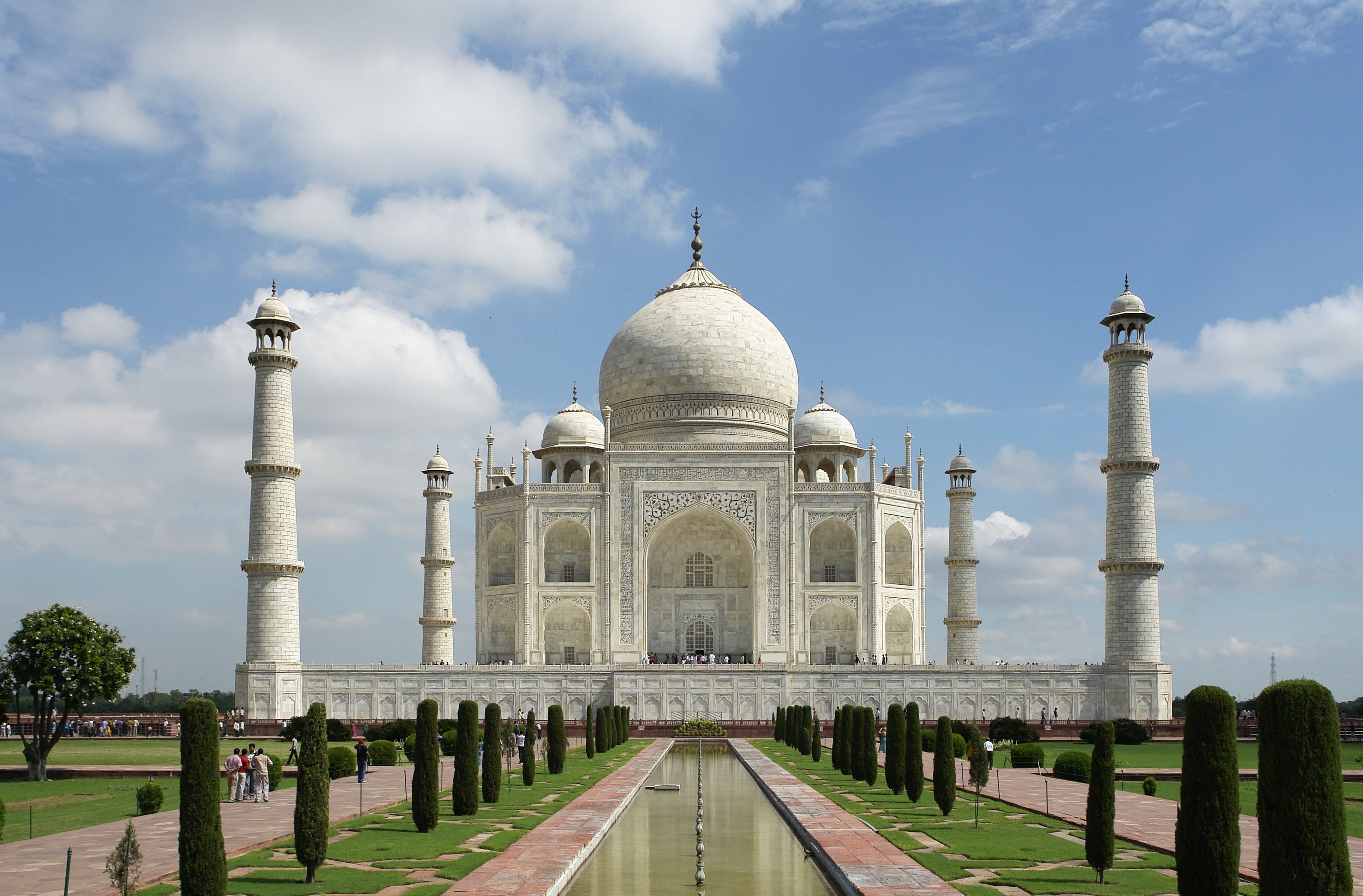
Agra
Home to the Taj Mahal — the white-marble Mughal mausoleum Shah Jahan built for Mumtaz Mahal between 1632-1653, and one of the planet's most familiar buildings. UNESCO 1983. Agra Fort + the Baby Taj round out the trio of Mughal masterpieces; Fatehpur Sikri 40km west adds another UNESCO site for day-trippers. Sits on the Golden Triangle between Delhi (200km north) and Jaipur (240km southwest). The Gatimaan Express does Delhi-Agra in 1h40m, India's fastest train. Air pollution and aggressive touts are real downsides.
Tours & Experiences
Browse bookable tours, activities, and day trips in Agra
📍 Points of Interest
Loading map...
At a Glance
- Pop.
- 1.7M (city), 2.1M (metro)
- Timezone
- Kolkata
- Dial
- +91
- Emergency
- 112
The Taj Mahal was built between 1632 and 1653 by Mughal Emperor Shah Jahan as a mausoleum for his beloved wife Mumtaz Mahal, who died in childbirth. An estimated 20,000 artisans labored over two decades to complete it
Agra sits on the banks of the Yamuna River in the northern Indian state of Uttar Pradesh, about 200 km south of New Delhi — a 2-hour journey on the Gatimaan Express, the fastest train in India
The city hosts three UNESCO World Heritage Sites: the Taj Mahal (1983), Agra Fort (1983), and the abandoned Mughal capital of Fatehpur Sikri (1986), located 40 km to the west
Agra receives roughly 7–8 million visitors a year, making the Taj Mahal one of the most visited monuments on earth. Sunrise entry is the most coveted slot — a golden glow reflects off the white marble into the front pool
Agra is one vertex of India's Golden Triangle tourist circuit, which links New Delhi (200 km north) and Jaipur (240 km southwest) — most visitors do all three cities in 5–7 days
The city is famous for petha, a translucent white sweet made from ash gourd, as well as Mughlai kebabs and biryani with roots in the imperial kitchens of the Mughal court
Top Sights
Taj Mahal
📌The supreme monument of Mughal architecture and one of the New Seven Wonders of the World. The ivory-white marble mausoleum shimmers at sunrise and glows amber at dusk. Book the earliest entry slot and add the ₹200 mausoleum ticket to step inside the inner tomb.
Agra Fort
🗼A massive red sandstone fortress on the Yamuna River, begun by Emperor Akbar in 1565 and expanded by successive Mughal rulers. Within its walls are palaces, mosques, audience halls, and a terrace from which Shah Jahan could see the Taj Mahal during his final years of house arrest.
Mehtab Bagh
📌A Mughal-era garden directly across the Yamuna River from the Taj Mahal, offering the best unobstructed sunset and full moon views of the monument without the crowds inside the complex. The garden's octagonal pool once mirrored the Taj perfectly before the river shifted.
Itimad-ud-Daulah (Baby Taj)
📌The jewel-box mausoleum of Mirza Ghiyas Beg, grandfather of Mumtaz Mahal, built 1622–28. Often called the Baby Taj, it was the first Mughal structure built entirely in white marble with intricate pietra dura inlay — a technique later used on a grand scale at the Taj Mahal.
Akbar's Tomb, Sikandra
📌The monumental sandstone tomb of Emperor Akbar, the greatest of the Mughal rulers, located 10 km northwest of Agra in Sikandra. The multi-tiered complex is surrounded by sprawling gardens populated by langur monkeys and deer.
Fatehpur Sikri
🗼An abandoned Mughal capital 40 km west of Agra, built by Emperor Akbar in 1571 and deserted within 14 years — possibly due to a water shortage. The perfectly preserved red sandstone city includes the Buland Darwaza gateway, Jama Masjid, and the stunning Panch Mahal palace. UNESCO 1986.
Kinari Bazaar
📌Agra's oldest market, threading through narrow lanes of the old city near the Jama Masjid. Stalls overflow with marble inlay goods, textiles, zardozi embroidery, and petha sweets. The chaos, color, and aroma make it a sensory immersion in old Agra.
Off the Beaten Path
Mehtab Bagh at Sunset
While thousands crowd the Taj Mahal complex at dusk, a handful of visitors slip across the river to Mehtab Bagh garden and watch the Taj turn gold and pink from the outside. Tickets are a fraction of the Taj entry price.
The reflection of the Taj in the long pool at Mehtab Bagh, with no other tourists in frame, is the photograph most people leave Agra without taking.
Taj Mahal Full Moon Viewing
The Archaeological Survey of India opens the Taj Mahal on five nights each month around the full moon (excluding Fridays and Ramadan). Entry is limited to 400 people per 30-minute slot, and the white marble glowing silver under the full moon is an experience unlike any daytime visit.
Only a tiny fraction of the Taj's millions of annual visitors ever see it by moonlight — booking ahead is essential.
Subhash Emporium (Marble Inlay Workshop)
One of several family-run workshops near the Taj where artisans practice the pietra dura (parchin kari) technique used on the Taj Mahal itself — setting semi-precious stones into white marble using tools that have not changed in 400 years.
Watching artisans chip and set lapis lazuli, malachite, and carnelian into marble by hand is a direct link to the craftspeople who built the Taj. Buying directly from workshops ensures fair wages.
Devansh Petha Store
Agra's most famous sweet, petha, is made from ash gourd (white pumpkin) cooked in sugar syrup until translucent. The old city has dozens of petha shops, but small family-run stores near Noori Darwaza carry angoori (tiny grape-shaped) and kesar (saffron) varieties rarely found elsewhere.
Petha has been made in Agra since the Mughal era — legend says it was created to feed the 20,000 workers building the Taj Mahal.
Ram Bagh (Aram Bagh)
The oldest surviving Mughal garden in India, laid out by Emperor Babur around 1526 before his death. Largely unvisited by tourists, it sits 4 km north of the Taj Mahal on the Yamuna River bank — a quiet, overgrown counterpoint to the immaculate Taj gardens.
Standing in the garden where the Mughal dynasty began, completely alone, while the Taj Mahal sits a short walk downriver — this is Agra without the crowds.
Insider Tips
Climate & Best Time to Go
Monthly climate & crowd levels
Agra has a semi-arid continental climate with extreme seasonal variation. Winters are cool and hazy, summers are brutally hot and dry before the monsoon breaks in July. The most comfortable and popular months to visit are October through March. Note that winter fog (December–January) sometimes delays morning train services from Delhi and can obscure Taj Mahal views.
Winter
December - February41-77°F
5-25°C
Cool days and cold nights with thick morning fog common in January. The fog can veil the Taj Mahal entirely until mid-morning — disappointing for sunrise visits. Afternoons are pleasant and clear. Pack layers.
Spring
March - May59-104°F
15-40°C
Temperatures rise rapidly through April into May when the heat becomes fierce. March is still pleasant; April and May are survivable only with early morning visits and afternoon rest. The Taj marble becomes uncomfortably hot to touch in May.
Monsoon
June - September77-104°F
25-40°C
The southwest monsoon brings relief from the scorching pre-monsoon heat in July. Humidity is high and rain comes in heavy bursts. The Yamuna swells, surrounding gardens turn green, and the Taj Mahal is often photographed against dramatic monsoon skies.
Post-Monsoon
October - November57-90°F
14-32°C
The finest season in Agra. Air washed clean by the monsoon, gardens lush, and temperatures dropping to a comfortable range. October and November have the clearest skies for Taj Mahal photography and the lowest crowds of the cool-season.
Best Time to Visit
October through March offers the most comfortable temperatures and clearest skies. October and November are ideal — post-monsoon freshness, gardens still green, and fewer crowds than peak December–January. Sunrise visits to the Taj Mahal are recommended year-round for the soft light and thinner crowds. Full moon nights (5 per month, excluding Fridays) offer the unmissable moonlit Taj viewing.
Winter (October - February)
Crowds: High — December through February is peak season; book hotels well in advancePeak tourist season. Temperatures pleasant by day, cold at night. Dense fog in December and January can obscure the Taj in the early morning — check forecasts. Full moon nights are coldest but magical.
Pros
- + Most comfortable temperatures
- + Clearest days for photography
- + Taj Mahal full moon viewing available
- + All sights accessible
Cons
- − Peak accommodation prices
- − Heaviest tourist crowds
- − Dense fog in Jan can ruin sunrise visits
- − Train delays due to fog common
Spring (March - May)
Crowds: Moderate in March; low in MayMarch is still pleasant. By April the heat is building fast and May is brutally hot with temperatures exceeding 40°C. Early morning visits are essential; afternoons are for air-conditioned hotels.
Pros
- + Lower hotel prices from April
- + Thinner crowds in May
- + Sunrise visits still spectacular
- + Clear blue skies for photography
Cons
- − Extreme heat in April–May
- − Marble Taj steps too hot to touch barefoot by 10am in May
- − Risk of heat exhaustion if not careful
Monsoon (June - September)
Crowds: Very low — fewest foreign visitors of the yearHot, humid, and wet. The Taj Mahal photographed against dramatic storm clouds is spectacular, and the gardens are lush. Flooding can affect riverside areas. Budget travelers willing to handle the heat find the lowest prices.
Pros
- + Lowest prices of the year
- + Dramatic monsoon sky photography
- + Gardens at their greenest
- + Fewest crowds inside monuments
Cons
- − Extreme heat and humidity
- − Flash flooding possible
- − Some days of heavy continuous rain
- − Mosquitoes peak
Post-Monsoon (October - November)
Crowds: Moderate and building through NovemberThe sweet spot. Monsoon has cleared the air, temperatures are pleasant (20–32°C by day), and the pre-peak-season crowds have not yet arrived. November brings some of the best photography conditions of the year at the Taj.
Pros
- + Best air quality of the year
- + Comfortable temperatures
- + Lush post-monsoon greenery
- + Pre-peak hotel rates
Cons
- − Shorter days than summer
- − Fog can start arriving in late November
- − Crowds begin building toward December
🎉 Festivals & Events
Taj Mahotsav
February 18–27A 10-day cultural festival held in Shilpgram crafts village near the Taj Mahal, featuring classical music, dance, craft demonstrations, and food from across India. One of the largest craft fairs in northern India.
Holi
March (full moon)The festival of colors transforms Agra into an explosion of dye powder and water. Old city neighborhoods see the most vibrant celebrations. Protect camera gear and wear clothes you don't mind ruining.
Diwali
October / NovemberThe festival of lights sees Agra illuminated with oil lamps, fireworks, and sparklers. The Taj Mahal area restricts fireworks to protect the marble, but the city celebrations are spectacular. Note that the Taj is closed for moonlight viewing during Diwali week.
Safety Breakdown
Exercise Caution
out of 100
Agra is generally safe for tourists in terms of violent crime, but it has a well-documented problem with scams, touts, and aggressive tricksters targeting visitors around the Taj Mahal and railway stations. Gem scams (being taken to an overpriced shop by a "helpful" stranger), fake guides, bogus ticket counters, and rickshaw drivers who take you to commission-paying shops instead of your destination are the most common hazards. Solo women travelers report experiencing harassment and should exercise additional caution after dark. Air pollution is a serious health concern, particularly in winter.
Things to Know
- •Arrange hotel pickup from Agra Cantt station in advance — the auto-rickshaws and taxis outside the station are a gauntlet of touts
- •Only use government-registered prepaid taxi counters or Uber/Ola for transport — never accept unsolicited offers from strangers claiming your hotel is closed or moved
- •Buy Taj Mahal and Agra Fort tickets only from the official ASI counters or online at asi.payumoney.com — touts sell fake tickets near the gates
- •Women travelers should stick to well-lit public areas after dark and travel in pairs where possible, especially around the old city
- •Wear an N95 mask during high-pollution days in winter — Agra's AQI regularly hits hazardous levels from October to February
- •Eat at restaurants in hotels or those with visible kitchen hygiene standards — street food is part of the experience but choose busy, freshly cooked stalls
Natural Hazards
Emergency Numbers
Unified Emergency (Police/Fire/Medical)
112
Police
100
Ambulance
102
Fire
101
Tourist Helpline (India Tourism)
1800-111-363
Costs & Currency
Where the money goes
USD per dayQuick cost estimate
Customize per category →Estimates based on regional averages. Flight prices vary by season and airline.
budget
$20-35
Hostel or budget guesthouse, dhal-roti meals at dhabas, auto-rickshaw transport, self-guided sightseeing
mid-range
$60-120
Comfortable hotel with AC, restaurant meals, Uber/Ola transport, licensed guide for Taj, Agra Fort, and Baby Taj
luxury
$250+
ITC Mughal or Oberoi Amarvilas (views of Taj from room), fine dining, private car and guide, moonlight Taj viewing
Typical Costs
| Item | Local | USD |
|---|---|---|
| AttractionsTaj Mahal entry (foreigners) | ₹1300 | ~$15.50 |
| AttractionsTaj Mahal inner mausoleum surcharge | ₹200 | ~$2.40 |
| AttractionsAgra Fort entry (foreigners) | ₹650 | ~$7.75 |
| AttractionsFatehpur Sikri entry (foreigners) | ₹610 | ~$7.25 |
| AttractionsTaj Mahal full moon viewing | ₹750 | ~$9 |
| AccommodationHostel / budget guesthouse | ₹500–1000 | $6–12 |
| AccommodationMid-range hotel (AC double) | ₹2500–5000 | $30–60 |
| AccommodationLuxury hotel | ₹10000+ | $120+ |
| FoodThali at dhaba | ₹150–300 | $1.80–3.60 |
| FoodMughlai restaurant meal | ₹400–800 | $5–10 |
| FoodBox of petha sweets | ₹100–200 | $1.20–2.40 |
| TransportAuto-rickshaw short hop | ₹50–150 | $0.60–1.80 |
| TransportUber/Ola across city | ₹100–250 | $1.20–3 |
| TransportTrain Delhi–Agra (chair car) | ₹670–750 | $8–9 |
💡 Money-Saving Tips
- •Buy a composite ticket at Agra Fort that includes Agra Fort, Fatehpur Sikri, Akbar's Tomb, Baby Taj, and Ram Bagh — cheaper than paying separately for each
- •Taj Mahal entry is free for children under 15 — no surcharge applies
- •Eat at hotel rooftop restaurants in Taj Ganj for Taj views at modest prices — food quality is consistent and significantly safer than random street stalls
- •Book Gatimaan or Shatabdi train tickets at least 2–3 weeks ahead on irctc.co.in — tatkal (last-minute) fares are double
- •Visit Mehtab Bagh at sunset instead of (or in addition to) the Taj at sunset — the view is arguably better and the ticket costs a fraction
- •The ASI (Archaeological Survey) ticket office at the Taj's south gate closes 30 min before the monument — buy online to avoid the queue
- •Haggle hard in all bazaars — opening prices for marble goods are typically 3–5 times the fair rate
- •Travel in October–November for the best combination of weather, clear skies, and pre-peak-season hotel rates
Indian Rupee
Code: INR
1 USD is approximately ₹84 (as of early 2026). ATMs are widely available at banks in Sadar Bazaar, near the railway station, and at hotels. International cards work at most hotel ATMs. Inform your bank before travel to avoid blocks. USD and EUR can be exchanged at Thomas Cook or authorized money changers — avoid street changers.
Payment Methods
Cash is widely necessary in Agra — bazaars, auto-rickshaws, and small restaurants are cash-only. UPI (Unified Payments Interface) digital payments via QR code are increasingly accepted even at small vendors. Major credit cards accepted at hotels and upscale restaurants. Carry a mix of ₹100 and ₹500 notes.
Tipping Guide
10% is customary at sit-down restaurants. No tipping expected at dhabas (roadside eateries) — rounding up is appreciated.
₹200–500 (~$2.50–6) for a half-day guide. Licensed Archaeological Survey of India guides charge fixed rates; tip on top if exceptional.
₹100–300 (~$1.20–3.60) per day for car drivers on a full-day sightseeing itinerary.
₹50–100 per bag for porters. ₹50–100 per day for housekeeping at mid-range and luxury properties.
No tipping expected, but rounding up to the next ₹50 is a kind gesture after a good ride.
How to Get There
✈️ Airports
Agra Airport (Pandit Deen Dayal Upadhyay Airport)(AGR)
7 km from city centerPrepaid taxi counters outside arrivals charge ₹300–500 (~$4–6) to the Taj Mahal area. Uber/Ola are also available. Limited domestic routes — mainly seasonal or charter flights. Check current schedules as connectivity changes frequently.
✈️ Search flights to AGRIndira Gandhi International Airport, Delhi(DEL)
200 km northMost international visitors fly into Delhi. From IGI Airport take the Delhi Metro to New Delhi or Hazrat Nizamuddin station, then board the Gatimaan or Shatabdi Express to Agra Cantt (total journey approximately 2.5–3 hr). Pre-book train tickets on irctc.co.in.
✈️ Search flights to DEL🚆 Rail Stations
Agra Cantt (Agra Cantonment) Railway Station
The main station for tourist trains from Delhi and Jaipur. Gatimaan Express (12049/12050) is the fastest: Delhi Hazrat Nizamuddin to Agra Cantt in 1 hr 40 min (₹750 chair car, ₹1500 executive). Shatabdi Express (12001/12002) from New Delhi takes about 2 hr (₹670–1280). Taj Express (12279/12280) is a slower day train. Book at irctc.co.in — foreigner quota seats exist. Station touts are aggressive; use prepaid taxi counters inside.
Agra Fort Railway Station
Smaller station nearer to the Taj Mahal — some slower passenger trains stop here. Useful for catching certain services to Rajasthan. Less convenient overall than Agra Cantt.
🚌 Bus Terminals
ISBT Agra (Idgah Bus Terminal)
Government (UPSRTC) and private buses connect Agra to Delhi (3–5 hr, ₹200–400), Jaipur (5–6 hr, ₹300–500), and other Uttar Pradesh cities. Buses are cheaper than trains but slower and less comfortable. Deluxe/AC Volvo buses on the Delhi route are the best bus option.
Getting Around
Agra's main sights are spread several kilometers apart across a city of 1.7 million people with heavy traffic and no metro system. Walking between attractions is generally impractical. Auto-rickshaws and app-based taxis are the main options for tourists. The area immediately around the Taj Mahal (within 500 m) is a low-emission zone where only electric vehicles and non-motorized transport are permitted.
Auto-Rickshaw
₹50–150 (~$0.60–1.80) for short hops; ₹400–600 (~$5–7) for a full-day tourThree-wheeled auto-rickshaws are the most common tourist transport. Bargain hard before getting in and agree on a fixed round-trip price if doing multiple sights. Expect aggressive touts at railway stations.
Best for: Short hops around Taj Ganj, getting to the Taj from nearby hotels
Uber / Ola
₹100–300 (~$1.20–3.60) for most tourist journeysApp-based taxis (Uber and Ola both operate in Agra) are significantly more reliable than hailing street cabs. Fares are metered and transparent. Pickup near the Taj Mahal low-emission zone may require a short walk to a legal pickup point.
Best for: Reliable metered transport between sights, airport, and railway station
Cycle Rickshaw
₹20–80 (~$0.25–1) within Taj Ganj areaPedal-powered rickshaws are the preferred transport inside the Taj Ganj pedestrian zone and surrounding lanes. Slower but atmospheric and zero-emission. Negotiate price firmly before boarding.
Best for: Exploring Taj Ganj, moving between the Taj Mahal and nearby restaurants and hotels
Hotel Transfer / Private Car
₹1500–3000 (~$18–36) for a full-day AC car with driverMid-range and luxury hotels arrange AC car transfers with trusted drivers for full-day sightseeing tours. More expensive but eliminates tout hassle and is worth it for multi-site days.
Best for: Full-day trips combining Taj Mahal, Agra Fort, Baby Taj, Mehtab Bagh, and Fatehpur Sikri
Walking
FreeWalking is only practical within the Taj Ganj neighborhood (the lanes immediately surrounding the Taj Mahal south gate area) and within individual monument complexes. Traffic, heat, and distances make walking between major sights impractical.
Best for: Exploring Taj Ganj lanes, Kinari Bazaar, within monument complexes
🚶 Walkability
Low. Agra's major sights are 3–10 km apart across a chaotic city with minimal footpaths. The Taj Ganj neighborhood and old city lanes reward on-foot exploration, but plan on using transport for all inter-site movement.
Travel Connections

Delhi
India's sprawling capital combines Mughal monuments (Red Fort, Humayun's Tomb, Qutub Minar), colonial architecture, chaotic bazaars, and a world-class food scene. The logical starting or ending point for any Golden Triangle trip.

Jaipur
The Pink City, capital of Rajasthan, dazzles with the Amber Fort, Hawa Mahal palace of winds, City Palace, and vibrant bazaars selling jewelry, textiles, and blue pottery. Completes the Golden Triangle circuit.

Fatehpur Sikri
Emperor Akbar's ghost capital, perfectly preserved in red sandstone and utterly unlike any other Mughal site. Combine with the morning Taj Mahal visit for a full day of UNESCO history.
Bharatpur — Keoladeo National Park
A former royal duck-hunting reserve turned UNESCO-listed bird sanctuary (1985), hosting over 370 species including migratory Siberian cranes in winter. An easy half-day detour combined with Fatehpur Sikri.
Entry Requirements
India requires a visa for virtually all foreign nationals. The India e-Visa (eTV) is available to citizens of approximately 170 countries and can be applied for online at indianvisaonline.gov.in. There is no visa on arrival. Always verify the current rules before travel as India's visa policy is updated regularly. Entry is most commonly through Indira Gandhi International Airport (DEL) in New Delhi, 200 km from Agra.
Entry Requirements by Nationality
| Nationality | Visa Required | Max Stay | Notes |
|---|---|---|---|
| US Citizens | Yes | 30 days / 1 year / 5 years (e-Visa options) | Tourist e-Visa available online. 30-day single-entry ~$25; 1-year double-entry ~$40; 5-year multiple-entry ~$80. Apply at least 4 business days before travel. Passport must have 2 blank pages and 6 months validity. |
| UK Citizens | Yes | 30 days / 1 year / 5 years (e-Visa options) | Tourist e-Visa available online. Same fee structure as US citizens. Apply at least 4 business days before travel. |
| EU Citizens | Yes | 30 days / 1 year / 5 years (e-Visa options) | Most EU nationals eligible for tourist e-Visa. Fees vary by nationality. Check indianvisaonline.gov.in. |
| Australian Citizens | Yes | 30 days / 1 year / 5 years (e-Visa options) | Tourist e-Visa available online. Same fee structure and process as US/UK. |
| Canadian Citizens | Yes | 30 days / 1 year / 5 years (e-Visa options) | Tourist e-Visa available online at indianvisaonline.gov.in. |
| Pakistani / Chinese Citizens | Yes | Varies | Citizens of Pakistan and certain other countries are not eligible for e-Visa and must apply through the Indian embassy or consulate in their country of residence. Allow several weeks. |
Tips
- •Apply for your e-Visa at least 4–7 business days before travel — last-minute approvals are not guaranteed
- •The e-Visa is linked to a specific passport — if you renew your passport after receiving an e-Visa, you must apply again with the new passport number
- •Passport must have at least 2 blank pages for entry and exit stamps and must be valid for at least 6 months beyond your date of entry
- •Print a copy of your e-Visa approval email to show at the immigration counter — digital copies on your phone are generally accepted but having a printout avoids any issues
- •On arrival at Delhi, follow signs for e-Visa holders at immigration — the queue is separate from regular visa holders
- •Beware of unofficial websites that charge inflated fees to submit your e-Visa application — use only indianvisaonline.gov.in
Shopping
Agra is famous for marble inlay work (pietra dura), leather goods, and Mughlai textiles. The old city markets are the most authentic shopping experience, though commission-hungry touts and rickshaw drivers will attempt to divert you to overpriced government or private emporia. Always visit shops independently and compare prices. Bargaining is expected everywhere except fixed-price government emporiums.
Sadar Bazaar
mixed marketAgra's main commercial district with a wide range of goods from clothing and electronics to handicrafts and leather. Accessible, relatively tourist-friendly, and a good place to compare marble inlay prices across multiple shops.
Known for: Marble souvenirs, leather goods, general shopping, affordable textiles
Kinari Bazaar
traditional bazaarA maze of lanes in the old city near the Jama Masjid, specializing in zardozi (gold thread) embroidery, traditional bridal wear, petha sweets, and handicrafts. The most atmospheric and local of Agra's markets.
Known for: Zardozi embroidery, petha sweets, bridal textiles, Mughlai jewelry
Subhash Bazaar
specialty marketNear the Taj Mahal, this market concentrates on leather goods, semi-precious stone jewelry, and marble inlay items. Also has carpet and dhurrie (flatweave rug) shops. Prices are negotiable.
Known for: Leather bags and shoes, semi-precious stone jewelry, marble coasters
🎁 Unique Souvenirs to Look For
- •Marble inlay (pietra dura) items — coasters, boxes, plates, and table tops set with semi-precious stones in patterns mirroring the Taj Mahal's floral motifs
- •Mughlai miniature paintings on silk or ivory-bone depicting Taj Mahal scenes and courtly life
- •Agra petha in original, angoori, and kesar varieties — buy vacuum-packed boxes for travel
- •Zardozi embroidered cushion covers, table runners, and purses from Kinari Bazaar
- •Leather goods — Agra has a long tradition of tanning and leatherwork; shoes, bags, and belts are good value
- •Brass and silver Mughal-motif decorative items — candleholders, trays, and photo frames
- •Semi-precious stone jewelry — malachite, lapis lazuli, and carnelian are the same stones used in Taj Mahal inlays
Language & Phrases
Hindi written in Devanagari script is the official language of Uttar Pradesh and is universally understood in Agra. Urdu in the Nastaliq script carries deep Mughal cultural roots and is spoken by a significant portion of the old city population. English is widely used in tourist areas, hotels, and at monument ticket counters — most tourism workers have functional English.
| English | Translation | Pronunciation |
|---|---|---|
| Hello / Greetings | Namaste (Hindu) / Assalamu Alaikum (Muslim) | nah-MAH-stay / ah-SAH-lah-moo ah-LAY-koom |
| Thank you | Dhanyavaad / Shukriya | dhahn-YAH-vahd / shoo-KREE-yah |
| Please | Kripaya | kree-PAH-yah |
| Yes / No | Haan / Nahin | hahn / nah-HEEN |
| How much? | Kitna paisa? | KIT-nah PAY-sah? |
| Too expensive! | Bahut mehanga hai! | bah-HOOT meh-HAN-gah hay! |
| Where is the Taj Mahal? | Taj Mahal kahan hai? | tahj mah-HAHL kah-HAHN hay? |
| I don't want this | Mujhe nahin chahiye | MOO-jhay nah-HEEN chah-HEE-yay |
| Please leave me alone | Mujhe akela chhod do | MOO-jhay ah-KAY-lah chhod doh |
| Can you reduce the price? | Kuch kam kar sakte hain? | kooch kahm kahr SAHK-tay hain? |
| Delicious! | Bahut swaadisht! | bah-HOOT swah-DISHT! |
| Where is the toilet? | Toilet kahan hai? | TOY-let kah-HAHN hay? |