
Pai
Northern Thailand's backpacker mountain town, 762 curves from Chiang Mai (bring motion-sickness pills). Dawn hot-air balloons over karst ridges, the Pai Canyon, Mo Paeng Waterfall, Shan Chinese villages, and fire shows at the walking-street market. Cool year-round, but the burning season February to April turns the air hazardous — plan around it.
Tours & Experiences
Browse bookable tours, activities, and day trips in Pai
📍 Points of Interest
Loading map...
At a Glance
- Pop.
- ~3000 (town), 65K (district)
- Timezone
- Bangkok
- Dial
- +66
- Emergency
- 191 / 1669
Pai is a small Northern Thai mountain town in Mae Hong Son Province, sitting at around 800 meters elevation in a lush valley ringed by forested ridges — cool, misty mornings and golden-hour rice paddies define the atmosphere
The road from Chiang Mai to Pai covers only 130 km but contains exactly 762 curves through steep mountain terrain — motion sickness pills are strongly recommended for first-time riders and bus passengers
Pai sits in the cultural heartland of the Shan (Tai Yai) people, an ethnic group with strong Burmese influence — Shan temples, textiles, and cuisine distinguish Pai from other Northern Thai towns
The town earned its reputation as a backpacker and hippie mecca in the 2000s — fire shows, live music, Walking Street night markets, tie-dye shops, and vegan cafes define its social fabric
Natural highlights include hot springs, waterfalls, bamboo bridges through rice paddies, and dawn hot-air balloon flights that drift above the valley's morning fog — all within a short motorbike ride of town
BURNING SEASON WARNING: From February through April, farmers across the region burn their fields, sending PM2.5 particulate levels to hazardous concentrations (300+ AQI) — visibility can drop below 1 km and air quality genuinely endangers your health. Avoid this period entirely if you have respiratory concerns.
Top Sights
Pai Walking Street Night Market
🏪The social heart of Pai — a nightly market (and especially lively Friday through Sunday) running along the main street with fire dancers, live acoustic music, vegan food stalls, Shan textiles, tie-dye clothing, crystals, and handmade crafts. It runs every evening throughout high season and is the best free entertainment in town.
Pai Canyon (Kong Lan)
🌿Dramatic red-earth ridges carved by erosion, forming narrow walkable paths with sheer drops on both sides and sweeping views across the valley. Sunset here is exceptional — the orange light on the canyon walls is photogenic but the narrow paths require confident footing. About 8 km south of town.
Yun Lai Viewpoint
📌The most accessible elevated viewpoint above Pai, reached by a steep concrete road or a short hike, rewarded with panoramic views over the valley, rice paddies, and distant ridges. Best at sunrise or when morning fog fills the valley below. Often visited alongside Santichon Village just below.
Santichon Chinese Village
📌A Yunnanese Chinese settlement at the base of the Yun Lai Viewpoint hill, established by former KMT soldiers who fled to Thailand after 1949. The village preserves Chinese architecture, food, and culture — try the Yunnan noodles and tea. Celebrate Chinese New Year here in January or February.
Mo Paeng Waterfall
🌿The most accessible and swimmable waterfall near Pai — a series of cascades over smooth limestone rock with natural pools ideal for a dip. About 8 km northwest of town, reachable by motorbike on good roads. Prettiest and fullest during and after the rainy season.
Pai Hot Springs (Tha Pai)
🌿A developed hot spring park 8 km east of town where thermal water bubbles into pools alongside the Pai River. Entry is around ฿200. Early morning visits give you the best experience before tour groups arrive. The adjacent stream creates a contrast bath — alternate between hot springs and cool river water.
Bamboo Bridge (Boon Ko Ku So)
🗼A narrow bamboo footbridge stretching 800 meters through golden rice paddies west of town, rebuilt each year after the monsoon washes the previous bridge away. Walking the bridge at sunrise with mist rising from the fields and mountains in the background is one of the most quietly beautiful experiences in all of Northern Thailand.
Wat Phra That Mae Yen
🏯Pai's hillside temple with a large white Buddha visible from town, reached by climbing 353 steps (or motorbike via a back road). The panoramic view over Pai's valley at sunset from the temple terrace is the best in town and worth the climb every time.
Tham Lod Cave
🌿A substantial cave system 45 minutes southwest of Pai near Soppong, featuring a river running through limestone chambers and accessible by bamboo raft with a guide and oil lamp. Evening visits when thousands of swifts pour into the cave are spectacular. A half-day trip from Pai that most visitors miss.
Off the Beaten Path
Dawn Hot-Air Balloon Flight
Balloon operators launch at first light when the valley is filled with morning fog and the light is golden. Flights typically last 45-60 minutes and drift over rice paddies, bamboo bridges, and the forested hills surrounding Pai. Costs run ฿3,500-5,500 (~$100-157) per person.
Watching sunrise from a balloon basket above Pai's misty valley, with the white Buddha of Wat Phra That Mae Yen visible on the hillside below, is genuinely one of the most beautiful ways to start a day in all of Thailand. Book 1-2 days ahead in peak season.
Sai Ngam Natural Hot Spring
Unlike the developed and ticketed Tha Pai Hot Springs, Sai Ngam is a free natural hot spring that bubbles up into a small pool in a forested setting about 15 km north of town near the Mae Hong Son road. Locals use it regularly and the experience is considerably more serene than the commercial site.
Free, uncrowded, and genuinely wild — the contrast between soaking in thermal water surrounded by forest and the touristy hot springs park 15 km away makes this the insiders' choice for anyone with a motorbike.
Wat Phra That Mae Yen at Sunset
Climbing the 353 steps to this hilltop temple in the late afternoon rewards you with a panoramic view of the entire Pai valley as the sun drops behind the western ridges, bathing rice paddies and bamboo groves in warm light.
The view from the temple terrace at golden hour is the single best free sunset experience in Pai — better than Yun Lai Viewpoint on clear evenings because you are looking west across the whole valley.
Coffee in Love Scenic Café
A famous roadside café a few kilometers south of town set on a hillside with sweeping valley views, gardens, and photogenic pastel signage. Best visited in the early morning before the Instagram crowds arrive. The coffee and Thai breakfasts are genuinely good.
One of the most photographed spots in Pai, but genuinely beautiful — arrive by 7:30 AM for peaceful views and uncrowded tables before tour groups from Chiang Mai make it their mandatory stop.
Walking Street Fire Shows & Vegan Stalls
Pai's Walking Street is busiest Friday through Sunday but runs every evening in high season. Local fire performers juggle, spin poi, and breathe fire for tips while vegan stalls — genuine ones, not tourist-washed — serve jackfruit curries, raw food plates, and tropical smoothies alongside more traditional Northern Thai food.
The combination of live fire performance, acoustic street musicians, tie-dye vendors, and remarkable vegan food density is unlike any other night market in Thailand. Budget ฿100-200 for dinner and stay for the 9 PM fire show.
Insider Tips
Climate & Best Time to Go
Monthly climate & crowd levels
Pai sits at around 800 meters elevation in a mountain valley, giving it a noticeably cooler and more pleasant climate than Chiang Mai year-round. Mornings can be genuinely chilly in the cool season and humidity is lower than the Thai lowlands. There are three distinct seasons — and one period, February through April, that should be avoided entirely due to catastrophic air quality from agricultural burning.
Cool Season
November - February50-77°F
10-25°C
The best months to visit. Daytime temperatures are pleasantly warm (20-25°C) while mornings and evenings dip to 10-15°C — bring a light jacket or fleece. Skies are clear blue, rice paddies are golden at harvest, and the valley often fills with photogenic morning mist. Balloon flights operate daily. January is peak season with the most reliable weather. Note: the very tail end of February marks the start of burning season, when air quality can begin to deteriorate — check air quality apps before you go.
Burning Season
February - April59-97°F
15-36°C
AVOID THIS PERIOD. Farmers across Mae Hong Son Province and neighboring Myanmar burn their fields and forests to clear land, and the surrounding mountains trap the smoke in Pai's valley. PM2.5 readings regularly exceed 300 µg/m³ — the WHO's hazardous threshold is 55. On the worst days (March-April) visibility drops below 1 km, the mountains disappear entirely, and the air smells of smoke constantly. Balloon flights are cancelled, outdoor activities become unpleasant, and people with asthma or respiratory conditions face genuine health risk. Even healthy travelers report headaches, sore throats, and eye irritation after several days. If you must visit during this period, bring N95 masks, stay in air-conditioned rooms with windows sealed, and limit outdoor exposure — but honestly, choose different months entirely.
Hot Dry Season
April - May72-97°F
22-36°C
After the worst of the burning clears (typically late April to early May), temperatures peak before the rains arrive. Hot and dry, but waterfalls are still flowing from the previous monsoon and crowds are minimal. May brings the first welcome rains and a dramatic clearing of the air.
Rainy Season
June - October68-84°F
20-29°C
Afternoon and overnight rain, but rarely all-day downpours. The valley turns intensely green, waterfalls run at their most impressive, and rice paddies are lush and actively cultivated. Motorbike roads can be slippery on mountain passes and flash flooding occasionally closes routes. Accommodation prices drop significantly and the town has a quieter, more authentic feel. The bamboo bridge west of town is typically washed out by August and rebuilt after the rains.
Best Time to Visit
November through January is the undisputed best time to visit Pai — cool, clear weather, crisp mornings, golden rice paddies, and balloon flights operating daily. The single most important advice: do not come between February and April. Burning season is not a minor inconvenience; it is a genuine air quality emergency that makes Pai physically unpleasant and potentially harmful to your health.
Cool Season (November - January)
Crowds: High — peak season, especially December 25 - January 10Peak season and for good reason. Daytime temperatures of 20-25°C are perfect for motorbike exploration, mornings are crisp at 10-15°C with dramatic valley fog, skies are deep blue, and balloon flights run daily. Rice harvest in November-December creates beautiful golden paddy landscapes. Book accommodation at least a week ahead for December and January when the town fills with Thai and international tourists alike.
Pros
- + Perfect weather for all outdoor activities
- + Morning valley fog for atmospheric photos
- + Balloon flights operate daily
- + Rice harvest colors in November-December
- + Lively Walking Street market
Cons
- − Highest accommodation prices of the year
- − Book ahead or be left with poor options
- − Town feels crowded mid-December through New Year
- − Some bungalow prices triple during peak week
Burning Season (February - April) — AVOID
Crowds: Low — savvy travelers avoid this periodThis is Pai's worst period and should be avoided by anyone who values their lungs or their enjoyment. Agricultural burning from Pai's surrounding valleys, Mae Hong Son Province, and across the border in Myanmar fills the mountain bowl with smoke from February onward, peaking in March-April. PM2.5 readings routinely hit 300-500 µg/m³ — the WHO hazardous threshold is 55. The mountains disappear, the valley looks apocalyptic, balloon flights are grounded, outdoor activities become unpleasant, and the "crisp mountain air" becomes a distant memory. If you must visit, March is worse than February. May begins to improve as the first rains arrive. Bring N95 masks (not surgical masks), stay indoors when AQI exceeds 200, and honestly just come in November.
Pros
- + Very low accommodation prices
- + Pai Jazz & Blues Festival in February
- + Fewer tourists at all sites
- + Songthaew Festival at Santichon for Chinese New Year
Cons
- − HAZARDOUS air quality (PM2.5 300+ on bad days)
- − Balloon flights suspended
- − Mountains invisible through smoke haze
- − Health risk for anyone with respiratory conditions
- − Outdoor activities unpleasant
Hot Season (April - May)
Crowds: Very lowAfter the worst burning subsides in late April, temperatures peak at 32-36°C before the rains arrive. Waterfalls still flow, prices are low, and the town is quiet. The first rains in May dramatically improve air quality within days — if you can time a late May visit, you get good conditions with low crowds and prices.
Pros
- + Lowest prices outside burning season
- + Quiet and uncrowded
- + Air quality improves from late April
- + Good waterfall flows
Cons
- − Hot and humid afternoons
- − Residual burning season air early in the period
- − Some bungalow owners take holidays
- − Fewer Walking Street vendors
Rainy / Monsoon Season (June - October)
Crowds: Low to moderate — quiet weekdays, busier Thai domestic tourist weekendsAfternoon and overnight rains transform Pai into vivid green. Waterfalls are at maximum flow, rice paddies are actively planted and growing, and the air is the cleanest of the year. Balloon flights are suspended (cloud cover and wind make launches dangerous). The bamboo bridge is washed out by August and rebuilt in October-November. Motorbike roads on mountain passes can be slippery after rain. September sees the heaviest rainfall. A genuinely beautiful time to visit if you embrace the rain.
Pros
- + Lush green landscapes at their most photogenic
- + Waterfalls at full flow
- + Clean air after months of burning
- + Significant accommodation discounts
- + Authentic local atmosphere
Cons
- − Balloon flights grounded June-October
- − Bamboo bridge removed by August
- − Slippery mountain roads after heavy rain
- − Flash flooding possible on passes
- − Gear and clothes stay damp
🎉 Festivals & Events
Loy Krathong & Yi Peng Lantern Festival
NovemberFloating banana-leaf boats on the Pai River and paper lanterns released into the night sky. Pai's version is smaller and more intimate than Chiang Mai's famous event, which makes it more magical — you release lanterns on the riverbank without fighting enormous crowds.
Chinese New Year at Santichon
January-FebruaryThe Yunnanese Chinese village of Santichon celebrates Chinese New Year with traditional performances, dragon dancers, Yunnan food stalls, and firecracker ceremonies. A unique cultural event that draws local and Thai visitors from across the province.
Pai Jazz & Blues Festival
FebruaryAn annual outdoor music festival featuring Thai and international jazz and blues acts on stages around the Walking Street area. Ironically timed with the start of burning season — atmospheric but smoky. Typically held in the first or second weekend of February.
Safety Breakdown
Moderate
out of 100
Pai is a small, low-crime town where violent incidents against tourists are very rare. The main safety concerns are environmental and self-imposed: burning season air quality is a genuine health hazard, motorbike accidents on mountain roads kill and seriously injure tourists every year, and the winding approach road demands real riding skill. Treat the "Pai tattoo" (road rash from motorbike falls) as a warning — if you see half the backpackers in town bandaged, that tells you something.
Things to Know
- •BURNING SEASON (February-April): If air quality exceeds AQI 150, wear an N95 mask outdoors and keep windows and doors sealed. Above AQI 200 (common in March), consider cutting your trip short — no sight in Pai is worth damaging your lungs. Check IQAir or AirVisual before booking.
- •MOTORBIKE ACCIDENTS: Pai's approach roads have steep curves, blind corners, loose gravel, and tourist riders with zero experience. Fatalities happen every year. Only ride if you are genuinely competent — not "I rode once in Koh Samui." Wear a full-face helmet, not just the flimsy bowl helmets rented with bikes. Insist on seeing the rental shop's insurance document before you leave.
- •Rent from reputable shops like AYA Service that carry proper liability insurance — cheap roadside rentals with no paperwork will leave you paying full hospital bills if you crash.
- •Dengue fever is present — use DEET repellent especially during the rainy season when mosquitoes are active at dawn and dusk.
- •Flash floods can close mountain roads to Chiang Mai and Mae Hong Son quickly during heavy rainy season storms — check conditions before attempting passes in July-September.
- •Snakes (including king cobras and vipers) are present in rural areas and on jungle trails — watch where you step at night and on overgrown paths.
- •Motion sickness on the Chiang Mai-Pai road affects many travelers — take a pill (Dramamine, Bonine) an hour before departure and sit at the front of the minivan.
- •The nearest hospital with any real capacity is in Chiang Mai — serious injuries require evacuation. Travel insurance with medical evacuation coverage is not optional here.
Natural Hazards
Emergency Numbers
Tourist Police
1155
Police
191
Ambulance / Emergency
1669
Pai Hospital
053-699-031
Fire Department
199
Costs & Currency
Where the money goes
USD per dayQuick cost estimate
Customize per category →Estimates based on regional averages. Flight prices vary by season and airline.
budget
$20-35
Basic bungalow outside center, Walking Street food, motorbike rental split with a friend, free natural hot spring, bamboo bridge, canyon — Pai is genuinely affordable for backpackers
mid-range
$50-90
Comfortable bungalow resort, restaurant meals, your own motorbike, hot springs entry, one or two paid activities
luxury
$180+
Pool villa resort or boutique eco-lodge, hot air balloon flight, private driver, fine dining, spa treatments
Typical Costs
| Item | Local | USD |
|---|---|---|
| AccommodationBasic bungalow (fan, shared bathroom) | ฿200-350 | $5.70-10 |
| AccommodationMid-range bungalow resort (en-suite, fan/AC) | ฿500-900 | $14-26 |
| AccommodationBoutique pool villa resort | ฿2,000-4,500 | $57-129 |
| FoodThai meal at local restaurant or market stall | ฿60-100 | $1.70-2.90 |
| FoodWestern breakfast (eggs, toast, coffee) | ฿120-200 | $3.40-5.70 |
| FoodWalking Street dinner (full plate + drink) | ฿80-150 | $2.30-4.30 |
| FoodSit-down cafe meal + specialty coffee | ฿180-300 | $5.10-8.60 |
| TransportChiang Mai to Pai minivan (one way) | ฿150-200 | $4.30-5.70 |
| TransportMotorbike rental (per day) | ฿200-300 | $5.70-8.60 |
| AttractionsPai Hot Springs (Tha Pai) entry | ฿200 | $5.70 |
| AttractionsHot-air balloon flight | ฿3,500-5,500 | $100-157 |
| AttractionsTham Lod Cave guided tour + bamboo raft | ฿400-600 | $11.40-17 |
| AttractionsTraditional Thai massage (1 hour) | ฿200-300 | $5.70-8.60 |
| AttractionsSai Ngam natural hot spring | Free | Free |
| AttractionsBamboo Bridge entry fee | ฿20-30 | $0.57-0.86 |
💡 Money-Saving Tips
- •Stay in bungalows 10-15 minutes walk from the center — prices drop by 30-40% and the walk through rice paddies at dawn is the best free experience in Pai
- •Eat all meals at the Walking Street market where a full dinner with vegan curries, fresh spring rolls, and a smoothie costs ฿100-150
- •Skip the commercial Tha Pai Hot Springs (฿200 entry) and ride 15 km north to Sai Ngam natural hot spring, which is completely free
- •Split motorbike fuel and sometimes the rental itself with a fellow traveler for routes where two-up riding is legal and safe on flat roads
- •The bamboo bridge, Pai Canyon, and Wat Phra That Mae Yen are all free or nearly free — a full day's sightseeing costs almost nothing if you own your own transport
- •Book the hot-air balloon directly at local operators' offices rather than through guesthouse desks — save ฿200-400 per person by cutting out the middleman
- •Avoid visiting during the Chiang Mai school holiday weekends (late October, New Year) when Thai domestic tourists pack the town and prices spike
Thai Baht
Code: THB
1 USD is approximately 35 THB (as of early 2026). ATMs are available in Pai town center — Bangkok Bank and Kasikorn Bank are the most reliable. Foreign card ATM fees are a flat ฿220 (~$6) per withdrawal, so withdraw larger amounts less frequently. Exchange booths in town offer reasonable rates for USD and EUR cash. Card payments are accepted at higher-end guesthouses, resorts, and a few restaurants — most of the market, cafes, and budget places operate cash only. Bring enough cash for a few days from Chiang Mai, where exchange rates are better.
Payment Methods
Cash dominates Pai entirely. The Walking Street market, all street food, motorbike rental, minivan services, and most guesthouses under ฿1,000/night are cash-only. Cards are accepted at a minority of higher-end resorts and a few restaurants. QR code payment via Thai banking apps is growing. Withdraw a float in Chiang Mai before the drive up — ATM availability in Pai is fine, but machine fees and occasional outages make it wise to arrive with sufficient baht.
Tipping Guide
Tipping is not expected but 10% is appreciated at sit-down restaurants. At street food stalls and the Walking Street market, rounding up or leaving small change (฿10-20) is a kind gesture.
฿50-100 (~$1.40-2.80) per session is customary and appreciated. Pai has many legitimate traditional massage therapists charging ฿200-300/hour.
No tipping expected. Returning the bike with a full tank of fuel instead of the bare minimum is appreciated by independent shop owners.
฿200-500 (~$5.70-14) per day for cave guides at Tham Lod or balloon crew is standard. Tip guides directly in cash at the end of the activity.
No formal expectation. Leaving ฿20-50 for housekeeping at the end of a multi-night stay is a thoughtful gesture at smaller family-run bungalows.
How to Get There
✈️ Airports
Chiang Mai International Airport(CNX)
130 km southeast (3 hr by minivan)From CNX, take a Grab or taxi into Chiang Mai city (฿100-150 / ~$3-4), then walk or Grab to the minivan pickup points near Pratu Chiang Mai or Arcade Bus Station. AYA Service and Pai Buss both run daily minivans to Pai for ฿150-200 (~$4-6) per person. The minivan journey takes 3 hours and includes 762 mountain curves — take motion sickness medication in advance.
✈️ Search flights to CNX🚌 Bus Terminals
AYA Service (Chiang Mai pickup)
The most popular and reliable minivan service between Chiang Mai and Pai. Departs from near Pratu Chiang Mai gate multiple times daily from approximately 8 AM to 2 PM. Fare ฿150-200 (~$4-6). Return services from Pai run mornings and early afternoon. Book in advance online or at any guesthouse in Pai or Chiang Mai — seats fill fast in peak season (December-January).
Pai Bus Station
Local bus station on the edge of the Walking Street area handles all departures. Direct buses to Chiang Mai (3 hr), occasional services to Mae Hong Son (3-4 hr via 1,864 curves — longer route west). For Bangkok, the standard route is Pai to Chiang Mai minivan, then overnight bus or flight from Chiang Mai. There is no direct comfortable bus from Pai to Bangkok that most travelers would recommend.
Getting Around
Pai's town center is small enough to walk in 15 minutes end to end, but the best attractions — hot springs, canyon, waterfalls, viewpoints, bamboo bridges, and cave — are spread across a 15-30 km radius and require independent transport. A motorbike is essentially mandatory for a full Pai experience. There is no Grab, no metered taxi service, and songthaews are rare. If you can't or won't ride a motorbike, negotiate with a driver for full-day songthaew hire.
Motorbike / Scooter Rental
฿200-250 (~$5.70-7) per day; AYA rates slightly higher (~฿300) but include better insuranceThe standard and expected way to explore Pai. Honda Click 125cc automatics are the most common rental. AYA Service is the most reputable operator with proper insurance. Daily rates are around ฿200-250. Fuel is cheap — a full tank is ฿60-80. Check brakes and tires before you leave the shop. Helmets are provided but bring your own or buy a better one for mountain roads.
Best for: All out-of-town attractions — Pai Canyon, Mo Paeng, hot springs, bamboo bridge, Yun Lai, Sai Ngam natural spring
Walking
FreeThe Walking Street night market and most of the town's cafes, restaurants, and shops are walkable from any guesthouse in the center. Morning walks along the Pai River behind the main street are genuinely peaceful.
Best for: Town center exploration, night market, riverside cafes, Wat Phra That Mae Yen (if you hike the steps)
Songthaew (Shared Truck)
฿30-50 within town; ฿800-1,500 for full-day private charterA handful of songthaews and local trucks operate in Pai, mainly running fixed routes to the bus area and a few outlying villages. They are not a reliable way to reach tourist attractions. Negotiate private hire for a full day if you cannot ride a motorbike — expect to pay ฿800-1,500 for a driver all day.
Best for: Getting around town center with luggage; private hire if you need a driver
Bicycle Rental
฿80-150 (~$2.30-4.30) per dayBasic mountain bikes are available for rent. Fine for the flat town center and the bamboo bridge route (3 km west on flat road), but not practical for hot springs, canyon, or any hilly attraction.
Best for: Town center, bamboo bridge, riverside cycling — flat routes only
🚶 Walkability
Pai's town center — the Walking Street, river area, and surrounding blocks of guesthouses and cafes — is entirely walkable. However, every major attraction except the town itself requires a motorbike or hired vehicle. The town is not designed for car traffic and has no public transport network.
Travel Connections
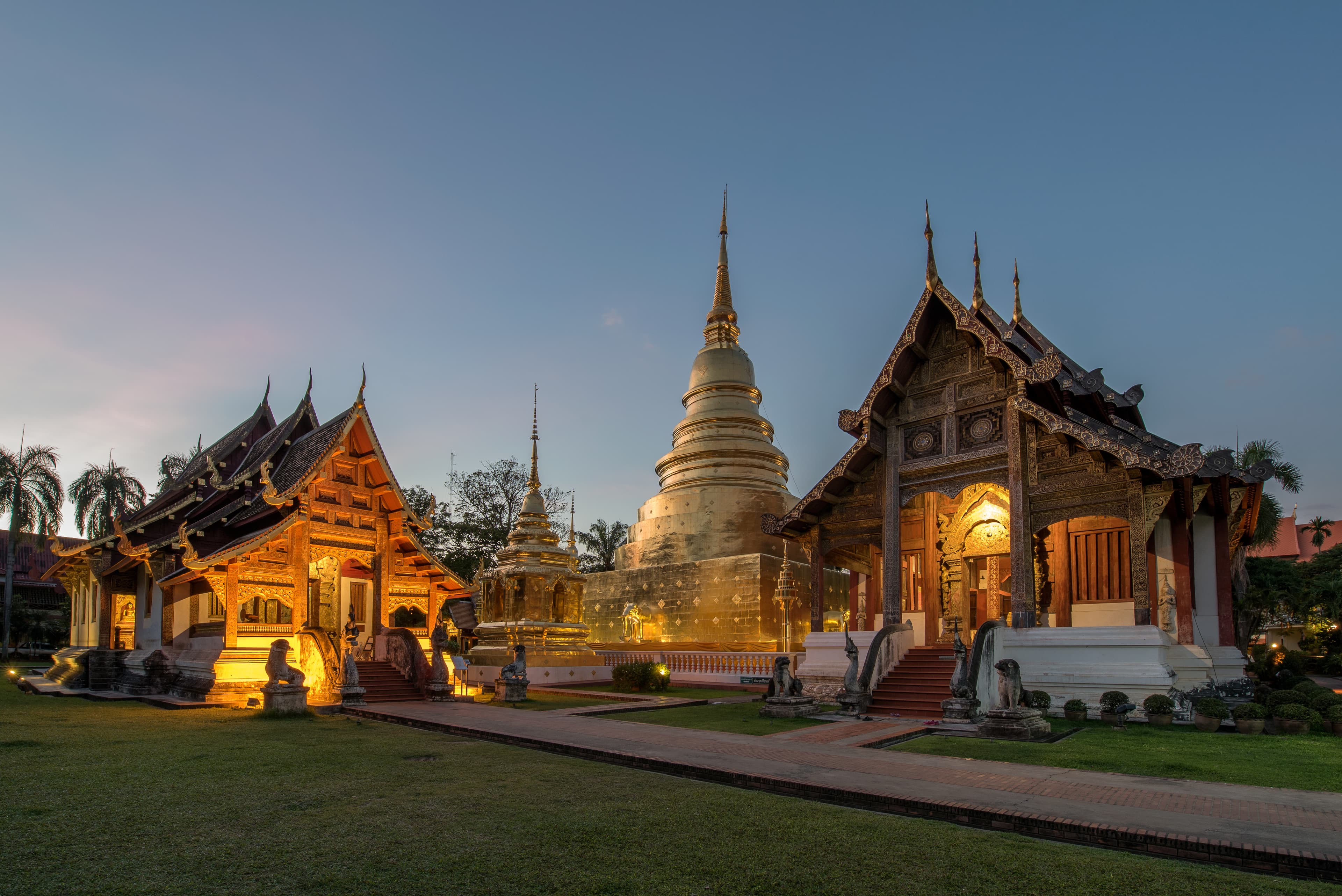
Chiang Mai
The essential gateway city and Northern Thailand's cultural capital — 300+ temples, a historic Old City moat, legendary street markets, and international transport links. Most travelers break their journey here either side of Pai. Minivans run several times daily from AYA Service or Pai Buss; book ahead in high season.

Bangkok
Thailand's capital is most practically reached via Chiang Mai — take the minivan to CNX, then fly to Suvarnabhumi or Don Mueang. Alternatively, the overnight bus from Chiang Mai to Bangkok is comfortable and saves a hotel night. A direct route by bus from Pai to Bangkok exists but takes 14+ hours.

Luang Prabang
The UNESCO-listed former royal capital of Laos, with gilded temples, saffron-robed monks, French colonial architecture, and the Mekong River. A logical next destination for travelers moving through Southeast Asia. Easiest access is to fly from Chiang Mai, or take the slow boat from Huay Xai after crossing the Thailand-Laos border near Chiang Rai.

Hanoi
Vietnam's chaotic, atmospheric capital with French colonial architecture, street food culture, Hoan Kiem Lake, and the Old Quarter. A popular onward destination for travelers looping through Southeast Asia. Fly from Chiang Mai via Bangkok.

Mae Hong Son
A remote, misty provincial capital near the Myanmar border with an even stronger Shan cultural influence than Pai. The drive west involves 1,864 mountain curves — even more dramatic than the Pai road. The town sits around a small lake framed by hills and Burmese-style temples. Far fewer tourists than Pai.
Entry Requirements
Pai is reached via Thailand, which offers visa-free entry or visa on arrival for most nationalities. Most Western travelers receive a 60-day visa exemption on arrival at Bangkok or Chiang Mai airport. Pai itself has no border crossing. Entry for the region is through Chiang Mai International Airport (CNX) for most international visitors.
Entry Requirements by Nationality
| Nationality | Visa Required | Max Stay | Notes |
|---|---|---|---|
| US Citizens | Visa-free | 60 days | Passport must be valid for at least 6 months. Visa exemption can be extended once for 30 days at any immigration office (฿1,900 fee). |
| UK Citizens | Visa-free | 60 days | Same 60-day visa exemption as US citizens. 30-day extension available at Chiang Mai immigration. |
| Canadian Citizens | Visa-free | 60 days | Visa exemption on arrival. Extension possible for 30 additional days at ฿1,900. |
| Australian Citizens | Visa-free | 60 days | Visa exemption on arrival. Extension available at any immigration office. |
| Indian Citizens | Yes | 15 days (VOA) or 60 days (e-visa) | Visa on arrival available for ฿2,000 (~$57) with proof of accommodation and return flight. Thai e-visa recommended for longer stays. |
| Chinese Citizens | Yes | 15 days (VOA) or 60 days (visa) | Visa on arrival for ฿2,000. Verify current visa exemption status before travel as agreements are periodically updated. |
Visa-Free Entry
Visa on Arrival
Tips
- •The nearest immigration office for visa extensions is in Chiang Mai — plan ahead if you need to extend
- •Overstaying your visa results in ฿500/day fine and can result in blacklisting for serious overstays
- •You may be asked to show proof of onward travel (return or onward flight booking) at Thai immigration
- •The 60-day exemption can be extended once for 30 more days at any immigration office for ฿1,900 (~$54)
- •A Digital Nomad / Destination Thailand Visa (DTV) is available for remote workers for a 180-day stay — apply online before travel
Shopping
Pai's shopping scene is concentrated entirely on the Walking Street and a few permanent shops along the main road. The market is strongest Friday through Sunday but runs nightly throughout high season. The mix of backpacker goods (tie-dye, crystal jewelry, incense) and genuinely distinctive Shan and Northern Thai crafts makes it worth browsing even if you're not buying. Prices are fair and sellers are generally relaxed — aggressive hawking is not the Pai style.
Walking Street Night Market
night marketThe main commercial event in Pai — fire shows and live music are the backdrop while vendors sell tie-dye clothing, handmade jewelry, crystals, incense, Northern Thai food, vegan dishes, fresh fruit, and Shan textiles. Best selection Friday to Sunday when vendors come from surrounding villages.
Known for: Fire shows, vegan street food, tie-dye, crystals, Shan weaving, hillside coffee, live music
Permanent Shops Along Ratchadamnoen Road
shopsThe main road through town has a mix of permanent shops open during daylight hours — coffee shops, massage parlors, bakeries, outdoor gear, and a few artisan textile shops selling higher-quality Northern Thai weaving.
Known for: Specialty coffee, local bakeries, outdoor clothing, traditional weaving
Santichon Village Market
village marketThe Yunnanese Chinese village northwest of town has small stalls selling Chinese tea, Yunnan ceramics, and snacks alongside the cultural sites. Small but distinctive.
Known for: Yunnan tea, Chinese ceramics, Shan-Chinese hybrid snacks
🎁 Unique Souvenirs to Look For
- •Shan handwoven textiles — distinctive geometric patterns in earth tones and indigo, sold by local weavers at the Walking Street
- •Silver jewelry made by local artisans — rings, bracelets, and pendants with Northern Thai and hill tribe motifs
- •Pai hillside single-origin coffee — bags of locally grown Arabica from farms on the surrounding mountain slopes
- •Organic Pai honey — wildflower honey from hives in the valley sold at the market and a few permanent shops
- •Handwoven bags from Shan and hill tribe communities — practical, sturdy, and genuinely made locally
- •Yunnan tea from Santichon Village — a region-specific souvenir not found elsewhere in Thailand
- •Tie-dye clothing — the most Pai-specific souvenir, still handmade by local craftspeople rather than mass-produced
Language & Phrases
Central Thai is the official language and understood by everyone. Older residents and Shan community members may speak Northern Thai (Kham Mueang) as their first language, which is distinct from Central Thai. The Shan (Tai Yai) community has its own language with Burmese script influence. English is widely understood in tourist-facing businesses along the Walking Street but minimal elsewhere. Adding "khrap" (male speaker) or "kha" (female speaker) to any phrase makes it polite.
| English | Translation | Pronunciation |
|---|---|---|
| Hello (female speaker) | Sawasdee kha | sah-wah-DEE kah |
| Hello (male speaker) | Sawasdee khrap | sah-wah-DEE krahp |
| Thank you | Khob khun kha/khrap | kohp KOON kah/krahp |
| Very delicious | Aroi mak | ah-ROY mahk |
| Cheers / Good luck | Chok dee | chohk DEE |
| Yes / No | Chai / Mai chai | chai / mai chai |
| Goodbye | Lai gon kha/khrap | lai GOHN kah/krahp |
| Excuse me / Sorry | Khor thot | kor TOHT |
| Do you speak English? | Poot pasa angrit dai mai? | poot PAH-sah ang-GRIT dai mai? |
| How much? | Tao rai? | tao RAI? |
| Not spicy | Mai pet | mai PET |