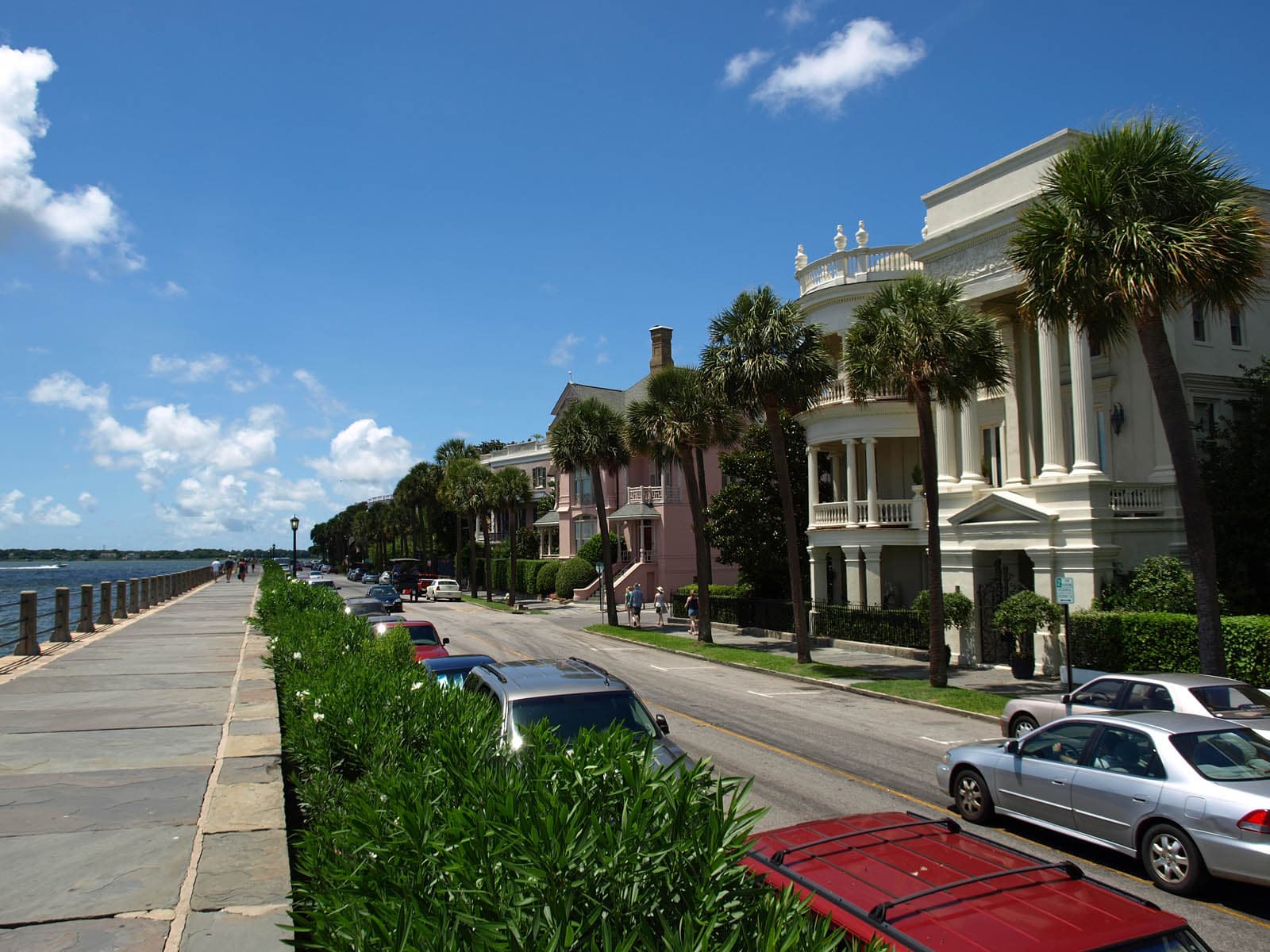
Charleston
Charleston has perfected the southern coastal city — pastel Rainbow Row on East Bay, Battery mansions staring down the harbor where Fort Sumter sits, and a restaurant scene (Husk, FIG, The Ordinary) that has defined modern low-country cooking. Gullah-Geechee heritage, King Street shopping, and plantation day trips round out longer visits.
Tours & Experiences
Browse bookable tours, activities, and day trips in Charleston
📍 Points of Interest
Loading map...
At a Glance
- Pop.
- 155K (city), 830K (metro)
- Timezone
- New York
- Dial
- +1
- Emergency
- 911
Charleston was founded in 1670 and served as the wealthiest city in the American colonies for much of the 18th century — most of that wealth was built on enslaved labor and the rice and indigo trade
The first shots of the Civil War were fired on April 12, 1861, at Fort Sumter in Charleston Harbor — Confederate forces bombarded the Union garrison for 34 hours
The pastel-painted row of Georgian houses known as Rainbow Row on East Bay Street dates to the 1740s but only got its famous colors in the 1930s-40s during restoration
Charleston is home to the Gullah-Geechee people — descendants of enslaved West Africans who preserved a distinct creole language, cuisine, and sweetgrass-basket weaving tradition
The historic peninsula is sometimes called the "Holy City" for its dozens of church steeples — city ordinance long banned buildings taller than the steeples
The Angel Oak on Johns Island is estimated at 400-500 years old with a canopy covering 17,000 square feet — one of the oldest living things east of the Mississippi
Top Sights
Rainbow Row
🗼Thirteen pastel-painted Georgian townhouses along East Bay Street — the most photographed block in the city. Best shot in early morning light before the tour groups arrive.
The Battery & White Point Garden
🌳A breezy oak-shaded promenade at the southern tip of the peninsula lined with grand antebellum mansions. Civil War cannons still face out toward Fort Sumter across the harbor.
Fort Sumter National Monument
📌The island fort where the Civil War began, reachable only by ferry from Liberty Square (30 min each way). A small museum on the island covers the bombardment and siege.
Charleston City Market
🗼A four-block covered market dating to the 1790s where Gullah artisans sell handmade sweetgrass baskets — a West African craft tradition passed down through generations.
Magnolia Plantation & Gardens
📌Founded in 1676, home to America's oldest romantic-style garden. The plantation's honest "From Slavery to Freedom" tour visits four restored enslaved cabins and tells the real story.
Middleton Place
📌A National Historic Landmark with the oldest landscaped gardens in America (1741), working stableyards, and one of the most thoughtful interpretations of plantation history in the Lowcountry.
Angel Oak Tree
🌿A Southern live oak estimated at 400-500 years old on Johns Island, with massive drooping branches that touch the ground. Free to visit. Awe-inducing in person.
International African American Museum
🏛️Opened in 2023 on the site of Gadsden's Wharf — where nearly half of all enslaved Africans brought to North America first landed. Essential, harrowing, and expertly curated.
Off the Beaten Path
Sullivan's Island Beach
A wide, walkable public beach 15 minutes from downtown with a row of low-key bars and restaurants (Poe's Tavern, The Obstinate Daughter) instead of high-rises. Free parking if you arrive early.
While tourists flock to Folly Beach, locals skew Sullivan's — fewer people, cleaner sand, and some of the best beachside dining in the Lowcountry.
Second Sunday on King Street
On the second Sunday of each month, King Street closes to cars and turns into a pedestrian-only street fair with restaurant patios extending into the road and live music.
Most visitors experience King Street as a shopping strip, but on Second Sunday it becomes the social center of the entire peninsula. A local tradition worth timing your trip around.
Rodney Scott's BBQ
A whole-hog pit master from Hemingway, SC who won a James Beard Award and opened this outpost in North Central. The pulled pork sandwich and collards are as good as BBQ gets.
Skip the tourist BBQ joints. Rodney Scott is one of the most important Black pitmasters in America and his Charleston spot hasn't gotten the hype it deserves.
The Ordinary Happy Hour
Mike Lata's raw bar in a converted 1927 bank building serves $1 oysters and half-priced cocktails during happy hour (4-6 PM, Tuesday-Thursday).
One of the best seafood restaurants in the South becomes genuinely affordable at happy hour — and the cavernous former bank lobby is a stunner.
Shem Creek Kayaking
Launch a rental kayak or SUP from Shem Creek in Mount Pleasant and paddle through the marsh grass among resident dolphins. Evening launches catch the sunset over the harbor.
Dolphin tours in charter boats are $45/person and crowded. Renting a kayak is $25 for 2 hours and you'll likely have a dolphin encounter on your own schedule.
Insider Tips
Climate & Best Time to Go
Monthly climate & crowd levels
Charleston has a humid subtropical climate — mild winters, long warm springs, and punishingly hot and humid summers. Hurricane season runs June through November with peak risk in August-September. Spring (March-May) and fall (October-November) are the sweet spots.
Spring
March - May54-81°F
12-27°C
The single best time to visit. Azaleas bloom in the gardens, the humidity has not yet settled in, and evenings are warm enough for rooftop dinners. Book 2-3 months ahead for April-May.
Summer
June - August72-93°F
22-34°C
Brutally hot and humid — heat index regularly exceeds 100°F. Afternoon thunderstorms are daily. Hurricane watch begins. The saving grace is the beaches and the long twilight evenings.
Autumn
September - November57-84°F
14-29°C
September is still hot and hurricane-prone, but October and November are gorgeous — warm days, cool nights, lower humidity, clear skies. A second peak season.
Winter
December - February41-61°F
5-16°C
Mild by US standards — daytime highs often in the 50s-60s°F. Rare hard freezes. Hotels are at their cheapest and the city's tour guides are grateful for the business.
Best Time to Visit
Late March through May is Charleston's peak — azaleas bloom, the Spoleto Festival takes over the city in May-June, humidity is low, and evenings are patio-perfect. Late October through early December is a gorgeous second peak with lower crowds.
Spring (March - May)
Crowds: High, especially late April through MayThe best season. Gardens explode with azaleas and dogwoods, temperatures sit in the 70s°F, and the city's festival calendar is packed. Book accommodations 2-3 months ahead for April-May.
Pros
- + Perfect weather
- + Garden blooms at peak
- + Spoleto Festival (May/June)
- + Patio season
- + Relatively low humidity
Cons
- − Highest hotel prices of the year
- − Restaurants booked out weeks ahead
- − College spring break crowds in March
- − Pollen can be intense
Summer (June - August)
Crowds: Moderate downtown, high at beachesHot, humid, and hurricane-prone — but the beach islands come alive and downtown is quieter. Early mornings and late evenings are the only time to sightsee without melting.
Pros
- + Beach season in full swing
- + Long daylight hours
- + Lower downtown hotel rates (sometimes)
- + Long rooftop-bar evenings
Cons
- − Heat index regularly 100°F+
- − Daily afternoon thunderstorms
- − Hurricane risk (especially August-September)
- − Exhausting walking conditions midday
Autumn (September - November)
Crowds: Moderate in October-November, decliningSeptember is still muggy and hurricane-prone, but October and November are arguably the best conditions of the year — warm, dry, clear, and visitors have thinned out.
Pros
- + Excellent weather (Oct-Nov)
- + Fewer tourists than spring
- + Oyster season returns
- + Thanksgiving decorations in the historic district
Cons
- − Hurricane risk lingers through October
- − September still very humid
- − Shorter days
Winter (December - February)
Crowds: Low except around Christmas/New YearMild and underrated — highs often in the 55-65°F range. Hotels drop prices 30-50%, restaurants take reservations the same day, and downtown looks gorgeous in holiday lights. Pack layers.
Pros
- + Cheapest hotel rates of the year
- + Restaurant reservations available
- + Holiday lights on peninsula mansions
- + Pleasant daytime walking weather
Cons
- − Cold snaps drop temps near freezing
- − Beach swimming not possible
- − Some carriage operators reduce hours
- − Occasional gray rainy stretches
🎉 Festivals & Events
Spoleto Festival USA
Late May - Mid JuneA 17-day world-class performing arts festival — opera, chamber music, theater, and dance — that takes over venues across the peninsula. Charleston's signature event and its busiest time.
Charleston Wine + Food Festival
Early MarchA five-day celebration of Lowcountry cuisine with tasting tents, visiting chefs, and ticketed dinners around the city.
Cooper River Bridge Run
Early AprilA 10K race across the Ravenel Bridge that draws 40,000+ runners — the largest 10K in the Southeast.
Festival of Houses & Gardens
March - AprilA historic-homes tour organized by the Historic Charleston Foundation that opens privately owned antebellum mansions to the public for a few afternoons each spring.
MOJA Arts Festival
Late September - Early OctoberA 10-day celebration of African American and Caribbean arts founded in 1984, with concerts, poetry readings, and performances across the city.
Safety Breakdown
Moderate
out of 100
The historic peninsula and the surrounding beach/barrier islands are very safe for visitors, with low violent crime and a heavy tourist-police presence downtown. Property crime (car break-ins, package theft) is the most common issue. Some outlying neighborhoods on the West Side and in North Charleston have higher crime rates but are not places most tourists end up.
Things to Know
- •Never leave valuables visible in parked cars — car break-ins at beach trailheads and restaurant lots are the #1 tourist crime
- •The historic district is walkable at night but stick to well-lit King, Meeting, and East Bay Streets — avoid the dark side streets south of Broad after midnight
- •Rip currents are a real danger at Folly Beach and Isle of Palms — always check the daily flag and swim near a lifeguard stand
- •Summer sun is brutal — wear sunscreen, a hat, and drink water constantly. Heat exhaustion is common among tourists walking the peninsula
- •During hurricane season (June-November), monitor NOAA and heed evacuation orders — Charleston floods even from distant storms
- •Alligators inhabit every freshwater pond and marsh in the Lowcountry — never approach, never feed, keep small dogs and children back
Natural Hazards
Emergency Numbers
Emergency (Police/Fire/Medical)
911
Non-emergency Police (Charleston)
843-743-7200
Coast Guard (Charleston Sector)
843-740-7050
Poison Control
1-800-222-1222
Costs & Currency
Where the money goes
USD per dayQuick cost estimate
Customize per category →Estimates based on regional averages. Flight prices vary by season and airline.
budget
$90-150
Budget hotel or Airbnb room in West Ashley, walking everywhere on the peninsula, casual restaurants and happy hour, free sights (Battery, Rainbow Row)
mid-range
$220-400
Boutique hotel off King Street, mix of James Beard-caliber and casual meals, 1-2 paid attractions, a carriage tour, Uber to the beach
luxury
$600+
Historic Charleston Place or Belmond Charleston Place, tasting menus at FIG/Husk/The Ordinary, private tours, spa treatments, plantation day trip
Typical Costs
| Item | Local | USD |
|---|---|---|
| AccommodationBudget hotel / Airbnb room | $90-150 | $90-150 |
| AccommodationMid-range boutique hotel | $220-400 | $220-400 |
| AccommodationLuxury historic inn | $500-900+ | $500-900+ |
| FoodShrimp and grits (casual spot) | $16-24 | $16-24 |
| FoodShe-crab soup cup | $10-14 | $10-14 |
| FoodDinner for two at Husk/FIG (no booze) | $140-200 | $140-200 |
| FoodLunch at a Lower King cafe | $15-25 | $15-25 |
| FoodCraft cocktail | $14-18 | $14-18 |
| FoodOysters on the half-shell (dozen) | $24-38 | $24-38 |
| TransportUber across the peninsula | $8-15 | $8-15 |
| TransportUber to CHS airport | $25-40 | $25-40 |
| TransportRental car per day | $50-90 | $50-90 |
| AttractionsFort Sumter ferry + entry | $38 | $38 |
| AttractionsMagnolia Plantation (house + gardens) | $30-45 | $30-45 |
| AttractionsCarriage tour | $30-38 | $30-38 |
| AttractionsInternational African American Museum | $20-25 | $20-25 |
💡 Money-Saving Tips
- •Most of Charleston's best sights are free — Rainbow Row, the Battery, walking the peninsula, Waterfront Park, Angel Oak
- •Take advantage of restaurant happy hours (4-6 PM) for $1 oysters at The Ordinary or half-priced wine at Chez Nous
- •Stay in West Ashley or Mount Pleasant for 30-50% cheaper hotels and Uber in for the day (~$12 each way)
- •The free DASH trolley covers the main tourist areas of the peninsula — use it instead of walking every block
- •Many galleries and historic churches are free to enter — St. Philip's, St. Michael's, and the French Huguenot Church all welcome visitors
- •Skip the bus tours ($35+) in favor of a self-guided walk using a free audio-tour app
- •Folly Beach and Sullivan's Island are free to enter — you only pay for parking ($2-3/hour)
- •Visit in January-February or August-early September for the lowest hotel rates
US Dollar
Code: USD
The US Dollar is accepted everywhere. ATMs are plentiful throughout the peninsula. International visitors should exchange at the airport or use an ATM with a debit card for the best rates. South Carolina state sales tax is 9% in Charleston County — not included in posted prices.
Payment Methods
Credit and debit cards are accepted virtually everywhere. Contactless (Apple Pay, Google Pay, tap-to-pay) is widespread. Cash is still useful for tour guide tips, City Market artisans, and the occasional small vendor. ATM withdrawal fees at out-of-network machines run $3-5.
Tipping Guide
18-22% is standard in Charleston; 20% has become the default for sit-down dining. Tax is not included in menu prices.
$1-2 per drink for beer/wine; $2-3 per cocktail; 18-20% if running a tab.
15-20% for taxis. Uber/Lyft tips through the app — $2-5 is typical for short rides.
$2-5 per bag for bellhops. $3-5 per night for housekeeping. $5-10 for the concierge if they book something for you.
$5-10 per person for group walking tours; $5-10 per family for carriage tours. Tip guides directly at the end.
$3-5 when the car is brought back to you.
How to Get There
✈️ Airports
Charleston International Airport(CHS)
12 mi northwest (20-30 min by car)Uber/Lyft: $25-40. Taxi: ~$35 flat rate. Rental cars all on-site. CARTA bus route 40 runs to downtown for $2 but takes 60+ minutes. Several downtown hotels run free shuttles.
✈️ Search flights to CHS🚆 Rail Stations
Charleston Amtrak Station (North Charleston)
8 mi northAmtrak's Silver Meteor and Palmetto stop here daily, connecting to NYC (17 hr), DC (10 hr), and Savannah (1 hr 45 min). The station is 8 miles from downtown in North Charleston — take Uber (~$25) as the location is not walkable.
🚌 Bus Terminals
Greyhound Charleston
Greyhound runs daily service to Savannah (2 hr, $20-40), Atlanta (8-10 hr, $45-80), and NYC (18-22 hr). The terminal is in North Charleston near the airport.
Getting Around
The historic peninsula is small — about 2 miles north-to-south at its widest — and extremely walkable. Charleston has very limited public transit for a US city: CARTA buses exist but run infrequently and cover downtown poorly for tourists. Most visitors walk everything downtown and rent a car or use Uber/Lyft for beaches, plantations, and the airport.
Walking
FreeThe peninsula is made for walking — flat, shaded, and laid out on a compact grid. You can cross from the Battery to Upper King Street in 25 minutes. Sidewalks are old and brick, so comfortable shoes matter.
Best for: Everything within the historic peninsula — sights, restaurants, bars
DASH Trolley
FreeFree downtown trolley service operated by CARTA on three loops covering the historic district, Marion Square, and the Aquarium. Runs every 10-15 minutes but routes are limited.
Best for: Hopping around the peninsula when your feet are tired
Uber & Lyft
$8-15 within downtown; $20-35 to airport; $25-40 to beachesWidely available throughout the Charleston metro. The fastest way to get to the airport, beaches, or plantations. Surge pricing kicks in on weekend nights downtown.
Best for: Airport runs, beach trips, nights out, and getting to plantations if you do not have a car
Rental Car
$45-90/day from CHS airportWorth renting for 1-2 days if you want to visit plantations, beaches, and the Angel Oak. Parking downtown is expensive ($20-40/day in garages) so some travelers only rent for the day trips.
Best for: Plantations, beaches, Angel Oak, day trips to Savannah or Beaufort
CARTA Buses
$2 per ride; $7 day passCharleston Area Regional Transportation Authority runs a small bus network with limited weekend service. Route 11 connects the peninsula to West Ashley and route 40 goes to the airport.
Best for: Budget airport transfers (slow but $2); local residents mainly, rarely useful for tourists
Bike Rental
$20-35/day for a cruiserSeveral downtown shops rent cruisers and e-bikes. Bike lanes exist on some streets but overall infrastructure is weak. Safe and pleasant on the Ravenel Bridge pedestrian path.
Best for: The Ravenel Bridge ride to Mount Pleasant, scenic waterfront paths
🚶 Walkability
Charleston's historic peninsula is one of the most walkable neighborhoods in the American South — flat, shaded by live oaks, well-maintained sidewalks (some brick and uneven), and tightly packed with destinations. Outside the peninsula, however, the metro is car-dependent and pedestrian infrastructure thins out fast.
Travel Connections

Savannah
Charleston's slightly more laid-back Georgia cousin — 22 historic squares draped in Spanish moss, a raucous River Street bar scene, and equally serious Lowcountry cuisine. The obvious pairing.

Myrtle Beach
The Grand Strand — 60 miles of family beach resorts, mini-golf courses, and oceanfront high-rises. Touristy in the extreme but very different energy from Charleston.

Columbia, SC
South Carolina's state capital and home to the University of South Carolina. Worth a stop for the Congaree National Park (45 min south) with its old-growth cypress swamp.
Beaufort & the Sea Islands
A tiny antebellum town between Charleston and Savannah, with the quiet beaches of Hunting Island State Park and deep Gullah-Geechee heritage on St. Helena Island.

Asheville, NC
A mountain escape with the Biltmore Estate, Blue Ridge Parkway, and a huge craft beer and art scene. Perfect counterpoint to Charleston's coastal flatness.
Entry Requirements
Charleston is in the United States. Entry requirements follow US federal immigration law. Most visitors need either a visa or an approved ESTA under the Visa Waiver Program. International arrivals typically route through Atlanta (ATL) or Charlotte (CLT) before connecting to CHS.
Entry Requirements by Nationality
| Nationality | Visa Required | Max Stay | Notes |
|---|---|---|---|
| Canadian Citizens | Visa-free | 6 months | No visa or ESTA required. Valid passport needed. |
| UK Citizens | Visa-free | 90 days | ESTA required ($21, valid 2 years). Apply online before travel. |
| EU/Schengen Citizens | Visa-free | 90 days | ESTA required. Apply at least 72 hours before departure. |
| Australian Citizens | Visa-free | 90 days | ESTA required. Standard Visa Waiver Program rules apply. |
| Chinese Citizens | Yes | Up to 10 years (multiple entry B1/B2) | Must apply for a B1/B2 visa at the US Embassy. Interview required. |
| Indian Citizens | Yes | Varies | B1/B2 tourist visa required with embassy interview. |
Visa-Free Entry
Tips
- •Apply for ESTA at least 72 hours before your flight
- •ESTA costs $21 and is valid for 2 years or until your passport expires
- •CHS is a small airport — international connections happen through Atlanta, Charlotte, JFK, or Miami
- •Global Entry ($100, 5 years) speeds up arrival at your connection city, not CHS itself
- •US Customs allows $800 in duty-free goods per person
Shopping
King Street is Charleston's main shopping artery — a 2-mile stretch that transitions from upscale national retailers on Lower King, to independent boutiques and home-goods in Middle King, to hip restaurants, bars, and vintage in Upper King. The Charleston City Market and sweetgrass basket stands are the most distinctive souvenirs.
Lower King Street
upscale shoppingThe stretch from Broad to Market Streets, lined with Apple, Lululemon, Anthropologie, and Charleston-based luxury boutiques. Croghan's Jewel Box is a seventh-generation local institution.
Known for: National chains, luxury brands, jewelry, designer clothing
Middle & Upper King Street
boutique districtNorth of Calhoun Street, King becomes an independent boutique corridor — Charleston-based clothing labels, home stores, vintage shops, and bookstores (Blue Bicycle Books is a treasure).
Known for: Independent fashion, home goods, vintage, bookstores
Charleston City Market
historic marketA four-block open-air market between Meeting and East Bay Streets where Gullah artisans weave and sell handmade sweetgrass baskets (a West African craft tradition). Also has local art, soaps, and food.
Known for: Sweetgrass baskets, Gullah crafts, local foods, handmade soaps
Shops of Historic Charleston Foundation
specialty boutiqueA nonprofit shop in the Mills House area selling replicas of Charleston-specific design objects, books on the city's architecture, and Lowcountry cookware.
Known for: Local books, Charleston-themed gifts, architectural replicas
🎁 Unique Souvenirs to Look For
- •Handmade Gullah sweetgrass baskets from City Market artisans ($30-500+ depending on size and complexity)
- •Benne wafers — a thin Charleston sesame cookie with West African origins, sold at Christophe Artisan Chocolatier or Charleston Candy Kitchen
- •Callie's Hot Little Biscuit frozen biscuit kits
- •A jar of high-quality Carolina Gold rice from Anson Mills or Marsh Hen Mill
- •Lowcountry cookbooks — Sean Brock's "Heritage" or BJ Dennis's Gullah recipes
- •Bourbon or rye from local distilleries like High Wire or Six & Twenty
- •A set of oyster plates from a local ceramic artist
Language & Phrases
English is the primary language. Gullah — a distinct English-based creole language with West African grammatical roots — is still spoken by some residents on the Sea Islands. Charlestonians have a genuinely distinct Southern accent, softer and more melodic than the stereotypical "y'all" drawl.
| English | Translation | Pronunciation |
|---|---|---|
| You all / all of you | Y'all | yawl — the universal Southern pronoun; "all y'all" is plural-plural |
| About to / planning to | Fixin' to | FIX-in tuh — "I'm fixin' to head over to Husk" |
| Polite dismissal or pity | Bless your heart | bless yer HART — can be sincere sympathy OR a Southern way of calling you an idiot; context is everything |
| The Holy City | Charleston's nickname | Named for the dozens of church steeples dominating the historic skyline |
| The Lowcountry | The coastal plain of South Carolina and Georgia | LOW-cuntree — flat tidal marsh terrain between Charleston and Savannah |
| Pluff mud | The deep, smelly tidal marsh mud | PLUFF mud — defining smell of the Lowcountry salt marsh, loved and joked about in equal measure |
| Frogmore stew / Lowcountry boil | A one-pot meal of shrimp, sausage, corn, and potatoes | Traditionally dumped on a newspaper-covered picnic table |
| SOB | South of Broad — an upper-class peninsula neighborhood | ESS-oh-BEE — used affectionately or mockingly depending on your tax bracket |
| Geechee | Relating to Gullah-Geechee culture | GEE-chee — the Sea Island descendants of enslaved West Africans, with distinct language, cuisine, and crafts |