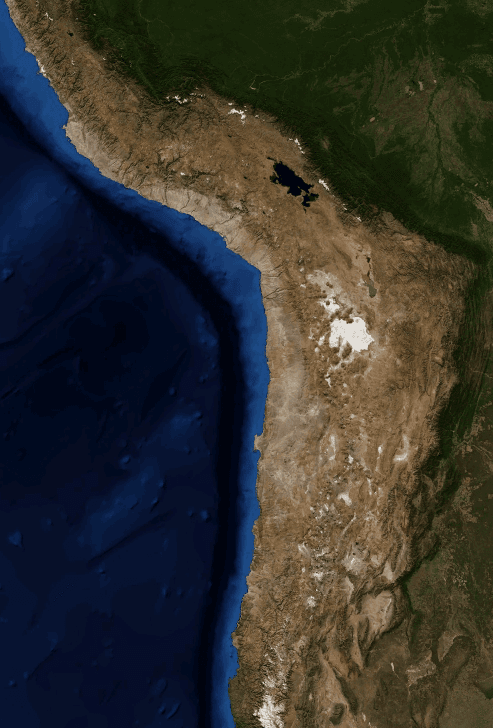
Atacama Desert
Chile

Santiago
Chile
Atacama Desert
Santiago
💰 Budget
🛡️ Safety
Atacama Desert
The Atacama is one of the safest travel destinations in South America. San Pedro de Atacama is a small, tourist-oriented village with minimal crime. The primary risks are environmental rather than human — altitude sickness, extreme UV radiation, dehydration, and hypothermia at dawn excursions are the real hazards. Choose licensed tour operators for high-altitude excursions.
Santiago
Santiago is one of the safer major cities in South America. Violent crime against tourists is rare, but petty theft — pickpocketing, bag snatching, and phone theft — is a constant concern in crowded areas and on public transit.
⭐ Ratings
🌤️ Weather
Atacama Desert
The Atacama operates on extremes. Days are intensely sunny and dry year-round — UV radiation at this altitude is among the highest on Earth. Nights drop sharply regardless of season, often below freezing at the higher elevations of El Tatio and the altiplanic lagoons. The rare rainy season ("Bolivian Winter") runs January–February, when afternoon thunderstorms can close some high-altitude routes. Humidity is near zero for most of the year.
Santiago
Santiago has a Mediterranean climate with hot, dry summers and cool, wet winters. The Andes are snowcapped from June through October. Air quality can suffer in winter when thermal inversions trap smog in the valley.
🚇 Getting Around
Atacama Desert
San Pedro de Atacama village is small enough to walk in 15 minutes, but virtually all major attractions lie 15–120 km away on unpaved or semi-paved desert roads. Most visitors rely on guided tour vans — this is the norm and often the safest option for remote high-altitude routes. Rental cars give flexibility for those comfortable with 4WD driving in remote terrain.
Walkability: San Pedro de Atacama village is fully walkable and compact. All services, restaurants, and tour agencies on Caracoles Street are within a 10-minute walk of any accommodation. However, all major natural attractions require motorized transport — the desert is too vast and the distances too great for on-foot exploration beyond the village limits.
Santiago
Santiago has an excellent Metro system and extensive bus network (Transantiago/RED). The Bip! card works across all public transit. Rush hour can be intense, but outside peak times the system runs smoothly.
Walkability: Central Santiago is very walkable. Lastarria, Bellavista, Providencia, and the Centro Historico are all best explored on foot. The city is flat between the two cerros (hills), making walking easy. Summer heat can be intense — carry water.
The Verdict
Choose Atacama Desert if...
you want the driest non-polar desert — geysers, salt lagoons with flamingos, ALMA stargazing, and the Bolivia border crossing to Uyuni
Choose Santiago if...
you want the Andes at the end of the metro — Cerro San Cristóbal funicular, Barrio Lastarria, Concha y Toro, Cajón del Maipo, and ski at Valle Nevado
Atacama Desert
Santiago