Bwindi Impenetrable Forest vs Sossusvlei
Which destination is right for your next trip?
🏆 Bwindi Impenetrable Forest wins 68 OVR vs 65 · attribute matchup 2–2

Uganda
68OVR
Namibia
65OVR
Bwindi Impenetrable Forest
Uganda
Sossusvlei
Namibia
Bwindi Impenetrable Forest
Sossusvlei
💰 Budget
🛡️ Safety
Bwindi Impenetrable Forest
Bwindi itself is a safe, heavily-managed conservation area with armed Uganda Wildlife Authority rangers present on every trek. Tourist-directed crime is extremely rare in the forest and trailhead villages, where tourism is the dominant economic force. The primary risks are environmental — steep terrain, tropical disease, and altitude. The border region with the DRC (10 km west) has historical instability, but cross-border incidents have been absent from Bwindi tourism for over two decades.
Sossusvlei
Namibia is one of the safest countries in sub-Saharan Africa for tourists — politically stable, low crime outside urban areas, and with a well-organized national parks infrastructure. The main safety concerns at Sossusvlei are environmental: extreme heat, dehydration, isolation, and wildlife. There is no violent crime risk in the park itself. Solo travelers and families are both common.
⭐ Ratings
🌤️ Weather
Bwindi Impenetrable Forest
Bwindi sits on the equator at 1,160–2,607 metres elevation, giving it a cool, wet, tropical-montane climate — fundamentally different from the hot savannas most visitors expect of East Africa. Temperatures are pleasant year-round (7–27°C depending on altitude) but it can rain in any month. The two "dry" seasons — June to August and December to February — see reduced rainfall rather than zero rain, and are the preferred gorilla trekking windows for drier trails. Gorillas are tracked 365 days a year.
Sossusvlei
Sossusvlei sits in the hyper-arid Namib Desert with almost no rainfall and extreme temperature swings between day and night. Daytime temperatures are warm to hot year-round; nights can be surprisingly cold, especially in winter (May-August). Brief and unpredictable rains fall occasionally between January and March. The desert sun is intense — sunscreen, hat, and at least 2 litres of water per person per day are essential.
🚇 Getting Around
Bwindi Impenetrable Forest
Bwindi is remote and road-dependent. There is no public transport usable by tourists — virtually every visitor arrives in a private 4WD with driver-guide, either on a full safari itinerary or as a point-to-point transfer. Within the park, movement happens on foot during treks; between the four sectors requires vehicles and drives of 1–3 hours on rough tracks. The "roads" to Ruhija and Nkuringo become genuinely challenging in the long rains.
Walkability: The forest itself is only walkable and only with a ranger escort. The trading centres of Buhoma, Ruhija, Rushaga, and Nkuringo are each small enough to walk end-to-end in 10–20 minutes, with lodges a short drive or walk from the trailhead briefing point. Nothing about Bwindi is urban — visitors effectively travel by car between sectors and walk within them.
Sossusvlei
Sossusvlei is a self-drive destination — there is no public transport to or within the park. A rental car is essential for independent travel. The road from Sesriem Gate to the 2x4 parking area (4.5 km before Sossusvlei pan) is tarred; the final 5 km to the pan requires 4x4 or the NWR shuttle. Within the park, distances are significant — the one-way journey from Sesriem Gate to the Sossusvlei pan is 60 km.
Walkability: Driving is required between sites — distances inside the park are too great to walk. Hiking on foot is permitted within the vleis and on the dunes themselves. The walk from the 2x4 parking area to Deadvlei is approximately 5 km one-way through soft sand. Comfortable closed shoes are essential; sandals are not recommended on hot sand.
The Verdict
Choose Bwindi Impenetrable Forest if...
you want mountain gorilla trekking at half the Rwanda price — Bwindi's four sectors, 350+ bird species, and Batwa cultural experience
Choose Sossusvlei if...
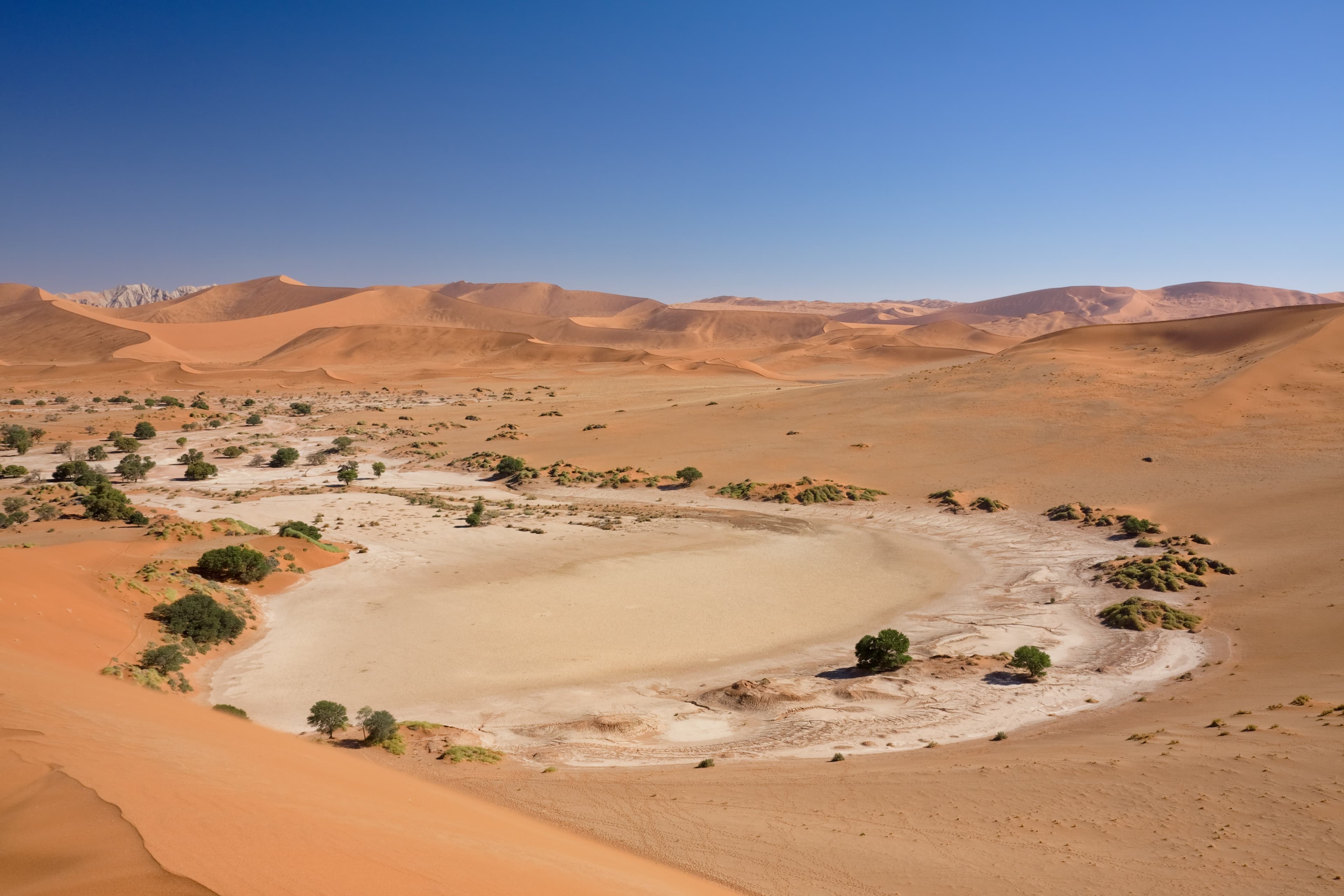
you want Earth's tallest red dunes and Deadvlei's black tree skeletons on white clay — a self-drive highlight of any Namibia itinerary
Bwindi Impenetrable Forest
Sossusvlei