
Easter Island
Rapa Nui — one of the most remote inhabited islands on Earth, 3,500 km from continental Chile. Home to nearly 1,000 moai stone statues including the 15-moai row at Ahu Tongariki, the quarry at Rano Raraku, the sea-facing Ahu Akivi, and the Birdman cult ceremonial village at Orongo. UNESCO Rapa Nui National Park covers 40% of the island. Sole air link is LATAM from Santiago (5.5 hr); the island's only town is Hanga Roa (~8,000 people). National park pass ~$80 USD.
Tours & Experiences
Browse bookable tours, activities, and day trips in Easter Island
📍 Points of Interest
Loading map...
At a Glance
- Pop.
- 8K
- Timezone
- Easter
- Dial
- +56
- Emergency
- 133 / 131
Easter Island (Rapa Nui in the local language) sits 3,500 km west of continental Chile — one of the most remote inhabited islands on Earth, with the nearest populated land (Pitcairn Island) 2,075 km away
The island is home to roughly 1,000 moai — massive carved stone figures with oversized heads, the largest weighing over 80 tonnes and reaching nearly 10 metres tall
UNESCO inscribed Rapa Nui National Park as a World Heritage Site in 1995, recognising the outstanding universal value of the moai and ceremonial platforms (ahu)
The entire island covers only 163 km² and has a single town — Hanga Roa, on the west coast — home to almost the whole population of around 8,000
Polynesian settlers arrived by ocean-going canoe between roughly 800 and 1200 CE, carving moai for ancestor worship across several centuries before the tradition mysteriously collapsed
Dutch explorer Jacob Roggeveen arrived on Easter Sunday in 1722, giving the island its European name — but the Rapa Nui people have always called it Te Pito o Te Henua, "the navel of the world"
Top Sights
Ahu Tongariki
📌The most iconic moai site on the island — a line of 15 restored moai standing on a single 100-metre ceremonial platform against the Pacific. Visit at sunrise when the sun rises directly behind the figures, silhouetting them against the sky. The single most photographed image of Rapa Nui, and rightly so.
Rano Raraku — The Moai Quarry
📌The volcanic tuff quarry where nearly every moai on the island was carved, with roughly 400 statues in various stages of completion still embedded in the hillside or half-buried in the crater wall. Walking the slopes is a surreal experience — stone heads emerge from the grass at every turn. Allow 2–3 hours.
Ahu Akivi
📌The only ahu on the island whose seven moai face the sea rather than inland. Local tradition links them to the seven explorers sent by King Hotu Matu'a to find the island before settlement. Aligned exactly with the equinox sunset — a rare piece of astronomical precision in Rapa Nui construction.
Orongo Ceremonial Village
🗼A stone-house village on the knife-edge rim of Rano Kau crater, used for the Tangata Manu (Birdman) cult ceremonies until the late 19th century. Fifty-three low stone houses sit between the 300-metre cliff dropping to the Pacific and the crater lake of Rano Kau. Extraordinary setting.
Rano Kau Volcano Crater
📌A vast 1.6 km wide volcanic crater with a freshwater lake at its base carpeted in floating reed mats (totora). The rim offers panoramic views across the island, out to Motu Nui offshore, and down into the crater. One of the most dramatic natural features on Rapa Nui.
Ahu Tahai & Hanga Roa Sunset
📌The ceremonial complex just north of Hanga Roa holds three restored ahu, including the only moai on the island with restored coral-and-obsidian eyes (Ahu Ko Te Riku). A short walk from town, it is the go-to sunset spot — moai silhouetted against Pacific colour every evening.
Anakena Beach
🏖️The only palm-fringed white sand beach on the island and the legendary landing place of King Hotu Matu'a, the first Polynesian settler. Two restored ahu stand behind the beach. Calm turquoise swimming, coconut palms imported by Chile in the 1960s, and a handful of food shacks — the island's main beach day.
Hanga Roa Town
📌The island's only settlement — a laid-back Polynesian village of 8,000 people with a working harbour, a small cathedral that blends Catholic iconography with Rapa Nui carvings, the excellent Father Sebastian Englert Anthropological Museum, seafood restaurants, and the only shops, banks, and ATMs on the island.
Off the Beaten Path
Ana Te Pahu Lava Caves
A network of collapsed lava tubes in the island's interior that the Rapa Nui used as shelters and garden caves — banana and taro still grow in the sunlit floor of the main chamber, watered through sinkholes in the roof. Bring a torch and sturdy shoes; the floor is uneven volcanic rock.
No tour groups, minimal signage, and a rare chance to see how islanders actually survived the island's resource crisis by farming inside caves. The sunbeams falling on banana palms are quietly spectacular.
Papa Vaka Petroglyphs
A low lava pavement on the north coast covered in carved images of tuna, sharks, canoes, and fishing hooks — one of the island's densest concentrations of rock art, carved by fishermen to invoke a good catch. Best viewed in low angle morning or late afternoon light when the carvings stand out.
Most visitors drive past without stopping. The carvings are enormous (some canoes are 12 m long) and completely unprotected — you walk directly on the rock art panels.
Ovahe Beach
A small pink-sand cove tucked in a cliff just east of Anakena, reached by a short scramble down the rocks. Far less visited than Anakena, with volcanic walls on three sides and often nobody else in sight. Swimming is possible when the surf is low; check conditions before going in.
The pink-tinted sand comes from crushed coral and volcanic minerals and is unique on the island. No facilities, no crowds, and a dramatically private feel only 500 metres from the main beach.
Te Pito Kura — The Navel of the World
A perfectly smooth, round magnetic stone about 75 cm across, said by tradition to have been brought from Polynesia by King Hotu Matu'a and to concentrate the mana (spiritual power) of the island. Compasses behave oddly nearby. Next to it lies the largest moai ever transported from the quarry — still toppled, 10 m long.
The combination of myth, magnetism, and the fallen giant moai in one small clearing makes this one of the most atmospheric minor sites on the island. Touching the stone is no longer permitted, but you can circle it.
Tapati Festival Rehearsals
Even outside the full two-week Tapati Rapa Nui festival (early February), dance and music groups rehearse most evenings at community centres in Hanga Roa — drumming, body-painting practice, and traditional competitions that are open to respectful visitors. Ask at your guesthouse for the night's schedule.
A completely free and unfiltered glimpse of contemporary Rapa Nui culture — the same families preparing for the festival have been doing these dances for generations.
Insider Tips
Climate & Best Time to Go
Monthly climate & crowd levels
Easter Island has a subtropical maritime climate moderated by the vast surrounding Pacific — temperatures are mild and remarkably stable year-round, rarely exceeding 28°C in summer or dropping below 15°C in winter. Rain falls in every month but is heaviest in May through August. The island is exposed to the open ocean on all sides, so strong wind is a near-constant feature regardless of season.
Austral Summer (Peak Season)
December - February68-82°F
20-28°C
Warm, humid, and the driest part of the year. Long daylight hours and the best ocean conditions for swimming and snorkelling. Also the most crowded — the Tapati Rapa Nui festival in early February draws visitors from around the world. Book flights and accommodation 3–6 months ahead.
Austral Autumn (Shoulder)
March - May64-77°F
18-25°C
Arguably the ideal time to visit. Still warm but crowds thin quickly after February. Rain increases gradually toward May. Lower prices, easier accommodation, and uncrowded moai sites make this a sweet spot for photographers.
Austral Winter
June - August59-72°F
15-22°C
The coolest and wettest months. Rain is more frequent and the wind can be fierce. Ocean swimming is cold but possible. The island is at its quietest — significant discounts on flights and lodging. Pack rain gear and a warm layer for evenings.
Austral Spring (Shoulder)
September - November61-75°F
16-24°C
Weather improves steadily through the spring — fewer storms by October and by November conditions are warm and pleasant. Ideal shoulder season with good prices, manageable crowds, and reliable weather. The equinox (around 22 September) is a special time at Ahu Akivi.
Best Time to Visit
Easter Island is a year-round warm Pacific destination, but the best all-round windows are the shoulder seasons — April to May and September to November. Temperatures are pleasant, crowds are light, flight prices are reasonable, and rain is moderate. The austral summer (Dec–Feb) is peak for weather and cultural events but has the highest prices and the heaviest tourist traffic. Winter (June–August) is cool and wet but offers the quietest moai sites.
Austral Summer — Peak Season (December - February)
Crowds: High — especially during Tapati (first two weeks of Feb) and late December holidaysThe warmest and driest months with the longest daylight. Perfect weather for swimming, snorkelling, and long site days. The Tapati Rapa Nui festival in early February is the cultural highlight of the year and draws the biggest crowds. Book flights 3–6 months out and accommodation even sooner during Tapati week.
Pros
- + Best weather for swimming at Anakena
- + Longest daylight for site visits
- + Tapati Rapa Nui festival in February
- + All boat trips to Motu Nui running reliably
Cons
- − Highest flight and accommodation prices
- − Major sites (Tongariki, Rano Raraku) busiest around mid-morning
- − Accommodation fills months ahead during Tapati
Austral Autumn — Shoulder (March - May)
Crowds: Low to moderateCrowds thin quickly after February and the weather remains warm into April. May brings slightly cooler evenings and a noticeable increase in rain. One of the best value windows — prices drop 20–30% from peak and moai sites are often empty at dawn.
Pros
- + Lower prices on flights and lodging
- + Quiet sites for photography
- + Still warm enough to swim
- + Easier to book last-minute tours
Cons
- − Rain increases through April and May
- − Some boat trips cancelled on windier days
- − Fewer cultural events than summer
Austral Winter (June - August)
Crowds: Very lowThe coolest, wettest, and windiest season. Days are short and showers frequent. The island can feel wonderfully empty — at times you are alone at Tongariki at sunrise. Good discounts on flights and hotels but be prepared for wet site visits and cold evenings.
Pros
- + Cheapest flights and lodging of the year
- + Moai sites often entirely to yourself
- + Dramatic stormy skies make for unique photography
Cons
- − Ocean swimming is cold and often too rough
- − Boat trips frequently cancelled by wind
- − Short daylight hours limit how much you can see in a day
Austral Spring — Shoulder (September - November)
Crowds: Low to moderateThe other great shoulder window. Conditions improve through September and by November are nearly as warm as summer. The equinox around 22 September is a special time at Ahu Akivi, where the seven moai align with the equinoctial sunset. Excellent value and reliable weather.
Pros
- + Warming temperatures and less rain than autumn
- + Fair flight prices before December spike
- + Equinox phenomenon at Ahu Akivi in September
Cons
- − Wind still strong in early September
- − Some boat operators have reduced schedules until October
🎉 Festivals & Events
Tapati Rapa Nui
Early February (two weeks)The most important cultural festival of the year. Two clans compete across traditional disciplines — spear throwing, canoe racing, body-painting, the Haka Pei (sliding down a grassy slope on banana trunks), and the incredible Tau'a Rapa Nui triathlon. Visiting families book flights a year ahead.
Dia de la Lengua Rapa Nui
28 NovemberRapa Nui Language Day — community events celebrating the indigenous Polynesian language of the island. Traditional music, poetry recitals, and school competitions.
Fiestas Patrias (Chilean Independence)
18 SeptemberChile's national holiday, celebrated on Rapa Nui with a blend of Chilean asado (barbecue), cueca dancing, and Polynesian fusion elements. A lively weekend across Hanga Roa.
Safety Breakdown
Very Safe
out of 100
Easter Island is extraordinarily safe — one of the safest destinations in the Americas. Violent crime against tourists is essentially unknown, petty theft is rare, and the tight-knit community of 8,000 means anonymity is impossible. The real hazards are environmental: strong sun, unexpected surf, slippery cliffside paths at Orongo, and the absence of a full hospital on the island itself. The island's remoteness means serious medical emergencies often require medical evacuation to Santiago.
Things to Know
- •Never touch, climb on, or lean against a moai — the porous tuff stone is extremely fragile and protected by strict Rapa Nui National Park law; fines start at $1,000 USD and can include deportation
- •Stay behind marked boundaries at every ahu — rangers actively patrol major sites (Tongariki, Rano Raraku, Tahai) and enforcement is immediate
- •UV is intense and amplified by the ocean reflection — use SPF 50+ and a hat even on overcast days; the subtropical latitude fools many visitors
- •The cliff path at Orongo is narrow, often wet, and drops 300 metres to the Pacific — stay well away from the edge and never cross barriers
- •Ocean swimming is only safe at Anakena and Ovahe — the rest of the coast has dangerous surf, jagged lava rock, and unpredictable currents
- •ATMs are limited to two in Hanga Roa and occasionally run out of cash on weekends — withdraw what you need on weekday mornings
- •No pharmacy stocks a full range of medications — bring any prescription drugs in sufficient supply for your entire stay plus buffer days
- •Mosquitoes are rare but do appear after rain; there is no malaria or dengue on the island
Natural Hazards
Emergency Numbers
Police (Carabineros de Chile)
133
Ambulance
131
Fire
132
Hanga Roa Hospital
+56 32 210 0215
CONAF (Park Rangers)
+56 32 210 0236
Costs & Currency
Where the money goes
USD per dayQuick cost estimate
Customize per category →Estimates based on regional averages. Flight prices vary by season and airline.
budget
$90-130
Family-run residencial or camping, shared bike/scooter rental, empanadas and market meals, self-guided site visits after paying the park pass
mid-range
$180-280
Comfortable hotel or boutique cabana, small rental car, mix of restaurant and guesthouse meals, guided full-day tour
luxury
$500+
Explora or Hangaroa Eco Village (all-inclusive lodges), private guide, premium meals, helicopter or dive charters
Typical Costs
| Item | Local | USD |
|---|---|---|
| AccommodationResidencial / family guesthouse (basic double) | 45,000–75,000 CLP | $50–85 |
| AccommodationMid-range hotel / cabana (double) | 100,000–180,000 CLP | $110–200 |
| AccommodationLuxury all-inclusive lodge (per person/night) | 450,000+ CLP | $500+ |
| FoodEmpanada or completo from a market stall | 3,000–5,500 CLP | $3.50–6 |
| FoodRestaurant fish dinner with drink | 18,000–30,000 CLP | $20–33 |
| FoodSupermarket bottle of water (1.5L) | 2,000–3,000 CLP | $2.20–3.30 |
| TransportCar rental (full day) | 55,000–90,000 CLP | $60–100 |
| TransportScooter rental (full day) | 32,000–50,000 CLP | $35–55 |
| TransportMountain bike rental (full day) | 14,000–22,000 CLP | $15–25 |
| TransportAirport shuttle from guesthouse | Usually free | Free |
| AttractionsRapa Nui National Park pass (foreigner) | ~72,000 CLP | $80 |
| AttractionsFull-day guided tour (group minivan) | 90,000–135,000 CLP | $100–150 |
| AttractionsDive trip (2-tank) | 110,000–150,000 CLP | $120–170 |
💡 Money-Saving Tips
- •Book LATAM flights 3–6 months ahead — fares can drop from $1,500 to $500 USD with enough lead time, and midweek departures are cheaper
- •The national park ticket is valid for 10 days and is single-entry at some sites (Orongo, Rano Raraku) — plan your two-day site circuit carefully to cover everything in one pass
- •Stay at a residencial (family guesthouse) rather than a hotel — half the price, often with kitchen access and breakfast included
- •Buy groceries at the two main supermarkets rather than eating every meal out — restaurant prices are 40–60% higher than mainland Chile
- •Share a rental car with other travellers — guesthouses can usually connect you with other guests heading to the same sites
- •The Tahai sunset is free and requires no park ticket — the same cannot be said for Ahu Akivi or Orongo
- •Carry a refillable water bottle — Hanga Roa tap water is treated and safe; avoiding bottled water saves $30–50 over a week
- •Free cultural events (music, dance, church services with Rapa Nui hymns at the cathedral) happen most weekends in Hanga Roa
Chilean Peso
Code: CLP
1 USD is approximately 900–1,000 CLP (as of early 2026). USD cash is widely accepted across the island — many guesthouses quote rates directly in dollars, and restaurants and tour operators happily take USD though change is returned in pesos. Only two ATMs operate in Hanga Roa (BancoEstado and Banco Santander); both dispense CLP only, can run out of cash on weekends, and sometimes refuse foreign cards. Carry USD as a backup. Credit cards are accepted at mid-range and upscale restaurants and hotels but almost never in the craft markets.
Payment Methods
Cash is preferred for craft markets, small restaurants, and transport rentals. Major hotels and most mid-range restaurants accept Visa and Mastercard. American Express is rare. Debit cards work at the two ATMs but incur foreign transaction fees. USD cash is the most useful backup — carry clean, unmarked bills in $20s and $50s. Small denominations of CLP are useful for transport and tips.
Tipping Guide
A 10% service charge (propina sugerida) is automatically added to most sit-down restaurant bills in Hanga Roa. If it's not added, leaving 10% in cash is appropriate. No tip needed for takeaway empanadas or food trucks.
$10–20 USD per person for a half-day group tour; $20–40 USD per person for a full-day; $50+ for a multi-day private guide. Tip in cash at the end in USD or CLP — both are welcome.
$2–5 USD per bag for porters, $2–5 USD/day left for cleaning staff at the end of a stay. Not a strong expectation but always welcomed.
Rounding up to the nearest 1,000 CLP is sufficient for a short transfer. Fixed-price airport transfers rarely require a tip unless the driver helps significantly with luggage.
$5–15 USD per person per trip for the crew is standard. Hand directly to the boat captain at the end.
How to Get There
✈️ Airports
Mataveri International Airport(IPC)
1 km from Hanga Roa centre (within walking distance)The only airport on the island, sitting directly adjacent to Hanga Roa. Almost every guesthouse and hotel offers free airport transfers — ask at booking. The walk into town takes 15–20 minutes with light luggage. The single runway is one of the longest in the Pacific, originally extended by NASA as an emergency Space Shuttle landing strip.
✈️ Search flights to IPCArturo Merino Benitez International, Santiago(SCL)
3,500 km east — the only air link to Rapa NuiLATAM Airlines operates the only commercial flights to Easter Island, departing Santiago (SCL) with a flight time of approximately 5.5 hours. Daily flights in peak season (Dec–Feb), roughly 5–7 per week in shoulder and winter months. Round-trip fares $500–1,500 USD depending on how far ahead you book and the season. A weekly flight also continues onward to Pape'ete, Tahiti, making Rapa Nui a possible stopover on a trans-Pacific routing.
✈️ Search flights to SCLGetting Around
There is no public transport system on Easter Island — no buses, no taxis on meters, and no ride-hailing apps. The island is small (163 km² total) and roads are generally good paved or graded surfaces, making rental vehicles the default. A rented 4x4, car, scooter, or mountain bike is almost universal for visitors who want to see the full moai circuit. Guided day tours are the alternative for those who prefer not to drive.
Rental Car / 4x4
$60–100 USD/day small car; $80–140 USD/day 4x4The standard way to explore. Small agencies cluster around Hanga Roa — Insular Rent A Car, Oceanic, Rapa Nui Rent A Car. Most cars are Suzuki Jimnys or small SUVs. No international chains. Note: most rental agreements do not include insurance — if you crash, you pay. Drive defensively, especially on unpaved sections to Ahu Akivi and the north coast.
Best for: Independent two-day moai circuits, flexibility, couples and families
Rented Scooter / ATV
$35–55 USD/day scooter; $60–90 USD/day ATVScooters and quad bikes are widely available and perfectly adequate for the paved coastal road — Hanga Roa to Tongariki to Anakena is doable on a scooter in a day. A helmet is legally required. Wind on exposed sections can be challenging. Bring a windproof layer.
Best for: Solo travellers, quick independent site visits, coastal road loops
Mountain Bike
$15–25 USD/dayThe island is compact enough to explore by bike — Hanga Roa to Anakena is about 18 km on rolling hills and can be done as a full day out with swimming at the end. Bikes are rented from guesthouses and a few shops in town. Strong wind and lack of shade make this a workout.
Best for: Active travellers, budget trips, short loops around Hanga Roa and Tahai
Guided Half- or Full-Day Tour
$60–90 USD half-day; $100–150 USD full dayShared minivan tours with a certified Rapa Nui guide cover the main circuit: Rano Raraku, Tongariki, Anakena on one day; Orongo, Ahu Akivi, Tahai on another. Guides are knowledgeable, most speak English and Spanish. The Rapa Nui National Park now requires a guide at several sites (Orongo, Rano Raraku, Motu Nui), so at least one guided day is mandatory.
Best for: First-time visitors, non-drivers, history-focused travellers
Walking
FreePerfectly feasible for Hanga Roa, Tahai, Ana Kai Tangata, and the Rano Kau rim — the walk up to Orongo from town is a 3–4 hour return hike with stunning views. Not feasible for Tongariki, Rano Raraku, or Anakena without a lift.
Best for: Hanga Roa exploration, Rano Kau and Orongo hike, Tahai sunset
🚶 Walkability
Hanga Roa itself is small and walkable end-to-end in 20 minutes. The major moai sites, however, are spread across the island — Tongariki is 18 km from town, Anakena 18 km, Ahu Akivi 10 km. No site can be realistically reached on foot except Tahai (15 min walk from the town centre) and the Orongo / Rano Kau rim (2.5 hr hike up).
Travel Connections

Santiago
Chile's capital, framed by the snow-capped Andes, with leafy Providencia and Bellavista neighbourhoods, excellent restaurants, funicular rides up Cerro San Cristobal, and the country's principal international airport (SCL). Every Easter Island trip begins and ends here.

Valparaiso
Chile's bohemian Pacific port, a UNESCO city of hillside funiculars, technicolour street art, and century-old seafront mansions. A natural add-on after your Easter Island flight lands back in Santiago.
Atacama Desert
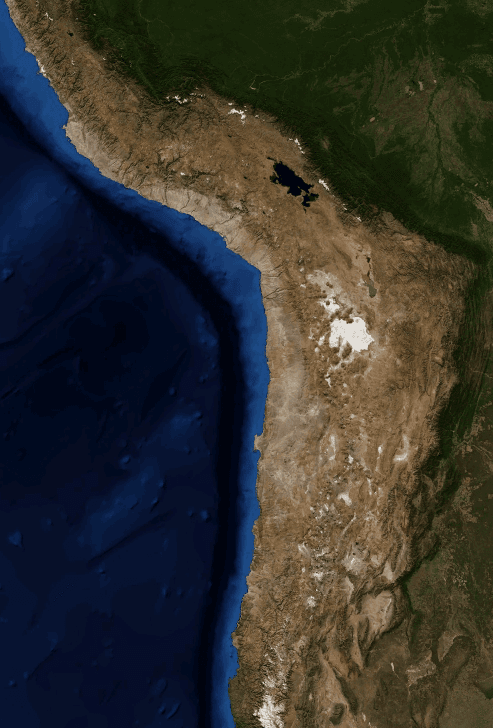
The driest desert in the world — geysers at dawn, salt flats with pink flamingos, star-filled skies at altitude, and the lunar landscape of the Valle de la Luna. A logical second leg after Rapa Nui for travellers with two weeks in Chile.
Tahiti (Pape'ete)
The Polynesian heart of the Pacific, with overwater bungalows, black-sand beaches, and the wider Society Islands archipelago. LATAM operates a weekly Santiago–Rapa Nui–Pape'ete flight, making Easter Island a possible stopover on a Chile-to-French-Polynesia itinerary.
Entry Requirements
Easter Island is Chilean territory, so Chile's visa policy applies. Most Western visitors can enter visa-free for up to 90 days. However, since 2018 a specific Rapa Nui law limits all non-resident visitors (including mainland Chileans) to a maximum stay of 30 days, and requires every visitor to present proof of onward flight, accommodation booking (at a registered SERNATUR property), and a completed arrival form upon landing at Mataveri (IPC). Rules are enforced strictly.
Entry Requirements by Nationality
| Nationality | Visa Required | Max Stay | Notes |
|---|---|---|---|
| US Citizens | Visa-free | 90 days in Chile (but 30 days maximum on Rapa Nui) | No visa required for Chile. US citizens no longer pay the reciprocity fee (abolished in 2014). Must present proof of onward flight, confirmed SERNATUR-registered lodging, and complete the Rapa Nui immigration form at Mataveri. |
| UK Citizens | Visa-free | 90 days in Chile (30 days on Rapa Nui) | Visa-free entry to Chile. Standard Rapa Nui entry requirements apply: proof of onward flight, accommodation booking, and completed entry form. |
| EU Citizens | Visa-free | 90 days in Chile (30 days on Rapa Nui) | All EU nationals enter visa-free. Must present return flight and SERNATUR-registered accommodation proof at Mataveri. |
| Australian Citizens | Visa-free | 90 days in Chile (30 days on Rapa Nui) | Australia pays no reciprocity fee since 2019. Standard Rapa Nui entry form required on arrival. |
| Canadian Citizens | Visa-free | 90 days in Chile (30 days on Rapa Nui) | Canada eliminated the reciprocity fee in 2014. No visa required. Same Rapa Nui-specific entry checks apply. |
| Japanese Citizens | Visa-free | 90 days in Chile (30 days on Rapa Nui) | No visa required. Carry proof of onward travel and a confirmed reservation at a registered accommodation. |
Visa-Free Entry
Tips
- •Before boarding your LATAM flight to IPC, Chilean authorities will check proof of onward flight and accommodation — have these printed or saved offline
- •Accommodation must be with a SERNATUR-registered property — Airbnb-only stays may not qualify; confirm registration status with your host before booking
- •The 30-day maximum Rapa Nui stay is strictly enforced — extensions are difficult and require applications through CONAF
- •The Rapa Nui National Park pass ($80 USD for foreigners) is separate from immigration and is purchased at Mataveri airport on arrival or at the CONAF office in Hanga Roa — keep the receipt
- •Chile has abolished reciprocity fees for most nationalities, including US, Canadian, and Australian citizens — confirm current status with your nearest Chilean consulate before travel
- •Bring printed copies of your flight, hotel reservation, and insurance — Mataveri immigration can be paperwork-heavy compared to a typical Chilean airport
Shopping
Shopping on Easter Island is small-scale and concentrated entirely in Hanga Roa — a handful of craft markets, the Feria Municipal, and a few family-run carving workshops. Expect wood carvings, stone moai replicas, jewellery from volcanic stone and obsidian, and beautiful hand-printed textiles. Prices are high by mainland Chile standards because nearly everything arrives by ship or air from the continent.
Feria Municipal (Mercado Artesanal)
craft marketThe main handicraft market of Hanga Roa, a covered collection of stalls run by Rapa Nui artisans selling carved moai, obsidian jewellery, bone fishhooks, tapa cloth, and printed T-shirts. The place to buy directly from the carver. Open daily except Sunday mornings.
Known for: Wooden moai replicas, obsidian pendants, rei miro (crescent pectoral ornaments), tapa cloth art, shell necklaces
Mercado Agricola (Farmers Market)
produce marketHanga Roa's fresh produce market — fruits, vegetables, local fish, and small amounts of preserved goods. A good place to stock up if you have kitchen access in your guesthouse. Prices are notably higher than mainland Chile because most produce is shipped or grown in small island plots.
Known for: Local pineapple, fresh tuna and sea bass, taro, manioc, homemade jams and chillies
Artisan Workshops
studio / workshopSeveral Rapa Nui carving families open their small workshops to visitors in the back streets of Hanga Roa — Taller Mana Gallery, Aldea Gallery, and others. Watching carvers at work with traditional tools makes for a more meaningful purchase than the market stalls, at slightly higher prices.
Known for: Museum-quality toromiro wood carvings, commissioned pieces, ceremonial weapons, original sculptures
🎁 Unique Souvenirs to Look For
- •Hand-carved wooden moai from toromiro or native mako'i wood — the most characteristic souvenir, in sizes from 10 cm to 1 m
- •Obsidian pendants and arrow-head jewellery — the volcanic glass from Rano Kau has been worked on the island for centuries
- •Rei miro — crescent-shaped wooden pectorals worn by Rapa Nui chiefs; the symbol appears on the island's flag
- •Tapa cloth prints featuring petroglyph motifs — traditional bark-cloth art revived by contemporary Rapa Nui artists
- •Bone fishhooks (rei) — replicas of the traditional hooks depicted in the Papa Vaka petroglyphs
- •Locally printed T-shirts and caps with Rapa Nui script (rongorongo) and moai imagery
- •Sea salt harvested from Rapa Nui's south coast tide pools — a small, genuine island product
Language & Phrases
Rapanui is the Polynesian language of the island, closely related to Maori and Tahitian. It is spoken alongside Spanish, the official national language of Chile — nearly all islanders are bilingual. English is widely understood in the tourism industry (hotels, tour operators, restaurants). Learning even a handful of Rapanui greetings is genuinely appreciated — the language is an active part of local identity and was once nearly lost.
| English | Translation | Pronunciation |
|---|---|---|
| Hello / Welcome | Iorana | ee-oh-RAH-nah |
| Goodbye | Iorana — see you | ee-oh-RAH-nah |
| Thank you | Maururu | mah-oo-ROO-roo |
| Thank you very much | Maururu riva riva | mah-oo-ROO-roo REE-vah REE-vah |
| Yes | Ee (Spanish: Si) | EE / SEE |
| No | Ina (Spanish: No) | EE-nah / NOH |
| Good / Fine | Riva riva | REE-vah REE-vah |
| How much? | ¿Cuánto cuesta? (Spanish) | KWAN-toh KWES-tah |
| Where is...? | ¿Dónde está...? (Spanish) | DON-day es-TAH |
| Water | Vai | VYE |
| Food | Kai | KYE |
| Sea | Tai / Moana | TYE / moh-AH-nah |
| Statue (moai) | Moai | MOH-eye |
| Good morning (Spanish) | Buenos dias | BWAY-nos DEE-ahs |
| Please (Spanish) | Por favor | por fah-VOR |
If you like Easter Island, you'll love…
4 cities with a similar vibe, outside of the same country.

Bhutan · OVR 79
deep artistic heritage · landscapes that steal the show

China · OVR 77
deep artistic heritage · you barely need transit

Austria · OVR 86
deep artistic heritage · landscapes that steal the show

Japan · OVR 85
rich cultural layers · eminently walkable core