🏆 Charleston wins 83 OVR vs 68 · attribute matchup 6–2
United States
83OVR
United States
68OVR

Charleston
United States
Denali National Park
United States
Charleston
Denali National Park
💰 Budget
🛡️ Safety
Charleston
The historic peninsula and the surrounding beach/barrier islands are very safe for visitors, with low violent crime and a heavy tourist-police presence downtown. Property crime (car break-ins, package theft) is the most common issue. Some outlying neighborhoods on the West Side and in North Charleston have higher crime rates but are not places most tourists end up.
Denali National Park
Denali is extremely safe from a crime perspective — violent crime is essentially nonexistent and the gateway strip is small and transient. The real hazards are environmental: grizzly bears, moose (which injure more visitors than bears), hypothermia in unpredictable mountain weather, river crossings in the backcountry, and altitude if you are attempting the mountain itself. Help can be hours away inside the park. Respect wildlife distances, never store food outside a bear locker, and always tell someone your backcountry plan.
⭐ Ratings
🌤️ Weather
Charleston
Charleston has a humid subtropical climate — mild winters, long warm springs, and punishingly hot and humid summers. Hurricane season runs June through November with peak risk in August-September. Spring (March-May) and fall (October-November) are the sweet spots.
Denali National Park
Denali has a severe subarctic continental climate — long frigid winters, brief warm summers, extreme day-night light swings, and the mountain's own microclimate that generates storms independent of surrounding weather. The park is only open to significant visitor traffic from late May through mid-September. Even in July, expect temperatures ranging from near freezing at night to 70°F afternoons, and always pack rain gear and warm layers regardless of the forecast.
🚇 Getting Around
Charleston
The historic peninsula is small — about 2 miles north-to-south at its widest — and extremely walkable. Charleston has very limited public transit for a US city: CARTA buses exist but run infrequently and cover downtown poorly for tourists. Most visitors walk everything downtown and rent a car or use Uber/Lyft for beaches, plantations, and the airport.
Walkability: Charleston's historic peninsula is one of the most walkable neighborhoods in the American South — flat, shaded by live oaks, well-maintained sidewalks (some brick and uneven), and tightly packed with destinations. Outside the peninsula, however, the metro is car-dependent and pedestrian infrastructure thins out fast.
Denali National Park
Denali is almost entirely a park-bus destination. Private vehicles are allowed only to Mile 15 (Savage River) — beyond that, everyone rides the green transit buses or tan tour buses. Combined with the fact that the Park Road is closed beyond Mile 43 as of the 2026 season due to the Pretty Rocks landslide, planning transportation around Denali is straightforward but requires reservations. Outside the park, a rental car is the most flexible way to reach Talkeetna, Healy, and state-park hikes, but the Alaska Railroad is a superb alternative between Anchorage, Talkeetna, Denali, and Fairbanks.
Walkability: The park entrance area is compact and walkable between the Visitor Center, Wilderness Access Center, Riley Creek Campground, and a handful of lodges — most distances are under a mile. Nenana Canyon / Glitter Gulch hotels are slightly further and the free shuttle links them. Inside the park beyond Mile 15, walkability is off-trail tundra hiking only — there are very few maintained trails deep in the park, by design.
The Verdict
Choose Charleston if...
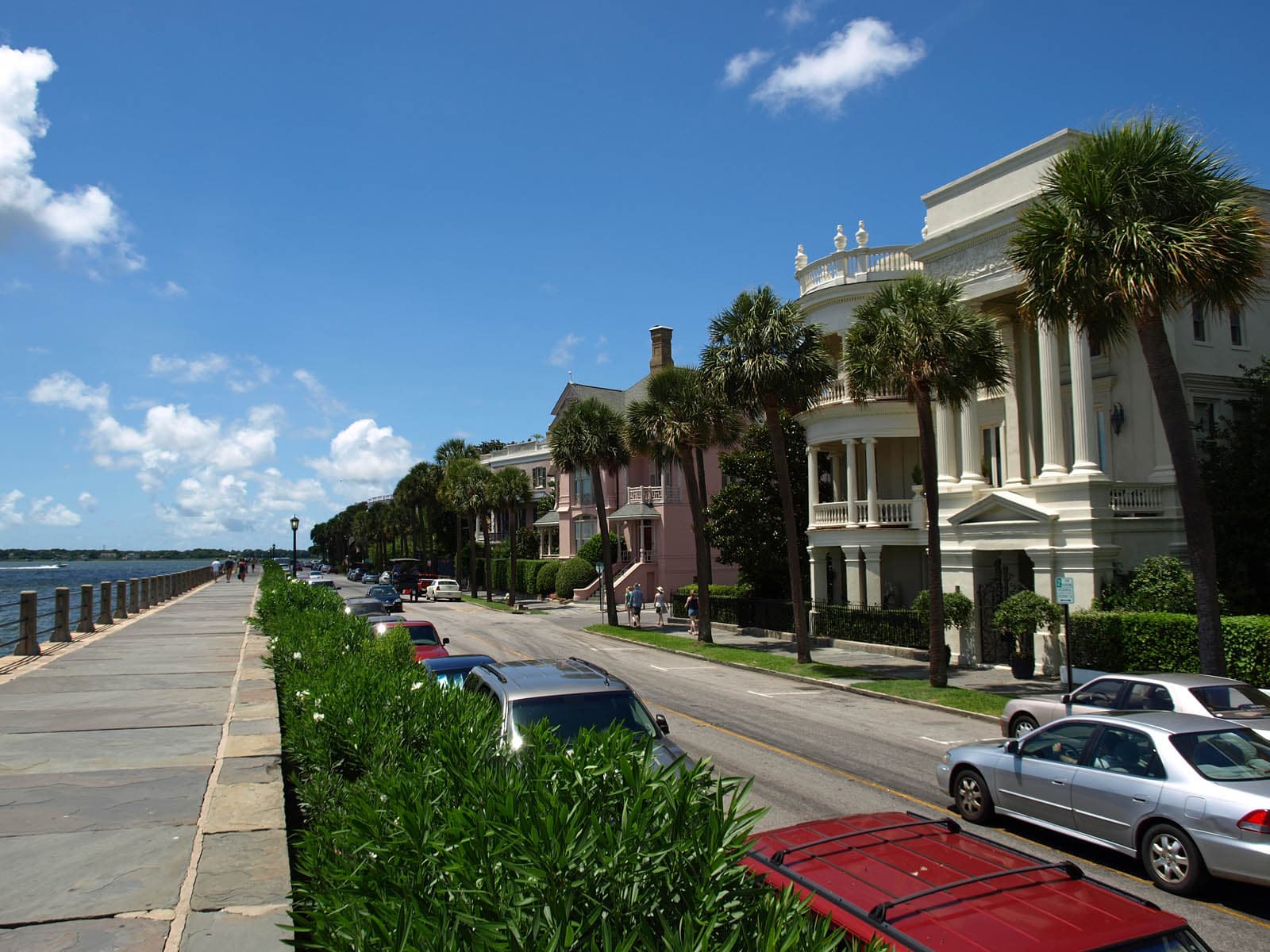
you want pastel antebellum architecture, harbor-side history, modern Southern cuisine's spiritual home, and Gullah-Geechee heritage
Choose Denali National Park if...
you want North America's tallest peak — the 30 Percent Club, Park Road wildlife buses, Talkeetna flightseeing, and Alaska Railroad's Denali Star
Charleston
Denali National Park