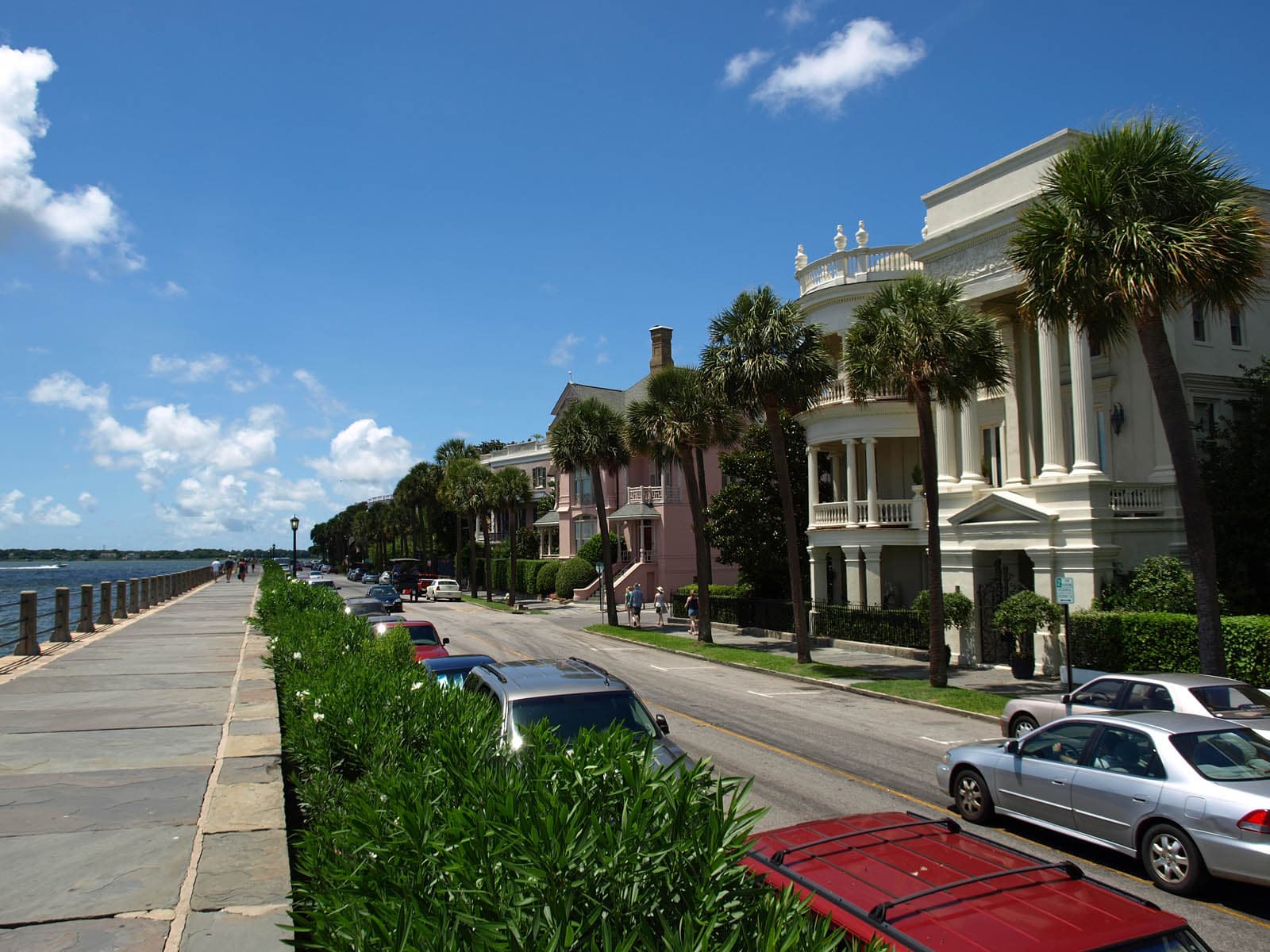
Charleston
United States

Los Angeles
United States
Charleston
Los Angeles
💰 Budget
🛡️ Safety
Charleston
The historic peninsula and the surrounding beach/barrier islands are very safe for visitors, with low violent crime and a heavy tourist-police presence downtown. Property crime (car break-ins, package theft) is the most common issue. Some outlying neighborhoods on the West Side and in North Charleston have higher crime rates but are not places most tourists end up.
Los Angeles
Most tourist areas in LA (Santa Monica, Venice, Beverly Hills, West Hollywood, Hollywood, Downtown Arts District) are generally safe by day. Petty theft — car break-ins especially — is the most common crime against visitors. Homelessness is highly visible in parts of Downtown and Venice. Certain neighborhoods see higher violent crime but are well outside typical tourist routes.
⭐ Ratings
🌤️ Weather
Charleston
Charleston has a humid subtropical climate — mild winters, long warm springs, and punishingly hot and humid summers. Hurricane season runs June through November with peak risk in August-September. Spring (March-May) and fall (October-November) are the sweet spots.
Los Angeles
LA has a Mediterranean climate with warm, dry summers and mild, wetter winters. The "marine layer" — a low morning cloud cover off the Pacific — often burns off by late morning (locals call it "June Gloom" when it lingers). Inland valleys run significantly hotter than the coast, sometimes by 10-15°C on the same day.
🚇 Getting Around
Charleston
The historic peninsula is small — about 2 miles north-to-south at its widest — and extremely walkable. Charleston has very limited public transit for a US city: CARTA buses exist but run infrequently and cover downtown poorly for tourists. Most visitors walk everything downtown and rent a car or use Uber/Lyft for beaches, plantations, and the airport.
Walkability: Charleston's historic peninsula is one of the most walkable neighborhoods in the American South — flat, shaded by live oaks, well-maintained sidewalks (some brick and uneven), and tightly packed with destinations. Outside the peninsula, however, the metro is car-dependent and pedestrian infrastructure thins out fast.
Los Angeles
LA is famously car-centric and spread over an enormous area, though Metro rail and bus service has expanded significantly. A TAP card works on Metro rail, buses, and most municipal systems. Expect traffic — rush hour on the 405 or 101 can be brutal. Rideshare is widespread, and neighborhoods like Santa Monica, Venice, and Downtown are walkable in pockets.
Walkability: LA is a city of walkable pockets inside a driving city. Santa Monica, Venice (Abbot Kinney/Boardwalk), Downtown (Arts District, Grand Park, Broadway), Hollywood Boulevard, Old Pasadena, and Silver Lake/Los Feliz all reward pedestrians. Getting between these pockets almost always requires a car, train, or rideshare.
The Verdict
Choose Charleston if...
you want pastel antebellum architecture, harbor-side history, modern Southern cuisine's spiritual home, and Gullah-Geechee heritage
Choose Los Angeles if...
you want Hollywood glamour, Pacific beaches, world-class tacos and sushi, and year-round sunshine in a sprawling car-culture city
Charleston
Los Angeles