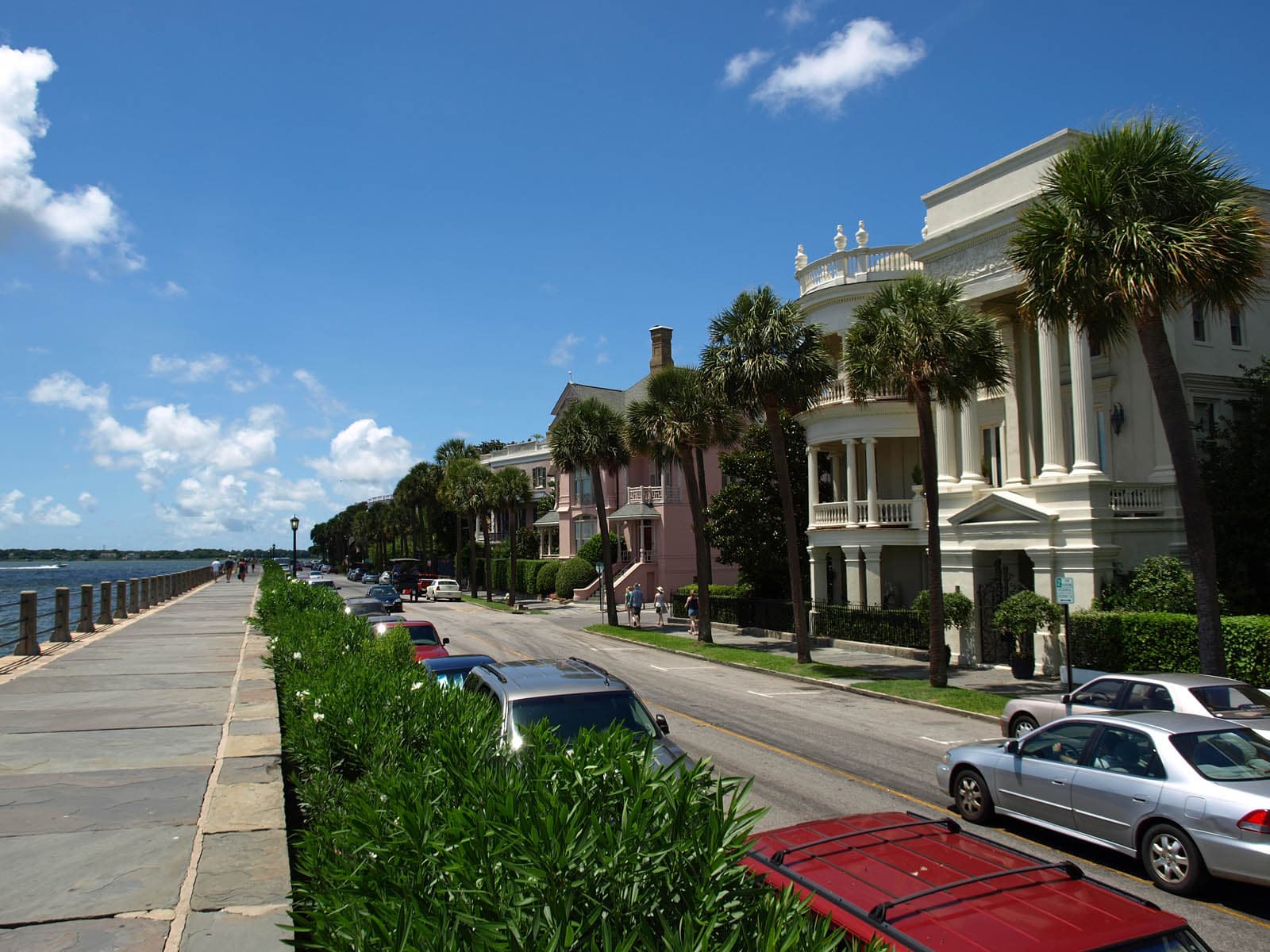
Charleston
United States

Miami
United States
Charleston
Miami
💰 Budget
🛡️ Safety
Charleston
The historic peninsula and the surrounding beach/barrier islands are very safe for visitors, with low violent crime and a heavy tourist-police presence downtown. Property crime (car break-ins, package theft) is the most common issue. Some outlying neighborhoods on the West Side and in North Charleston have higher crime rates but are not places most tourists end up.
Miami
Most tourist areas of Miami — South Beach, Wynwood, the Design District, Coconut Grove, Coral Gables, Key Biscayne — are safe for visitors. Petty theft, car break-ins, and pickpocketing are the main concerns. Some neighborhoods north and west of downtown have higher crime and tourists have no reason to go there. Spring break season (March) and major events bring rowdy crowds to South Beach.
⭐ Ratings
🌤️ Weather
Charleston
Charleston has a humid subtropical climate — mild winters, long warm springs, and punishingly hot and humid summers. Hurricane season runs June through November with peak risk in August-September. Spring (March-May) and fall (October-November) are the sweet spots.
Miami
Miami has a tropical monsoon climate — warm to hot year-round, with a distinct wet season (May-October) and dry season (November-April). Ocean breezes moderate coastal temperatures. The "dry season" is the peak tourist season with near-perfect weather, while summer brings heat, humidity, and thunderstorms.
🚇 Getting Around
Charleston
The historic peninsula is small — about 2 miles north-to-south at its widest — and extremely walkable. Charleston has very limited public transit for a US city: CARTA buses exist but run infrequently and cover downtown poorly for tourists. Most visitors walk everything downtown and rent a car or use Uber/Lyft for beaches, plantations, and the airport.
Walkability: Charleston's historic peninsula is one of the most walkable neighborhoods in the American South — flat, shaded by live oaks, well-maintained sidewalks (some brick and uneven), and tightly packed with destinations. Outside the peninsula, however, the metro is car-dependent and pedestrian infrastructure thins out fast.
Miami
Miami is a sprawling, car-centric city. Public transit exists but is limited compared to New York or Chicago — the Metrorail runs a single main corridor, the Metromover is a free downtown people-mover, and buses fill gaps. Rideshare is extremely popular, and many visitors rent cars to reach the Everglades, the Keys, or Fort Lauderdale.
Walkability: South Beach is very walkable — tight grid, flat, with Lincoln Road pedestrianized and Ocean Drive full of life. Wynwood, the Design District, and Coconut Grove are also walkable neighborhood-scale. Between neighborhoods, however, distances are long and rideshare is usually necessary. Avoid walking across causeways.
The Verdict
Choose Charleston if...
you want pastel antebellum architecture, harbor-side history, modern Southern cuisine's spiritual home, and Gullah-Geechee heritage
Choose Miami if...
you want Art Deco beaches, Cuban cafecito, Wynwood street art, legendary nightlife, and day trips to the Keys or Everglades
Charleston