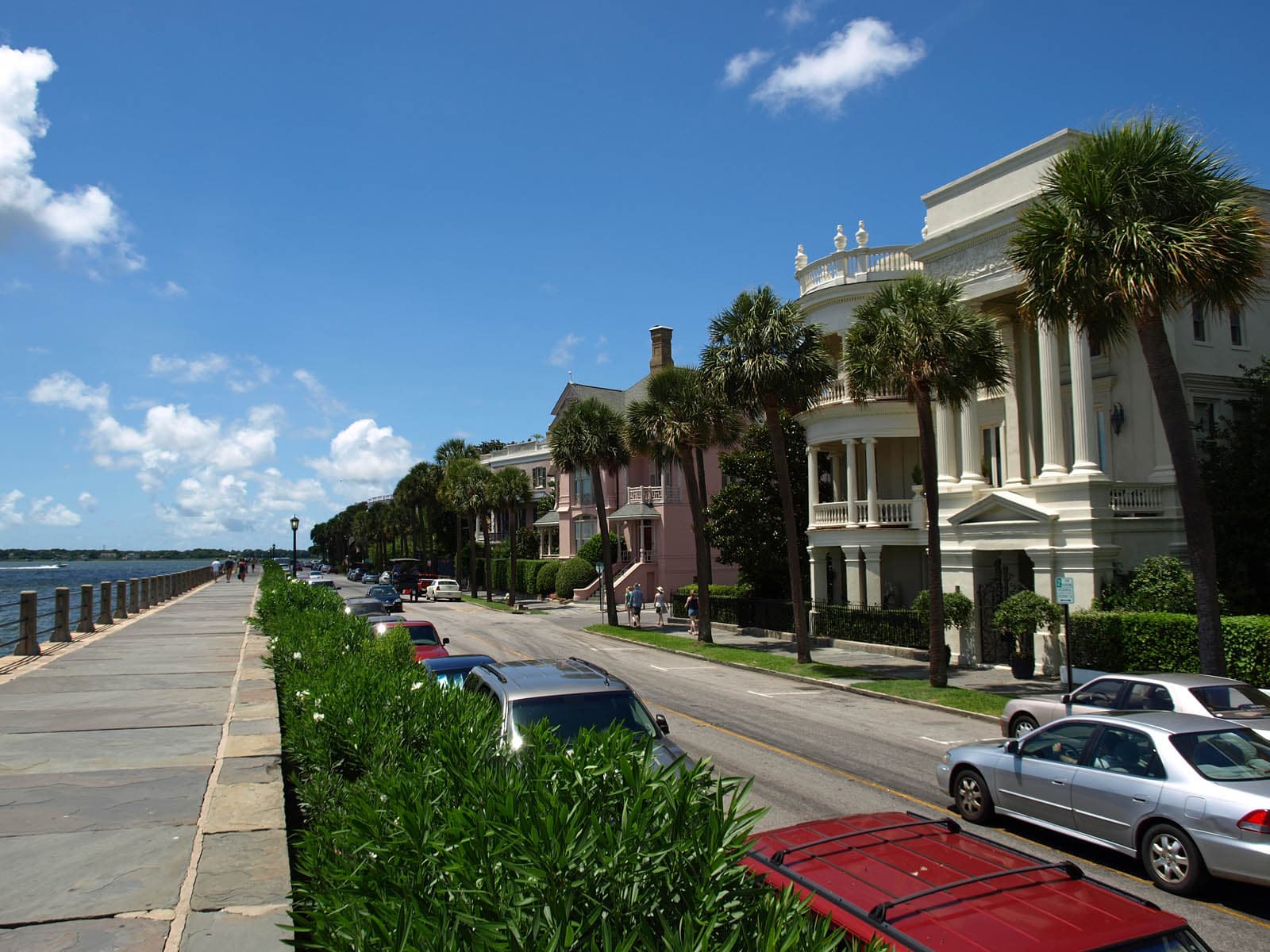
Charleston
United States

New Orleans
United States
Charleston
New Orleans
💰 Budget
🛡️ Safety
Charleston
The historic peninsula and the surrounding beach/barrier islands are very safe for visitors, with low violent crime and a heavy tourist-police presence downtown. Property crime (car break-ins, package theft) is the most common issue. Some outlying neighborhoods on the West Side and in North Charleston have higher crime rates but are not places most tourists end up.
New Orleans
New Orleans has higher violent crime rates than most US tourist cities, but crime is heavily concentrated in specific neighborhoods. Tourist areas (French Quarter during day, Garden District, Warehouse District, Frenchmen Street) are generally safe. Pickpocketing and phone theft on Bourbon Street are common. After-hours crime spikes outside these zones.
⭐ Ratings
🌤️ Weather
Charleston
Charleston has a humid subtropical climate — mild winters, long warm springs, and punishingly hot and humid summers. Hurricane season runs June through November with peak risk in August-September. Spring (March-May) and fall (October-November) are the sweet spots.
New Orleans
New Orleans has a humid subtropical climate — hot and sticky for most of the year, with short, mild winters. Summer humidity is famously oppressive, and afternoon thunderstorms are near-daily from June through September. Hurricane season runs June through November.
🚇 Getting Around
Charleston
The historic peninsula is small — about 2 miles north-to-south at its widest — and extremely walkable. Charleston has very limited public transit for a US city: CARTA buses exist but run infrequently and cover downtown poorly for tourists. Most visitors walk everything downtown and rent a car or use Uber/Lyft for beaches, plantations, and the airport.
Walkability: Charleston's historic peninsula is one of the most walkable neighborhoods in the American South — flat, shaded by live oaks, well-maintained sidewalks (some brick and uneven), and tightly packed with destinations. Outside the peninsula, however, the metro is car-dependent and pedestrian infrastructure thins out fast.
New Orleans
New Orleans is compact and walkable in its tourist core. The Regional Transit Authority (RTA) runs historic streetcars, buses, and ferries. A Jazzy Pass offers unlimited rides. Driving downtown is difficult — streets are narrow, parking is scarce and expensive, and the one-way grid is confusing.
Walkability: The French Quarter, Marigny, CBD, and Warehouse District are highly walkable. The Garden District, Bywater, and Mid-City are walkable once you've arrived, but you'll want a streetcar or rideshare to get between districts. Sidewalks in the Quarter can be uneven — watch for broken flagstones, especially at night.
The Verdict
Choose Charleston if...
you want pastel antebellum architecture, harbor-side history, modern Southern cuisine's spiritual home, and Gullah-Geechee heritage
Choose New Orleans if...
you want America's most culturally distinct city — Creole and Cajun food, jazz on Frenchmen Street, and French Quarter magic
Charleston
New Orleans