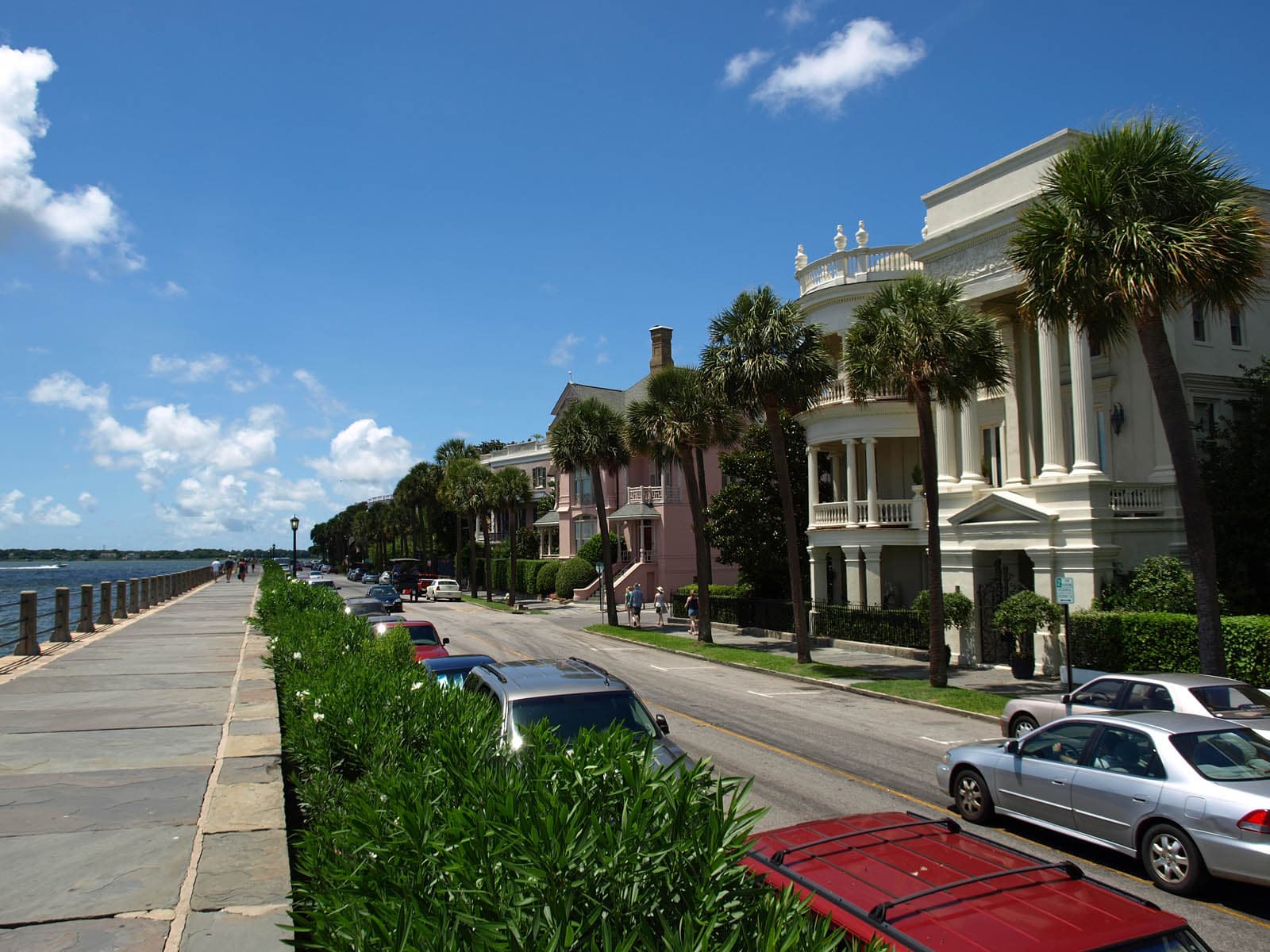
Charleston
United States

Santo Domingo
Dominican Republic
Charleston
Santo Domingo
💰 Budget
🛡️ Safety
Charleston
The historic peninsula and the surrounding beach/barrier islands are very safe for visitors, with low violent crime and a heavy tourist-police presence downtown. Property crime (car break-ins, package theft) is the most common issue. Some outlying neighborhoods on the West Side and in North Charleston have higher crime rates but are not places most tourists end up.
Santo Domingo
Santo Domingo requires more street awareness than typical Caribbean resort destinations. The Zona Colonial and upscale neighborhoods (Piantini, Naco, Gazcue) are relatively safe during the day. Petty crime (pickpocketing, phone snatching) is common. Motorcycle-borne snatch theft is a real issue. Avoid walking alone at night outside tourist areas.
⭐ Ratings
🌤️ Weather
Charleston
Charleston has a humid subtropical climate — mild winters, long warm springs, and punishingly hot and humid summers. Hurricane season runs June through November with peak risk in August-September. Spring (March-May) and fall (October-November) are the sweet spots.
Santo Domingo
Santo Domingo has a tropical maritime climate with warm temperatures year-round. There are two rainy periods: May-June and September-November. Hurricane season runs June through November, with peak risk in August-October. The "dry" season (December-April) still sees occasional showers but is significantly drier.
🚇 Getting Around
Charleston
The historic peninsula is small — about 2 miles north-to-south at its widest — and extremely walkable. Charleston has very limited public transit for a US city: CARTA buses exist but run infrequently and cover downtown poorly for tourists. Most visitors walk everything downtown and rent a car or use Uber/Lyft for beaches, plantations, and the airport.
Walkability: Charleston's historic peninsula is one of the most walkable neighborhoods in the American South — flat, shaded by live oaks, well-maintained sidewalks (some brick and uneven), and tightly packed with destinations. Outside the peninsula, however, the metro is car-dependent and pedestrian infrastructure thins out fast.
Santo Domingo
Santo Domingo has the Caribbean's only metro system, plus an extensive (if chaotic) public bus and guagua (minibus) network. Uber is the recommended transport for tourists — affordable, safe, and avoids language barriers. Traffic congestion is severe during rush hours.
Walkability: The Zona Colonial is compact and walkable — all major colonial sites are within a 20-minute walk of each other. Sidewalks in the rest of the city are inconsistent, traffic is aggressive, and distances are large. Walking along the Malecon is pleasant but the heat makes long walks uncomfortable. Use Metro or Uber for anything outside the Zona Colonial.
The Verdict
Choose Charleston if...
you want pastel antebellum architecture, harbor-side history, modern Southern cuisine's spiritual home, and Gullah-Geechee heritage
Choose Santo Domingo if...
you want the Americas' oldest colonial capital — Zona Colonial, Alcázar de Colón, Catedral Primada, Plaza de España, and merengue in Parque Colón
Charleston
Santo Domingo