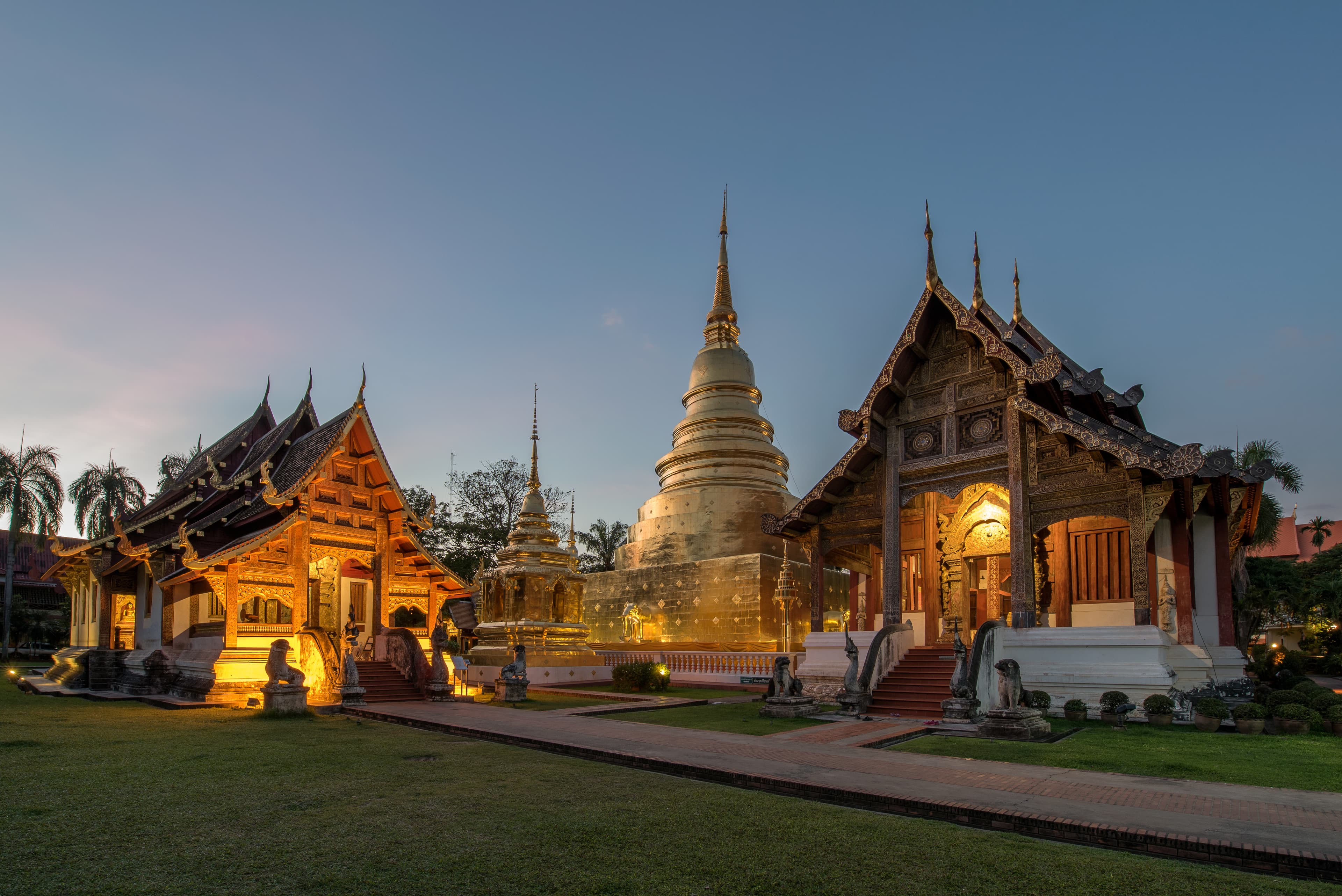
Chiang Mai
Thailand

Krabi
Thailand
Chiang Mai
Krabi
💰 Budget
🛡️ Safety
Chiang Mai
Chiang Mai is one of the safest cities in Southeast Asia for travelers. Violent crime against tourists is extremely rare, though petty theft and scams exist. The biggest health concern is air quality during burning season (February-April).
Krabi
Krabi is a relatively safe destination for tourists. The area sees millions of visitors annually with a well-established tourism infrastructure. The main dangers are environmental and road-related rather than criminal — ocean hazards during monsoon, motorbike accidents, and sun exposure account for the majority of tourist incidents. Petty theft exists but serious crime targeting tourists is uncommon. Solo female travelers generally report feeling safe in both Ao Nang and Krabi Town.
⭐ Ratings
🌤️ Weather
Chiang Mai
Chiang Mai has a tropical savanna climate with three distinct seasons: hot, rainy, and cool. The city sits in a valley which traps heat and, unfortunately, smoke during the burning season (February-April).
Krabi
Krabi has a tropical monsoon climate dominated by two distinct seasons: a dry season with calm, azure seas (November to April) and a monsoon season with heavy rain and rough water (May to October). Sea temperature stays around 27-29°C year-round. The dry season brings the ideal postcard conditions most people picture, but even the wet season offers long sunny stretches between downpours.
🚇 Getting Around
Chiang Mai
Chiang Mai lacks a metro or rail system, so getting around relies on songthaews (red shared trucks), tuk-tuks, Grab ride-hailing, and rented scooters. The Old City is compact enough to walk or cycle. The city is currently building a light rail system planned for future years.
Walkability: The Old City is very walkable — roughly 1.5 km on each side — and most major temples are within easy walking distance of each other. The Nimmanhaemin area is also pedestrian-friendly. Beyond these areas, distances grow and motorized transport is needed.
Krabi
Water transport is as important as road transport in Krabi — longtail boats and ferries connect the beaches, islands, and mainland in ways no road can. On land, songthaews (shared pickup trucks) run fixed routes between Krabi Town and Ao Nang, while motorbike taxis and rentals cover shorter distances. The Grab app works in Ao Nang and Krabi Town but supply is limited compared to Phuket.
Walkability: Ao Nang beach strip is walkable end-to-end in about 20 minutes and most restaurants, shops, and the longtail pier are on a single road. Krabi Town is also walkable around the river and night market area. However, between Ao Nang and Krabi Town (15 km) walking is impractical — use songthaew or Grab. Railay is car-free by necessity and entirely pedestrian.
The Verdict
Choose Chiang Mai if...
you want northern Thailand's temple city — Doi Suthep sunsets, Sunday Walking Street, ethical elephant sanctuaries, and Songkran soaked to the bone
Choose Krabi if...
you want limestone karsts rising from turquoise sea, Railay's boat-only beach cliffs, and roughly half the price of Phuket
Chiang Mai