Glacier National Park vs Yellowstone National Park
Which destination is right for your next trip?

Glacier National Park
United States
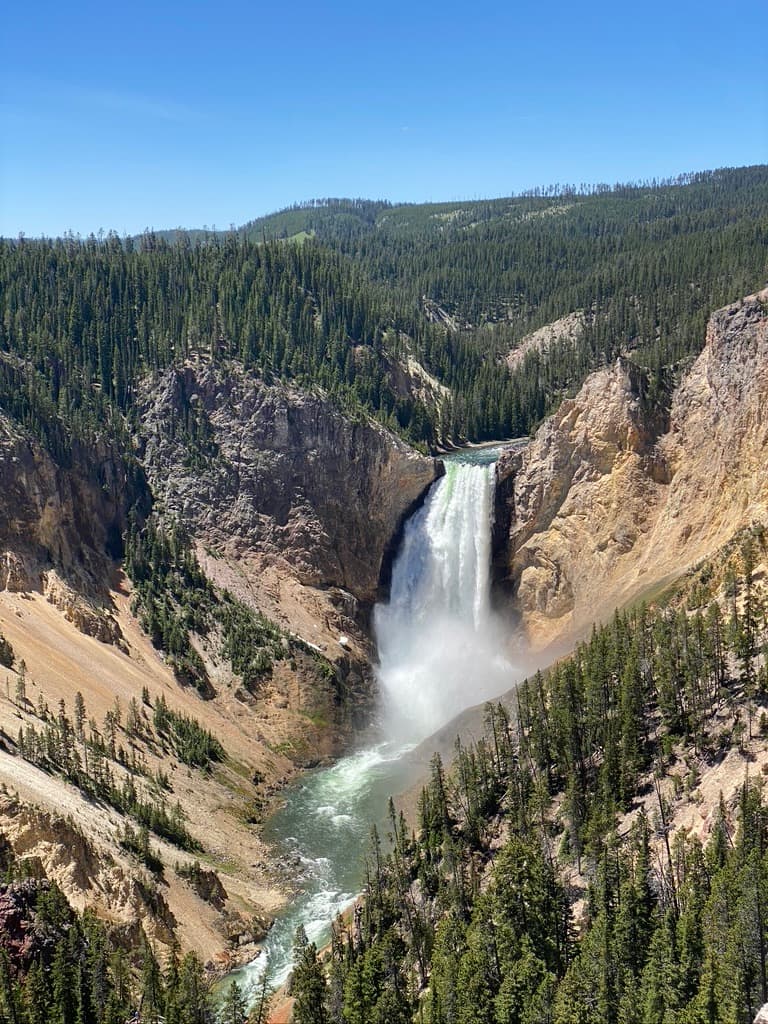
Yellowstone National Park
United States
Glacier National Park
Yellowstone National Park
💰 Budget
🛡️ Safety
Glacier National Park
Glacier is extremely safe from a crime perspective but is genuinely serious wilderness with real consequences. The park holds the densest grizzly population in the contiguous US plus black bears throughout — bear spray is not optional, it is a piece of required equipment. Add the exposed cliff-edge driving on Going-to-the-Sun, sudden mountain thunderstorms with lightning on high passes, hypothermia risk even in August, hanging glaciers and rockfall, cold glacier-fed stream crossings, and late-summer wildfire smoke, and the hazard profile is genuinely different from most other US parks. Rangers are superb but help can be hours away in the backcountry.
Yellowstone National Park
Yellowstone is extremely safe from a crime perspective. The real hazards are natural — thermal features that can kill you in seconds, bison that gore more visitors than bears each year, grizzly bears, sudden weather changes, and thin ice on Yellowstone Lake. The park has a strong ranger presence, but help can be hours away in remote areas. Respect wildlife distances, stay on boardwalks near thermal features, and always carry bear spray in the backcountry.
⭐ Ratings
🌤️ Weather
Glacier National Park
Glacier has an aggressively short, intense summer season bookended by long winters and unpredictable shoulder seasons. The visitable window is effectively mid-June to mid-September — Going-to-the-Sun Road usually opens late June or early July (Logan Pass can hold 80 feet of snow into May) and closes by mid-October. Within that window weather shifts hour-by-hour: a cool foggy morning at Lake McDonald often becomes a 25°C afternoon at Logan Pass, then a thunderstorm at 4pm, then clear starlight by 10pm. Always pack layers, always carry rain gear, and never assume a dawn temperature predicts the afternoon.
Yellowstone National Park
Yellowstone has a high-elevation continental climate dominated by its altitude — most of the park sits at 7,000-8,500 feet, which means summer highs are pleasant but nights are cold year-round, and winters are genuinely severe. Snow is possible in every month. Weather varies enormously across the park: Mammoth (lowest elevation) can be 15°F warmer than Old Faithful on the same day. Always pack layers and rain gear.
🚇 Getting Around
Glacier National Park
Glacier is a car park. There is no rideshare inside the park, no Uber from gateway towns, and no public transit beyond a seasonal free NPS shuttle on Going-to-the-Sun Road. A private vehicle is essentially required for flexibility — dawn starts at distant trailheads, Many Glacier access (55 miles from West Glacier around the park's south end), and Polebridge or Two Medicine all demand a car. Peak-summer vehicle reservations for Going-to-the-Sun are in effect most recent years — check nps.gov/glac for the current year's rules before you book.
Walkability: Within individual areas — Apgar Village, Lake McDonald Lodge, Many Glacier Hotel grounds, St. Mary, Two Medicine — walking is pleasant and all services cluster in short loops. But between areas distances are substantial: Apgar to Many Glacier is 55 miles, Apgar to Two Medicine is 80+ miles. There are no sidewalks along Going-to-the-Sun; you will drive or shuttle between regions. Whitefish (30 miles west) is a highly walkable mountain town worth an afternoon if you base there.
Yellowstone National Park
A private vehicle is essentially required — there is no public transit into or through Yellowstone, no reliable rideshare inside the park, and the Grand Loop Road (142 mi figure-8) connects the major sights with distances that demand a car. Xanterra operates in-park shuttle bus tours from the lodges that can supplement but not replace a personal vehicle. In peak summer, expect bison traffic jams that can stop traffic for 30+ minutes, a 45 mph park-wide speed limit, and parking lots that fill by 8-9am at popular features.
Walkability: Yellowstone is not walkable between areas — distances are too great and there are no sidewalks along park roads. Within villages (Old Faithful, Canyon, Mammoth, Lake) you can walk between lodges, restaurants, and visitor centers. Boardwalk systems around geyser basins (Upper, Midway, Lower, Norris, Mammoth) are extensive and allow hours of thermal feature exploration on foot.
The Verdict
Choose Glacier National Park if...
you want jagged peaks, Going-to-the-Sun Road, grizzly country, and Amtrak's Empire Builder stopping right at a park entrance
Choose Yellowstone National Park if...
you want the world's first national park — wolves + bison in Lamar Valley and half the planet's geysers on a figure-eight drive
Glacier National Park
Yellowstone National Park