🤝 It's a tie — both rated 65 OVR

Botswana
65OVR
Namibia
65OVR
Okavango Delta
Botswana
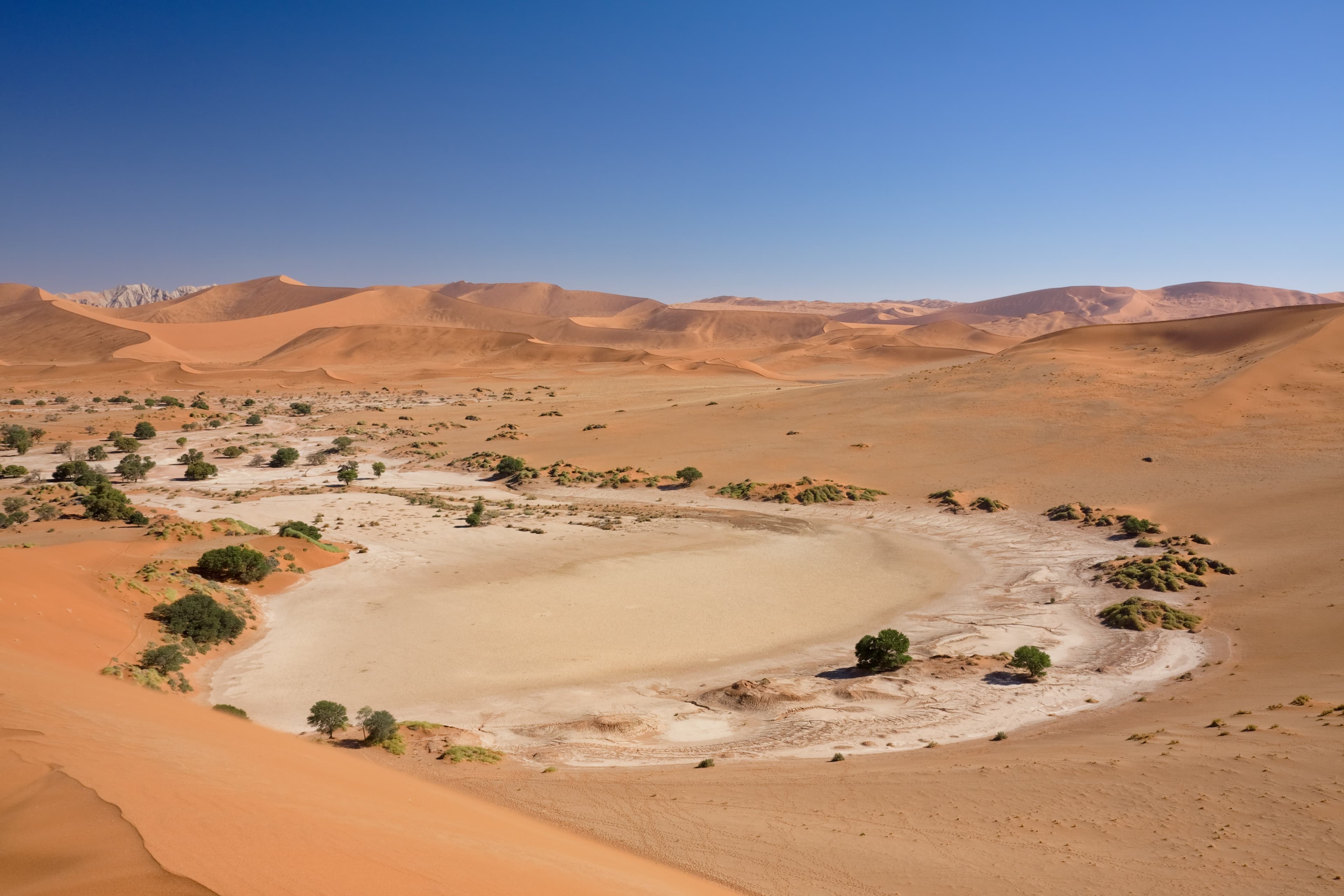
Sossusvlei
Namibia
Okavango Delta
Sossusvlei
💰 Budget
🛡️ Safety
Okavango Delta
Botswana is one of Africa's most politically stable and low-crime countries, consistently ranking among the safest on the continent for travellers. The Okavango Delta itself is a wilderness reserve with essentially zero crime — the risks here are ecological. Hippos, elephants, lions, crocodiles, buffalo, and malaria are the things to respect. Fly-in camps have excellent medical evacuation protocols; self-drivers through Moremi must be completely self-sufficient.
Sossusvlei
Namibia is one of the safest countries in sub-Saharan Africa for tourists — politically stable, low crime outside urban areas, and with a well-organized national parks infrastructure. The main safety concerns at Sossusvlei are environmental: extreme heat, dehydration, isolation, and wildlife. There is no violent crime risk in the park itself. Solo travelers and families are both common.
⭐ Ratings
🌤️ Weather
Okavango Delta
The Okavango's weather is paradoxical: the delta is driest on land when the floodwaters are highest. Angolan summer rains (January–March) take months to travel down the Okavango River, arriving in Botswana between May and August — the southern African dry winter. This means water levels peak while local rainfall is near zero. The classic safari season of May–October is both the driest and the flood-richest time to visit.
Sossusvlei
Sossusvlei sits in the hyper-arid Namib Desert with almost no rainfall and extreme temperature swings between day and night. Daytime temperatures are warm to hot year-round; nights can be surprisingly cold, especially in winter (May-August). Brief and unpredictable rains fall occasionally between January and March. The desert sun is intense — sunscreen, hat, and at least 2 litres of water per person per day are essential.
🚇 Getting Around
Okavango Delta
Within the delta, there are effectively no roads — transport is by light aircraft between lodge airstrips, motorboat or mokoro along the channels, and 4x4 game-drive vehicles on the game paths of each concession. All camp-to-camp transfers are by Cessna 206 or Caravan bush planes operated by Mack Air, Moremi Air, or Wilderness Air. Self-drivers can access Moremi and Khwai by 4x4 only; the deep delta is not accessible by road.
Walkability: The delta is not walkable — settled areas are only the lodge footprint and the village perimeter of Maun. Bush walks within private concessions must be accompanied by an armed, licensed guide. Public self-guided walking is prohibited in all game reserves including Moremi. Within lodges and camps, short walks between tents are normal; camp staff may escort guests after dark.
Sossusvlei
Sossusvlei is a self-drive destination — there is no public transport to or within the park. A rental car is essential for independent travel. The road from Sesriem Gate to the 2x4 parking area (4.5 km before Sossusvlei pan) is tarred; the final 5 km to the pan requires 4x4 or the NWR shuttle. Within the park, distances are significant — the one-way journey from Sesriem Gate to the Sossusvlei pan is 60 km.
Walkability: Driving is required between sites — distances inside the park are too great to walk. Hiking on foot is permitted within the vleis and on the dunes themselves. The walk from the 2x4 parking area to Deadvlei is approximately 5 km one-way through soft sand. Comfortable closed shoes are essential; sandals are not recommended on hot sand.
The Verdict
Choose Okavango Delta if...
you want the world's largest inland delta — mokoro canoe safaris, Big 5 + wild dogs, and luxury fly-in camps in UNESCO wilderness
Choose Sossusvlei if...
you want Earth's tallest red dunes and Deadvlei's black tree skeletons on white clay — a self-drive highlight of any Namibia itinerary
Okavango Delta
Sossusvlei