Serengeti National Park vs Sossusvlei
Which destination is right for your next trip?

Serengeti National Park
Tanzania
Sossusvlei
Namibia
Serengeti National Park
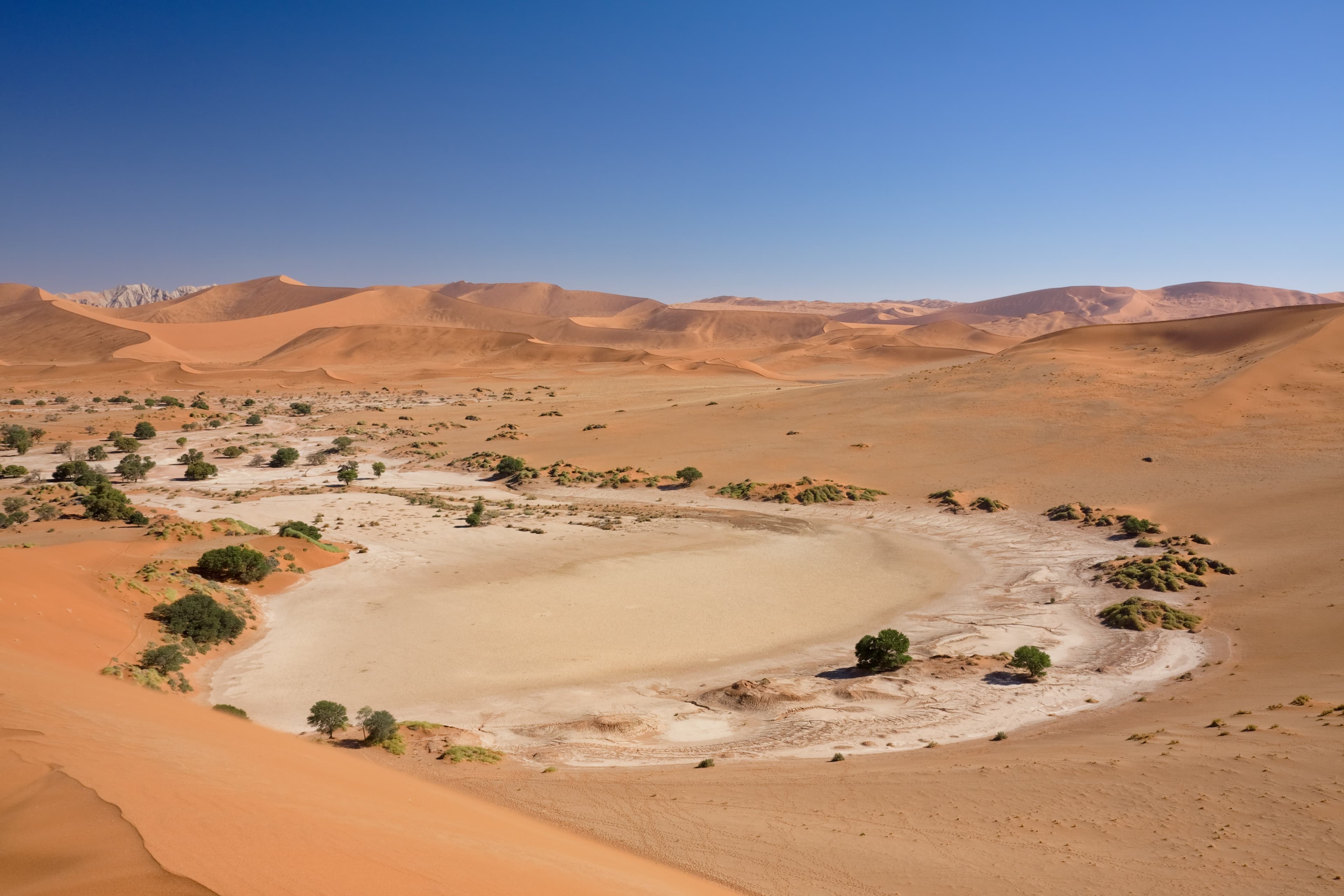
Sossusvlei
💰 Budget
🛡️ Safety
Serengeti National Park
Serengeti National Park is extremely safe for visitors traveling with registered guides and reputable operators. The principal risks are wildlife-related if you ignore safety protocols, and health-related (malaria, sun, and dehydration). Crime is negligible inside the park. Tanzania itself is a stable country with a long history of safe tourism, though normal urban precautions apply in Arusha.
Sossusvlei
Namibia is one of the safest countries in sub-Saharan Africa for tourists — politically stable, low crime outside urban areas, and with a well-organized national parks infrastructure. The main safety concerns at Sossusvlei are environmental: extreme heat, dehydration, isolation, and wildlife. There is no violent crime risk in the park itself. Solo travelers and families are both common.
⭐ Ratings
🌤️ Weather
Serengeti National Park
The Serengeti has a semi-arid climate with two wet seasons and two dry seasons, directly driving the Great Migration cycle. Temperatures are moderate year-round at this altitude (roughly 920-1,850 m), rarely exceeding 30°C or dropping below 15°C. The dry season from June through October is the most popular time to visit, but each season offers distinct wildlife experiences.
Sossusvlei
Sossusvlei sits in the hyper-arid Namib Desert with almost no rainfall and extreme temperature swings between day and night. Daytime temperatures are warm to hot year-round; nights can be surprisingly cold, especially in winter (May-August). Brief and unpredictable rains fall occasionally between January and March. The desert sun is intense — sunscreen, hat, and at least 2 litres of water per person per day are essential.
🚇 Getting Around
Serengeti National Park
Inside Serengeti National Park, a closed or open-roof 4WD safari vehicle is the only practical and legal mode of transport. Self-drive is technically possible with your own 4WD but almost never attempted by foreign visitors due to road conditions and navigation challenges. The vast majority of visitors travel in operator-supplied Land Cruisers or Land Rovers.
Walkability: There is zero independent walkability inside Serengeti National Park. Walking safaris with armed rangers are offered only by a small number of licensed camps in adjacent private concessions. Inside the park, all movement between destinations must be by vehicle.
Sossusvlei
Sossusvlei is a self-drive destination — there is no public transport to or within the park. A rental car is essential for independent travel. The road from Sesriem Gate to the 2x4 parking area (4.5 km before Sossusvlei pan) is tarred; the final 5 km to the pan requires 4x4 or the NWR shuttle. Within the park, distances are significant — the one-way journey from Sesriem Gate to the Sossusvlei pan is 60 km.
Walkability: Driving is required between sites — distances inside the park are too great to walk. Hiking on foot is permitted within the vleis and on the dunes themselves. The walk from the 2x4 parking area to Deadvlei is approximately 5 km one-way through soft sand. Comfortable closed shoes are essential; sandals are not recommended on hot sand.
The Verdict
Choose Serengeti National Park if...
you want the world's most famous safari — the Great Migration, Mara River crossings, balloon dawns, and the Big Four (rhino is rare here)
Choose Sossusvlei if...
you want Earth's tallest red dunes and Deadvlei's black tree skeletons on white clay — a self-drive highlight of any Namibia itinerary
Serengeti National Park
Sossusvlei