Charleston
United States

Glacier National Park
United States
Charleston
Glacier National Park
💰 Budget
🛡️ Safety
Charleston
The historic peninsula and the surrounding beach/barrier islands are very safe for visitors, with low violent crime and a heavy tourist-police presence downtown. Property crime (car break-ins, package theft) is the most common issue. Some outlying neighborhoods on the West Side and in North Charleston have higher crime rates but are not places most tourists end up.
Glacier National Park
Glacier is extremely safe from a crime perspective but is genuinely serious wilderness with real consequences. The park holds the densest grizzly population in the contiguous US plus black bears throughout — bear spray is not optional, it is a piece of required equipment. Add the exposed cliff-edge driving on Going-to-the-Sun, sudden mountain thunderstorms with lightning on high passes, hypothermia risk even in August, hanging glaciers and rockfall, cold glacier-fed stream crossings, and late-summer wildfire smoke, and the hazard profile is genuinely different from most other US parks. Rangers are superb but help can be hours away in the backcountry.
⭐ Ratings
🌤️ Weather
Charleston
Charleston has a humid subtropical climate — mild winters, long warm springs, and punishingly hot and humid summers. Hurricane season runs June through November with peak risk in August-September. Spring (March-May) and fall (October-November) are the sweet spots.
Glacier National Park
Glacier has an aggressively short, intense summer season bookended by long winters and unpredictable shoulder seasons. The visitable window is effectively mid-June to mid-September — Going-to-the-Sun Road usually opens late June or early July (Logan Pass can hold 80 feet of snow into May) and closes by mid-October. Within that window weather shifts hour-by-hour: a cool foggy morning at Lake McDonald often becomes a 25°C afternoon at Logan Pass, then a thunderstorm at 4pm, then clear starlight by 10pm. Always pack layers, always carry rain gear, and never assume a dawn temperature predicts the afternoon.
🚇 Getting Around
Charleston
The historic peninsula is small — about 2 miles north-to-south at its widest — and extremely walkable. Charleston has very limited public transit for a US city: CARTA buses exist but run infrequently and cover downtown poorly for tourists. Most visitors walk everything downtown and rent a car or use Uber/Lyft for beaches, plantations, and the airport.
Walkability: Charleston's historic peninsula is one of the most walkable neighborhoods in the American South — flat, shaded by live oaks, well-maintained sidewalks (some brick and uneven), and tightly packed with destinations. Outside the peninsula, however, the metro is car-dependent and pedestrian infrastructure thins out fast.
Glacier National Park
Glacier is a car park. There is no rideshare inside the park, no Uber from gateway towns, and no public transit beyond a seasonal free NPS shuttle on Going-to-the-Sun Road. A private vehicle is essentially required for flexibility — dawn starts at distant trailheads, Many Glacier access (55 miles from West Glacier around the park's south end), and Polebridge or Two Medicine all demand a car. Peak-summer vehicle reservations for Going-to-the-Sun are in effect most recent years — check nps.gov/glac for the current year's rules before you book.
Walkability: Within individual areas — Apgar Village, Lake McDonald Lodge, Many Glacier Hotel grounds, St. Mary, Two Medicine — walking is pleasant and all services cluster in short loops. But between areas distances are substantial: Apgar to Many Glacier is 55 miles, Apgar to Two Medicine is 80+ miles. There are no sidewalks along Going-to-the-Sun; you will drive or shuttle between regions. Whitefish (30 miles west) is a highly walkable mountain town worth an afternoon if you base there.
The Verdict
Choose Charleston if...
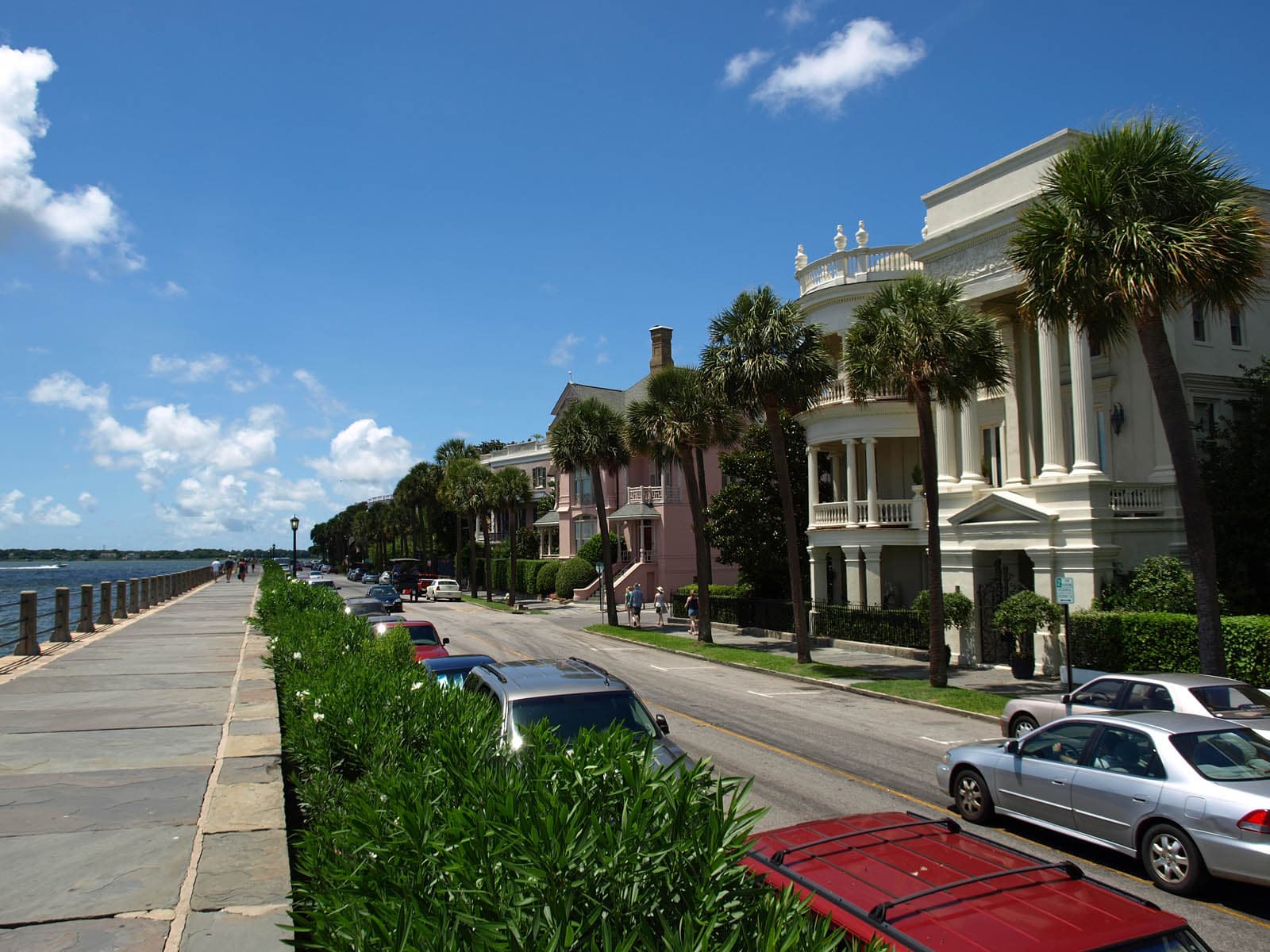
you want pastel antebellum architecture, harbor-side history, modern Southern cuisine's spiritual home, and Gullah-Geechee heritage
Choose Glacier National Park if...
you want jagged peaks, Going-to-the-Sun Road, grizzly country, and Amtrak's Empire Builder stopping right at a park entrance
Charleston
Glacier National Park