Charleston vs Grand Canyon National Park
Which destination is right for your next trip?
Charleston
United States

Grand Canyon National Park
United States
Charleston
Grand Canyon National Park
💰 Budget
🛡️ Safety
Charleston
The historic peninsula and the surrounding beach/barrier islands are very safe for visitors, with low violent crime and a heavy tourist-police presence downtown. Property crime (car break-ins, package theft) is the most common issue. Some outlying neighborhoods on the West Side and in North Charleston have higher crime rates but are not places most tourists end up.
Grand Canyon National Park
Crime at the Grand Canyon is essentially a non-issue. Natural hazards are the real story — people die here every year, almost always from preventable mistakes. The single most important rule: DOWN IS OPTIONAL, UP IS MANDATORY. The canyon punishes overconfidence. Most search-and-rescue operations target day hikers who went too far, too fast, with too little water, in too much heat.
⭐ Ratings
🌤️ Weather
Charleston
Charleston has a humid subtropical climate — mild winters, long warm springs, and punishingly hot and humid summers. Hurricane season runs June through November with peak risk in August-September. Spring (March-May) and fall (October-November) are the sweet spots.
Grand Canyon National Park
The Grand Canyon has three distinct microclimates stacked on top of each other. Rim temperatures (7,000-8,000 ft) are 10-15°C (20-30°F) cooler than the inner canyon and Phantom Ranch at river level (2,400 ft). A pleasant 24°C spring day on the rim can be a brutal 38-40°C in the canyon. The North Rim is cooler and wetter than the South Rim year-round. Monsoon season (July-September) brings dramatic afternoon thunderstorms with dangerous lightning on exposed rims.
🚇 Getting Around
Charleston
The historic peninsula is small — about 2 miles north-to-south at its widest — and extremely walkable. Charleston has very limited public transit for a US city: CARTA buses exist but run infrequently and cover downtown poorly for tourists. Most visitors walk everything downtown and rent a car or use Uber/Lyft for beaches, plantations, and the airport.
Walkability: Charleston's historic peninsula is one of the most walkable neighborhoods in the American South — flat, shaded by live oaks, well-maintained sidewalks (some brick and uneven), and tightly packed with destinations. Outside the peninsula, however, the metro is car-dependent and pedestrian infrastructure thins out fast.
Grand Canyon National Park
The free park shuttle system is the backbone of South Rim transportation March through November. Color-coded routes (Village, Kaibab/Rim, Hermits Rest, Tusayan) connect every viewpoint, trailhead, and village facility. Hermit Road is CLOSED to private vehicles March 1 through November 30 — shuttle only. Desert View Drive is open to private vehicles year-round. A car is essential for Desert View Drive, reaching the North Rim, or leaving the park. There is no commercial taxi or ride-share service inside the park.
Walkability: The South Rim village and Rim Trail system are extremely walkable — the biggest distances are handled by shuttle. Hiking trails into the canyon are steep and strenuous, not casual walks. The North Rim area is compact, with the lodge, trailheads, and viewpoints all within walking distance.
The Verdict
Choose Charleston if...
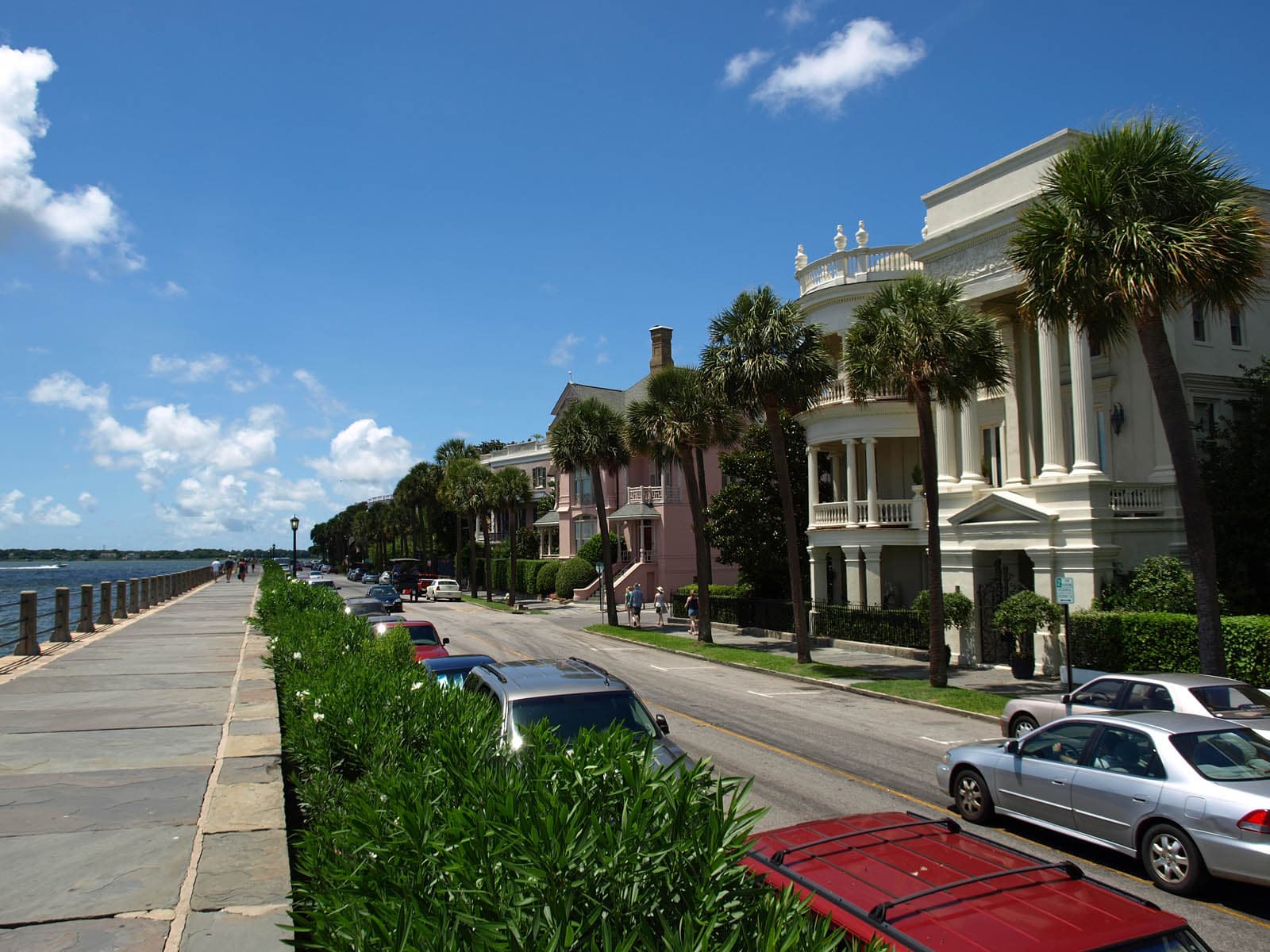
you want pastel antebellum architecture, harbor-side history, modern Southern cuisine's spiritual home, and Gullah-Geechee heritage
Choose Grand Canyon National Park if...
you want one of the planet's most iconic landscapes — free park shuttles, Bright Angel Trail to the Colorado, and Desert View sunrises
Charleston
Grand Canyon National Park