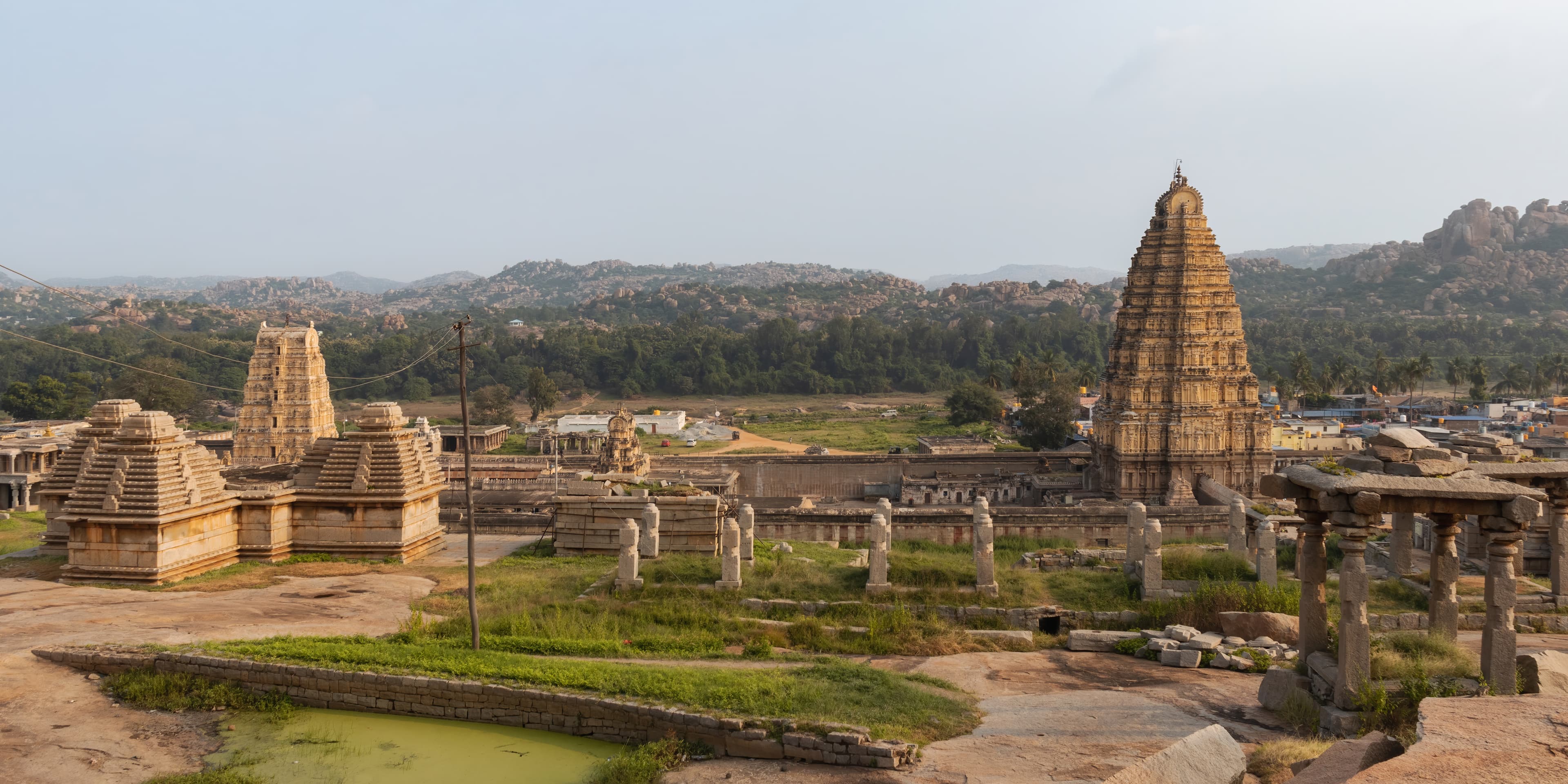
Hampi
India

Pai
Thailand
Hampi
Pai
💰 Budget
🛡️ Safety
Hampi
Hampi is a safe destination by Indian standards, with violent crime toward tourists extremely rare. The primary hazards are environmental rather than human — heat stroke in summer, slippery barefoot temple steps, and monkey bites from the large Rhesus macaque population around the temples. India's overall safety index sits around 112 on global peace indices; Hampi, as a pilgrimage and tourist town, is notably calmer than urban India.
Pai
Pai is a small, low-crime town where violent incidents against tourists are very rare. The main safety concerns are environmental and self-imposed: burning season air quality is a genuine health hazard, motorbike accidents on mountain roads kill and seriously injure tourists every year, and the winding approach road demands real riding skill. Treat the "Pai tattoo" (road rash from motorbike falls) as a warning — if you see half the backpackers in town bandaged, that tells you something.
⭐ Ratings
🌤️ Weather
Hampi
Hampi sits on the Deccan Plateau in northern Karnataka, giving it a semi-arid climate with extremes in both directions. The tourist season runs mid-October to mid-March, when temperatures are pleasant and the granite ruins are comfortable to explore on foot. The remaining months — summer heat peaking above 40°C and a monsoon that turns paths muddy — make off-season visits genuinely challenging.
Pai
Pai sits at around 800 meters elevation in a mountain valley, giving it a noticeably cooler and more pleasant climate than Chiang Mai year-round. Mornings can be genuinely chilly in the cool season and humidity is lower than the Thai lowlands. There are three distinct seasons — and one period, February through April, that should be avoided entirely due to catastrophic air quality from agricultural burning.
🚇 Getting Around
Hampi
Hampi's ruins span roughly 26 km² — too large to walk entirely but well-suited to bicycle or scooter. The Sacred Centre (Virupaksha to Vittala Temple, ~3 km) can be done on foot. The Royal Centre (Lotus Mahal, Elephant Stables, Queen's Bath) is a further 3–4 km south, making a bicycle or hired auto-rickshaw the practical choice for covering both zones in a day.
Walkability: The Sacred Centre core is walkable but the full ruin field is not — distances between major sites range from 1 to 6 km on sandy or rocky paths. The Royal Centre is not comfortably walkable from Hampi village. A bicycle is the minimum recommended transport for visitors wanting to cover both zones.
Pai
Pai's town center is small enough to walk in 15 minutes end to end, but the best attractions — hot springs, canyon, waterfalls, viewpoints, bamboo bridges, and cave — are spread across a 15-30 km radius and require independent transport. A motorbike is essentially mandatory for a full Pai experience. There is no Grab, no metered taxi service, and songthaews are rare. If you can't or won't ride a motorbike, negotiate with a driver for full-day songthaew hire.
Walkability: Pai's town center — the Walking Street, river area, and surrounding blocks of guesthouses and cafes — is entirely walkable. However, every major attraction except the town itself requires a motorbike or hired vehicle. The town is not designed for car traffic and has no public transport network.
The Verdict
Choose Hampi if...
you want a UNESCO boulder-and-ruins landscape — the Vijayanagara capital, Virupaksha Temple, Stone Chariot, Matanga Hill sunset, and Hippie Island slow days
Choose Pai if...
you want a Northern Thai backpacker mountain town — dawn balloons, hot springs, and rice paddies (avoid the Feb-April burning season)